
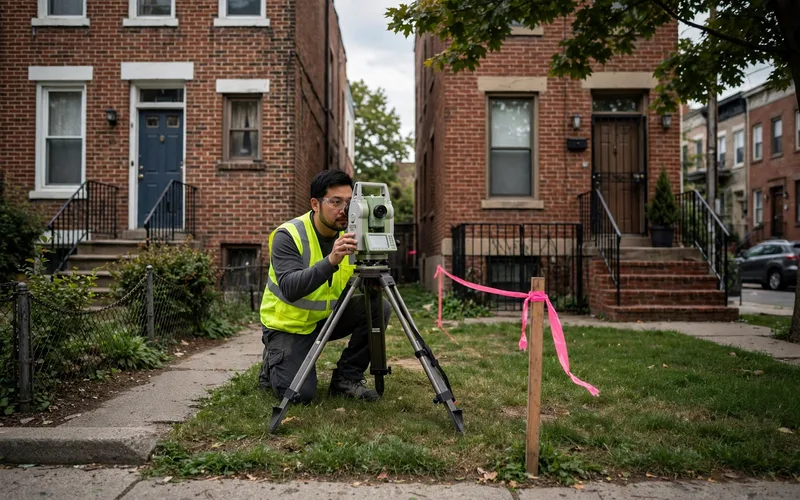
A fence that sits a foot over the property line. A driveway that has crept onto the neighbor’s lot over thirty years. A survey from 1987 that disagrees with the one your buyer’s lender just ordered. In New York City and on Long Island, where lots are narrow and many houses predate reliable surveys, boundary disputes are one of the most common reasons a home sale stalls — and one of the most misunderstood.
The short answer is yes, you can sell a house with a boundary dispute in New York. No state law bars the sale. But the dispute changes how the sale works: it can shrink your buyer pool, complicate title insurance, and give a buyer’s lender a reason to pause. What matters is knowing where the line actually is, disclosing what you know, and choosing a sale path that fits the situation. If you want to sell your house fast in New York, a boundary question is a problem to manage, not a reason to give up on selling.
What Counts as a Boundary Dispute or an Encroachment?
A boundary dispute is a disagreement about where one lot ends and the next begins. An encroachment is the physical thing crossing that line — a fence, a shed, a garage wall, a driveway, or even a row of shrubs planted on the wrong side. The two usually travel together: the encroachment is discovered, and the dispute about the line follows.
The situations that come up most often in Queens, Brooklyn, Staten Island, Nassau, and Suffolk include:
- A fence or wall over the line. The most common encroachment in older neighborhoods, where fences were built by eye or by handshake decades ago.
- A driveway, walkway, or patio crossing the line. Narrow lots and shared access make this frequent, especially where two houses share a driveway.
- A shed, garage, or addition built too close. Structures placed without a current survey sometimes sit partly on the neighbor’s land.
- Overlapping deed descriptions. Old deeds described boundaries by landmarks — a tree, a stone wall, a fence that no longer exists — and two descriptions can overlap or leave a gap.
- Two surveys that disagree. A survey from the 1980s and a new one can place the same line feet apart, usually because the older one relied on a monument that has moved or vanished.
Encroachment vs. Easement vs. Adverse Possession
Three legal ideas get mixed up in boundary disputes, and they are not the same thing. An encroachment is a physical intrusion onto your land without a legal right — a fence built over the line. An easement is a legal right to use part of someone else’s land for a specific purpose, such as a shared driveway or easement recorded in the deed. Adverse possession is a claim to actually own the land, which in New York requires ten years of possession meeting strict legal tests. An encroachment can become an adverse possession claim over time, but most never get there — and since 2008, New York law makes it harder for small ones to do so, as explained below.
Can You Legally Sell a House With a Boundary Dispute in New York?
Yes. Nothing in New York law prevents you from selling a property while a boundary dispute is unresolved. When you sell, you transfer whatever interest you own; the dispute travels with the property, and the buyer takes it subject to the same question you had.
What a boundary dispute affects is everything around the sale. A traditional buyer needs a mortgage lender and a title insurer to sign off, and both care about the line. The buyer’s attorney will raise it during attorney review, the title search will flag it, and the lender may require a resolution, a new survey, or a price adjustment before funding. Some buyers will walk away rather than inherit a neighbor conflict. The practical question is rarely “can I sell?” but “who will buy, on what terms, and how long will it take?”
Disclosure is not optional. Under New York’s Property Condition Disclosure Act (Real Property Law § 462), sellers of one- to four-family homes must complete a Property Condition Disclosure Statement before the buyer signs a binding contract. Question 5 asks whether anybody else claims to own any part of your property, and Question 6 asks whether anyone has denied you access or made a formal legal claim challenging your title. A boundary dispute you know about belongs in those answers. Since March 20, 2024, sellers can no longer skip the form by offering a $500 credit at closing, so there is no shortcut around it.
How a Boundary Dispute Can Affect Your Sale
Even a small dispute can change the economics of a sale in several ways:
- Fewer buyers. Some buyers will pass on any property with a neighbor conflict, especially if the relationship is already strained. A smaller buyer pool can mean a longer time on market and lower offers.
- Price pressure. Buyers discount for risk. A dispute over a strip a few feet wide can cost more in lost value than the land itself is worth, because the buyer is pricing the uncertainty and the possible legal bill.
- Title insurance exceptions. A standard owner’s title policy often excepts boundary matters a current survey would reveal. The buyer’s insurer may list the disputed area as an exception, or require a survey and a resolution before issuing a policy without it.
- Lender conditions. A mortgage lender may require the encroachment to be removed, a boundary line agreement to be recorded, or an endorsement from the title insurer before approving the loan.
- Delays and renegotiation. Boundary questions usually surface late — during the title search or attorney review. A buyer who discovers the dispute at that stage may ask for a price reduction, demand removal, or walk away.
Start With a Survey — the Only Evidence That Settles the Line
Tax maps, listing diagrams, and old surveys do not settle a boundary dispute. A tax map shows approximate lot shapes for assessment, not legal boundaries, and a survey from decades ago may rely on a fence or a tree that no longer exists. The only evidence a court, a title company, and a buyer’s attorney will take seriously is a current survey prepared by a licensed land surveyor who has staked the corners.
Order a boundary survey, not just a location survey. A boundary survey establishes the legal lines from the deed and the public record and marks them on the ground. If a lender or title company is involved, they may ask for an ALTA/NSPS survey, a more detailed national standard that also maps easements, encroachments, and access. Get quotes from two or three licensed surveyors, since cost varies with lot size, terrain, and how much deed research the surveyor must do.
While the surveyor works, pull your own paper: your deed, your title report, and any prior survey. In Manhattan, Brooklyn, Queens, and the Bronx, deeds and surveys are searchable in ACRIS, the New York City Department of Finance’s online records system; Staten Island records sit with the Richmond County Clerk, and Nassau and Suffolk records with the county clerk. Gathering the documents you need to sell your house for cash is easier when you start early, and a deed with a clear legal description is the surveyor’s starting point.
What New York Law Says About Boundary Disputes
This section is general educational information about New York law, not legal advice. Boundary disputes are fact-specific, so talk to a New York real estate attorney before you act.
Adverse possession takes ten years — and small encroachments usually do not qualify. Under Real Property Actions and Proceedings Law (RPAPL) § 501, a neighbor can only claim ownership of part of your land after ten years of possession that is actual, open and notorious, exclusive, continuous, and hostile, under a claim of right. Since the 2008 amendments, a claim of right means a reasonable basis for believing the property belongs to the claimant — a neighbor who knew the land was yours has a very hard case. And RPAPL § 543, also added in 2008, deems de minimis non-structural encroachments — fences, hedges, shrubbery, plantings, sheds, non-structural walls, and acts like mowing across the line — to be permissive and non-adverse. Permissive use can never become adverse possession, so a fence that crosses the line by a small amount generally cannot ripen into ownership, no matter how long it has stood.
You can ask a court to order removal — but the court can award damages instead. RPAPL § 871 lets the owner of land bring an action for an injunction directing the removal of an encroaching structure, and it expressly allows the court to award damages in an appropriate case in lieu of an injunction. New York courts balance the equities: in Kimball v. Bay Ridge United Methodist Church (2018), the Appellate Division, Second Department, vacated an order requiring removal of cladding and a drip edge from a shared party wall, holding that the party seeking removal must show the benefit of removal outweighs the harm removal would cause. A willful encroachment is treated very differently from an innocent one built in reliance on a mistaken survey.
A quiet title action fixes the boundary on the record. Under RPAPL Article 15, an owner can ask the court to compel a determination of a claim to real property — the action people usually mean by “quiet title.” A judgment under Article 15 settles who owns the disputed strip and bars the losing side from asserting the claim again. That permanence is what makes it valuable to a future buyer, and it is also why these cases are usually paired with a removal claim under RPAPL § 871.
Fence height is a separate rule from fence location. A fence can be in the wrong place and the wrong height at the same time. Under the New York City Zoning Resolution § 23-312, fences in residence districts may not exceed four feet in a front yard and six feet elsewhere on the lot, with a narrow exception for one front yard on a corner lot. The Department of Buildings does not require a permit for a fence six feet or less at a one- or two-family home, but the zoning height limits apply whether or not a permit is required. A six-foot fence in the front yard violates the zoning rules even if it sits squarely on your own land.
Disclosure covers title claims, not just physical condition. The Property Condition Disclosure Statement required by Real Property Law § 462 asks directly whether anybody else claims to own any part of your property and whether anyone has challenged your title. Answer from your actual knowledge, attach the survey, and explain the situation in the space provided. A knowingly false or incomplete answer can expose you to a claim for actual damages — and the dispute will appear in the buyer’s title search anyway.
How to Resolve a Boundary Dispute Before You Sell
Most boundary disputes settle without a courtroom. Work through the options in order of cost and speed:
1. Talk to your neighbor first, survey in hand. Many disputes are measurement misunderstandings, not land grabs. A current survey, shared calmly, resolves a surprising number of them — especially when the encroachment is small and neither side realized it existed. Put any agreement in writing, even a friendly one.
2. Sign a boundary line agreement. If both sides accept the surveyor’s line, a written boundary line agreement records it and binds future owners of both properties. This is the cleanest fix for a buyer, because it removes the question from the title entirely. Have a real estate attorney draft it and record it with the county.
3. Formalize a small encroachment instead of moving it. When a foot of driveway or a corner of a shed crosses the line, moving it can cost more than the land is worth. A license or a recorded easement can give the encroachment a legal basis the buyer and the title company can accept, at a fraction of the cost of demolition.
4. Consider a lot line adjustment for bigger overlaps. Where the overlap is substantial, the two owners can agree to adjust the lot line itself, with a new survey, attorney-drafted deeds, and any required municipal approvals. It is slower and costlier than a boundary line agreement, but it permanently redraws the map.
5. Try mediation. A neutral mediator can get two neighbors to an agreement in weeks, where litigation takes years. Many New York courts encourage mediation in neighbor disputes, and a mediated settlement can be recorded just like any other agreement.
6. Keep litigation as the last resort. Suing under RPAPL § 871 and Article 15 is the only route when the neighbor will not cooperate, but it is slow and expensive relative to what is usually at stake — a contested boundary case on Long Island commonly runs one to two years. If you co-own the house and the co-owners disagree about whether to settle or fight, that disagreement can stall the sale on its own; in that situation, a partition action is sometimes the only way to force a decision.
Selling As-Is When the Dispute Will Not Settle Quickly
Some boundary disputes cannot be resolved on a selling timeline. The neighbor will not sign, the surveyor found a genuine overlap in the deeds, or the court calendar stretches past your moving date. In that situation, the traditional route — list, find a buyer, satisfy a lender and a title insurer — may not be the best fit.
A cash sale changes the equation. With no mortgage lender to satisfy and no appraisal contingency, the buyer evaluates the property as it is, disputed strip included. You still disclose the dispute, and the buyer still takes the property subject to it — but there is no lender demanding a recorded agreement or a removal before funding. That is why many sellers with unresolved neighbor issues choose to sell as-is: the dispute becomes a pricing conversation rather than a deal-killer.
Cash Buyers NY buys houses as-is across New York City and Long Island, including homes with boundary disputes and encroachments. A cash offer reflects the property with the dispute attached, and the sale can close while the neighbor question is still open — with the buyer, not you, carrying it forward.
What to Put in Writing When You Sell With a Boundary Issue
Paperwork is what turns a dispute from a deal-killer into a manageable fact. Before you list or accept an offer:
- Answer the disclosure statement completely. Address Questions 5 and 6 of the Property Condition Disclosure Statement directly, and attach the current survey and any correspondence with the neighbor.
- Put the dispute in the contract. The contract of sale should describe the known encroachment or dispute, state what you know and do not know about the line, and allocate responsibility for any resolution costs. Your attorney drafts this — do not improvise it.
- Expect title exceptions. The title commitment will likely except the disputed area from coverage. Read it before you sign, and ask the title company what, if anything, a survey endorsement or an enhanced policy would cover.
- Keep every record. Surveys, dated photos, letters to and from the neighbor, any written permission or agreement, and the deed history all help the next owner — and your attorney, if the dispute ever reaches a courtroom.
- Do not tear anything down yourself. Removing a neighbor’s fence or structure on your own can turn a civil boundary question into a trespass or property-damage claim. The order of operations is survey, written demand through your attorney, then a court action if needed.
Frequently Asked Questions
Can I sell my house if my neighbor’s fence is on my property?
Yes. A neighbor’s fence on your land does not prevent a sale, but you should disclose it, get a current survey showing the encroachment, and price the home with the issue in mind. You can also ask a court to order removal under RPAPL § 871, though that process is slow and the court may award damages instead of removal if the equities favor it.
Can a neighbor claim part of my yard by adverse possession in New York?
Only after ten years of possession that is actual, open and notorious, exclusive, continuous, and hostile, under a claim of right — a reasonable basis for believing the land was theirs. Since 2008, RPAPL § 543 deems de minimis non-structural encroachments such as fences, hedges, sheds, and plantings to be permissive, and permissive use can never support a claim. A neighbor who knew the land belonged to you has a very difficult case.
Do I have to disclose a boundary dispute when selling in New York?
Yes. The Property Condition Disclosure Statement required by Real Property Law § 462 asks whether anybody else claims to own any part of your property and whether anyone has challenged your title. Answer from your actual knowledge and attach the survey. The dispute would appear in the buyer’s title search regardless, so disclosing it early costs you nothing and hiding it can cost you the sale.
Will title insurance cover a boundary dispute?
Usually not in full. A standard owner’s policy often excepts boundary matters that a current survey would reveal — which is exactly what a boundary dispute is. An enhanced owner’s policy or a survey endorsement may offer more protection, but coverage varies by insurer and by the facts. Ask your title company what is covered before closing, and get the answer in writing.
Can a cash buyer buy a house with a boundary dispute?
Yes. Cash buyers do not need a lender’s approval, so the title and survey conditions that stall a mortgaged sale are not deal-breakers. The buyer still takes the property subject to the dispute, and the price will reflect it, but a cash sale can close while the boundary question is still unresolved.
The Bottom Line
A boundary dispute or encroachment is a fact about your property, not a verdict on your sale. Find out where the line actually is with a current survey, disclose what you know, and choose the resolution that fits the size of the problem — a conversation, a recorded agreement, or, when nothing else works, an as-is sale to a buyer who does not need a lender’s sign-off. Most buyers will accept a documented boundary question without hesitation; what they will not accept is a surprise. If the neighbor situation is difficult or you need to move fast, get a cash offer from Cash Buyers NY and see what your home is worth, disputed boundary and all.

Jeff is part of the team at Cash Buyers NY, a cash home-buying company serving New York City and Long Island from Bellerose, Queens. The company buys houses as-is in any condition — no repairs, no agents, no commissions, and no financing contingencies — through a straightforward cash-offer process. Jeff covers the questions New York homeowners actually ask: how long a cash sale takes, what it costs, how co-op boards and inheritance work, and when selling as-is makes sense.