
Blog

Boarded-up condemned brick house in New York City with plywood-covered windows

How to Sell a Condemned House in New York

A condemned house notice is one of the scariest things a New York property owner can find taped to their front door. A vacate order means the city has decided the building is unsafe to live in — and many owners assume that means it’s also impossible to sell. It isn’t. You absolutely can sell a condemned house in New York, and you can do it without spending a fortune on repairs first. In this guide, we’ll explain what condemnation actually means in New York City and across the state, what your realistic options are, how cash buyers value condemned properties, and the exact steps to get a condemned house sold — often in weeks rather than months. What Does It Mean When a House Is Condemned in New York? In New York, a house is typically “condemned” when the Department of Buildings (DOB) or another agency issues a vacate order declaring the structure unfit for occupancy. This happens after an inspection finds conditions that make the building dangerous — severe structural damage, a collapsed roof, fire damage, dangerous electrical systems, or an illegal condition that can’t be fixed while people live inside. Condemnation is not the same as a code violation. A code violation — even a serious one — tells you to fix something within a deadline. A vacate order tells everyone to get out. The property remains in your name, the title stays yours, and your right to sell it stays yours too. If your house is sitting under a pile of violations rather than a vacate order, the process is different — see our guide on selling a house with code violations in NYC for that situation. Can You Legally Sell a Condemned House in New York? Yes. There is no New York law that stops you from selling a property that has been condemned or vacated. The buyer’s lender is usually the obstacle, not the law — conventional mortgage lenders will not finance a home that isn’t habitable, which is why condemned houses almost never sell through the traditional MLS route. But cash buyers don’t need a lender’s permission, and they buy condemned houses in New York regularly. What you cannot do is misrepresent the property’s condition. New York’s Property Condition Disclosure Act requires sellers to disclose known defects and the condition of the property. Condemnation and vacate orders are public records anyway — any serious buyer will find them during due diligence. The right move is to be upfront: price reflects condition, and the buyers who purchase condemned houses are doing so precisely because of the condition. Why Do Houses Get Condemned in New York? Understanding why your house was condemned helps you talk to buyers and price realistically. The most common causes include: Structural failure Crumbling foundations, failing load-bearing walls, collapsed or rotting roofs, and sinking floors are the classic triggers. Older wood-frame houses in Queens and Staten Island and aging brick rowhouses in Brooklyn and the Bronx are especially vulnerable after decades of deferred maintenance or water intrusion. Fire and water damage A major fire often leads directly to a vacate order. So does catastrophic water damage — burst pipes in a vacant winter house, for example — which weakens structure and breeds hazardous mold. Illegal or dangerous construction Illegal subdivisions, removed load-bearing walls from unpermitted renovations, overloaded electrical panels, and missing fire separations between units can all prompt the DOB to vacate a building. These cases often come bundled with heavy ECB (Environmental Control Board) violations and fines that attach to the property. Abandonment and neglect A house that sits vacant and unsecured for years gets stripped of copper, infested with squatters, and damaged by the elements. In some cases the city steps in, vacates it, and eventually refers it to programs that sell tax-lien or distressed inventory. If you inherited a property that went this way, acting sooner rather than later protects your equity. Your Options for Selling a Condemned House in New York You have four realistic paths. They differ in speed, effort, and net proceeds. Option 1: Sell as-is to a cash buyer (fastest) This is the route most condemned-house owners take, for a simple reason: it’s the only one that doesn’t require you to fix the house first. A cash home buyer in New York purchases condemned properties in any condition, closes in as little as 7–14 days, and handles the violations, liens, and legal clean-up after closing. You get a fair cash offer based on the property’s after-repair value minus renovation costs — and you skip listing fees, agent commissions, and months of carrying costs. Option 2: Sell for land value / as a teardown In neighborhoods where land is worth more than the structure — much of Brooklyn, parts of Queens, and hot Long Island corridors — your condemned house may be most valuable as a teardown sale. Builders and developers buy condemned houses specifically to demolish and build new. If your lot is large or well-located, get opinions on the land value before you accept any offer. Option 3: List with a distressed-property specialist agent An agent experienced with condemned and distressed inventory can list the property on the MLS marketed explicitly to investors and builders. Expect a smaller buyer pool, longer timelines, and offers well below asking. This can work when the condemnation is partial (one unit vacated, rest fine) and the property is in a high-demand area. Option 4: Auction Auctions create a hard deadline and competitive bidding among investors, but reserve prices on condemned houses often go unmet, and auction fees eat into proceeds. It’s a reasonable backup plan if direct cash offers disappoint. How Cash Buyers Value a Condemned House Cash buyers don’t use comparable sales the way an agent pricing a move-in-ready home would. They use a version of the MAO formula (Maximum Allowable Offer): take the property’s after-repair value (ARV), subtract the full cost of renovation including demolition of unsalvageable structure, subtract holding and resale costs, and
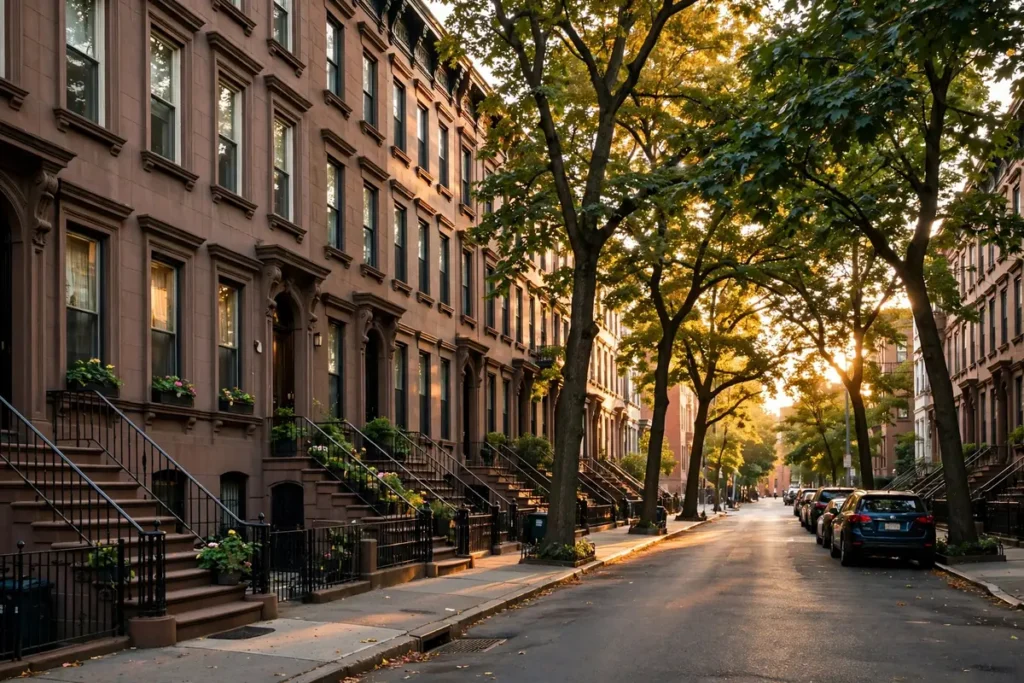

How to Sell a Condemned House in New York Read More »

Brooklyn brownstone row houses in New York City — selling a house with code violations.

How to Sell a House With Code Violations in NYC

Finding out your house has open code violations can feel like a deal-breaker — especially in New York City, where the Department of Buildings (DOB) and Housing Preservation & Development (HPD) keep meticulous public records that any buyer’s attorney will pull before closing. But here’s the good news: you can absolutely sell a house with code violations in NYC. Thousands of properties change hands every year with open violations on the books. The catch is that violations in New York attach to the property, not the person. Selling doesn’t erase them — the new owner inherits every open violation, every pending OATH hearing, and every dollar of unpaid penalties. That changes how buyers, lenders, and title companies treat your home, and it changes the strategy you need to sell it. This guide walks through exactly what you’re dealing with, your options for curing violations versus selling as-is, and the fastest path to the closing table. What “Code Violations” Actually Mean on an NYC House In New York City, the word “violation” covers several different enforcement systems, and it helps to know which one is after you before you decide what to do about it. DOB and OATH (ECB) violations The Department of Buildings issues violations when your property or construction work doesn’t comply with the NYC Construction Codes, the Zoning Resolution, or other applicable laws. The most common of these arrive as OATH summonses (formerly called ECB violations) — a Notice of Violation plus an order to correct the condition. Typical triggers on houses include work completed without permits, illegal basement or attic conversions, unsafe electrical or plumbing work, missing or defective smoke and carbon monoxide detectors, boiler and oil-tank issues, illegal curb cuts and driveways, and sheds, decks, or fences built without approval. HPD violations If your property is a residential rental — even a two- or three-family house where you live in one unit — HPD can cite you for housing-code violations: lack of heat or hot water, vermin, peeling paint (especially lead paint under Local Law 1 of 2004 in pre-1960 buildings with young children), broken windows, or unsanitary conditions. HPD violations are graded by hazard class too (A, B, and C), with C violations considered immediately hazardous. The three violation classes and what they cost OATH summonses fall into three classes, and the penalties scale sharply: Class 1 — Immediately Hazardous: conditions that pose an immediate threat to public safety. Penalties can reach $25,000 per violation. Class 2 — Major: serious but not immediately dangerous conditions. Penalties up to $10,000 per violation. Class 3 — Lesser: minor infractions. Penalties up to $500 per violation. Ignore a hearing date and the judge can enter a default judgment against you — up to $25,000 per summons depending on the violation. That alone is reason to deal with violations proactively rather than hoping they disappear. Why Open Violations Complicate a Traditional Sale Violations don’t legally prevent you from signing a contract — but they throw obstacles in front of almost every conventional buyer: Mortgage lenders back away. Conventional lenders, and especially FHA and VA lenders, generally will not fund a purchase with open DOB violations or unresolved OATH summonses on the property. No financing means a much smaller buyer pool. Appraisals get conditioned. If an appraiser flags violations, the lender typically requires them to be cured before funding — pushing the cost and delay back onto you. Title searches surface everything. A municipal lien and violation search is standard in every NYC closing. The buyer’s attorney will demand the violations be cleared or require large escrow holdbacks — money held back from your proceeds until you fix the problems. Buyers get scared. Even when violations are minor, a long list of them on a public portal reads like a horror story to a first-time buyer. Worse, unpaid penalties can mature into liens against the property, which must be satisfied at closing and come straight out of your equity. Time is genuinely money here. Step 1: Find Every Open Violation on Your Property Before you can make a plan, you need the full picture. Violations are public record in NYC, and you can pull them yourself for free: DOB NOW Public Portal (the successor to the old BIS system) — search by address to see DOB violations, OATH summonses, complaints, and job filings. HPD Online — check the “Violations” section for any HPD housing-code violations on the building. ACRIS — the city’s property records system, where you can spot liens that grew out of unpaid penalties. For each violation, note the violation number, the issuing agency, the class, whether it’s marked open, dismissed, or resolved, and any scheduled hearing dates. Pay special attention to the distinction between open violations (still need correction and certification) and dismissed ones (dead and gone). If you’re staring at a long list — illegal conversions plus plumbing plus electrical, say — consider hiring a violation expeditor or a real-estate attorney to triage them. A professional can often get stale or duplicative violations consolidated or dismissed faster than you can on your own. Step 2: Decide Whether to Cure the Violations or Sell As-Is This is the central financial decision of the whole process, and it comes down to honest maths. What “curing” a violation involves Resolving a DOB/OATH violation isn’t just fixing the problem — it’s fixing it and proving it to the city. The standard process: correct the violating condition (using licensed professionals where the code requires it), then file a notarised Certificate of Correction with the DOB’s Administrative Enforcement Unit, including proof such as permits, photographs, receipts, and inspection results. Class 1 violations must be corrected immediately; Class 2 and Class 3 violations must be corrected and certified within 40 days. If you want to fight the violation instead, you appear at your OATH hearing — but if the judge upholds it, you still have to correct, certify, and pay. One critical detail: paying the penalty alone does not close the violation.

How to Sell a House With Code Violations in NYC Read More »