
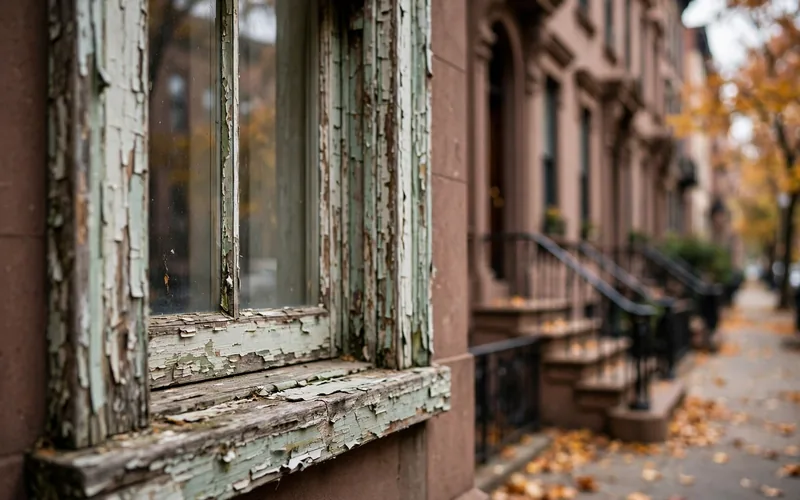
Finding a lead paint violation on your property — or simply learning your pre-war home probably contains lead paint — can feel like a deal-killer when you’re trying to sell. In New York City, though, it’s one of the most common property issues there is: roughly 76% of the city’s buildings predate 1960 and are presumed by law to contain lead-based paint (NYC Dept. of City Planning data, via the Cooper Square Committee). The good news is that a lead paint problem doesn’t make your home unsellable. It means you need to understand three things: what federal law requires of every seller of a pre-1978 home, what New York City’s own lead rules require of owners of certain rental buildings, and how an outstanding violation changes the math on your sale.
Here’s what most sellers get backwards: NYC’s strictest lead rules are aimed at landlords, not at someone selling the home they live in. But sellers of pre-1978 homes still have federal disclosure duties that apply whether you’re listing with an agent or looking to sell your house fast in New York for cash. This guide covers both regimes, what an open violation means, and your realistic options.
Why lead paint matters so much in New York City
Lead-based paint was banned in the United States in 1978, but it was standard in nearly every home painted before then. New York City’s health department reported 4,655 children under six with elevated blood lead levels in 2024 — a 93% decline since 2005, but still a reminder of why the city treats this seriously (NYC Dept. of Health and Mental Hygiene annual report). Peeling or chipped paint, especially around windows and doors, is the main way lead dust gets into a home’s air.
That history is why New York has some of the strictest lead-paint rules in the country. But the rules split sharply between what a landlord must do and what a home seller must do — and knowing which bucket you’re in saves you from paying for work you don’t owe, or missing work you do.
The federal rule every NYC seller must follow
Under Section 1018 of the federal Residential Lead-Based Paint Hazard Reduction Act, the seller of “target housing” — essentially any home built before 1978 — must complete specific disclosures before the buyer becomes obligated under the contract. The exceptions are narrow (foreclosures, certified lead-free homes, very short leases, mortgage transactions, zero-bedroom units, senior housing). There is no cash-sale or as-is exemption.
Specifically, you must:
- Disclose all known lead-based paint and lead hazards — what they are, where they are, and their condition.
- Hand over all available lead records and reports for the home.
- Give the buyer the EPA pamphlet Protect Your Family From Lead in Your Home.
- Include the federal Lead Warning Statement in the contract, signed by both parties.
- Give the buyer a 10-day opportunity to have the home inspected or risk-assessed for lead at their expense. The buyer can waive this in writing — which is how legitimate cash deals close quickly while staying compliant.
Keep your signed acknowledgments for three years. Note what the rule does not require: you need not test for lead, remediate it, or warrant the home lead-free. The penalties for skipping disclosure, however, are severe — EPA civil penalties ran up to $49,772 per violation per day in the 2025 inflation adjustment, buyers can sue for up to three times their damages, and willful failures have drawn criminal fines.
One more New York layer: under the state’s Property Condition Disclosure Act, sellers of 1–4 family homes must deliver a completed Property Condition Disclosure Statement before the buyer signs — and since March 2024, the old option of paying a $500 closing credit instead is gone.
New York City’s Local Law 1: the landlord-side rules
New York City’s lead law — Local Law 1 of 2004 (Admin Code §27-2056 onward) — is primarily a landlord law, stricter than the federal baseline. It covers tenant-occupied buildings built before January 1, 1960, which are presumed by law to contain lead paint (1960–1978 buildings are covered only where the owner actually knows lead paint is present). It activates when a child under six lives in the unit. Covered owners must send an annual notice (January 1–16, English and Spanish), inspect those units and common areas, use certified contractors and lead-safe work practices, remediate to turnover level on every vacancy, and keep records for ten years.
Crucially for most house sellers: owner-occupied one- and two-family homes are exempt from Local Law 1. If you own the brownstone or rowhouse you live in, the city’s lead-violation regime almost certainly never applied to you — your duties at sale are the federal disclosure duties above. (Exception: if your two-family has a rental unit occupied by someone other than you or your family, that unit is covered.) Unsure which category you’re in? That’s a question for a New York real estate attorney, not a guess.
Recent changes sellers should know about
Recent developments, verified with the city:
- XRF testing deadline passed (August 9, 2025). Under Local Law 31 of 2020, covered pre-1960 buildings needed every unit tested by an EPA-certified independent inspector by that date. Missed testing draws a Class C violation plus $1,500 per untested unit or common area.
- The legal threshold dropped. Local Law 66 lowered the definition of lead-based paint from 1.0 to 0.5 mg/cm², effective December 2021.
- Turnover work has hard deadlines. Under Local Law 123 of 2023, pre-1960 multiple-dwelling units must reach turnover level by the earlier of: unit turnover, July 1, 2027 (if a child under six lived there as of January 1, 2025), or within three years of a child under six moving in.
- Enforcement is real. In August 2023 the city announced $473,500 in penalties against four landlords (5,147 apartments); in January 2024 HPD obtained $150,000 against one group with 154 lead-related violations. In 2023 alone HPD issued more than 18,000 lead-paint violations.
What an open lead paint violation means for your sale
HPD issues lead violations after inspections — typically triggered by a 311 complaint about peeling paint in a pre-1960 building where a young child lives. These are Class C (immediately hazardous) violations: correct and certify within 21 days, with penalties up to $250 per day and $10,000 per violation. Clearing one means remediating with lead-safe work practices, passing a dust-wipe clearance test by an EPA-certified inspector, and filing a Certificate of Correction with HPD.
If you’re selling a rental building with open lead violations, five things matter:
- The violations are public. Anyone — including your buyer — can look them up by address in HPD Online’s violation search. You can’t keep them quiet, and concealing them invites liability.
- They transfer with the building. Violations attach to the property, not the person who owned it when they were issued. Your buyer inherits them — along with your ten years of Local Law 1 records, which you’re required to hand over.
- They shrink your buyer pool — but not to zero. Conventional buyers with mortgage lenders may walk away or demand large credits, because lenders and insurers dislike open violations. Cash buyers and investors, who buy as-is and handle remediation themselves, are often the natural buyers for exactly this kind of property.
- They affect price, not just feasibility. Expect buyers to discount for abatement cost plus the hassle of HPD clearance. Getting your own abatement estimate first puts a real number on the table — and it’s worth knowing how cash buyers calculate their offer before you negotiate.
- Ignoring them is the worst option. Open violations accrue penalties, complicate every future transaction, and undisclosed lead hazards are a liability that can survive closing.
Selling your own owner-occupied pre-1978 home with no violations — just the statistical likelihood of old paint? The practical effect is much smaller: complete the federal disclosure honestly, offer the 10-day inspection window, and the sale proceeds normally. Buyers of pre-war NYC homes expect this; most brownstones, pre-war co-ops, and older Queens and Brooklyn houses are in the same boat.
Your options when lead paint is in the picture
1. Remediate before you sell
Full abatement by a certified contractor is the cleanest route: it removes the hazard, clears violations, and lets you market the home without the issue. It’s also the slowest and most expensive option — get itemized quotes, since costs vary widely by scope. This makes most sense when the rest of the sale is conventional (listed, mortgaged buyer) and the violation is the single obstacle.
2. Sell with disclosure and a price adjustment
For owner-occupied homes, this is the common path: complete the federal and state disclosures honestly, offer the inspection window, and let the buyer decide. Many buyers of pre-war homes price in the possibility of lead paint from the start — the 1978 cutoff means a huge share of the city’s housing stock shares the condition.
3. Sell as-is to a cash buyer
When violations are open, the building has a compliance history, or you simply don’t want to manage an abatement project, selling as-is to a direct cash buyer is often the fastest resolution. Cash buyers purchase with violations in place, handle HPD clearance after closing, and close in days rather than the months a clearance project takes — the same logic behind selling a house with code violations as-is. The trade-off is price: you accept less than a fully remediated market price, but you avoid the abatement cost, carrying costs, and months of delay.
Which option fits depends on your building type, violation status, timeline, and tolerance for managing contractors. There is no universal right answer — but there is a wrong one: ignoring the problem. Violations are public record, and undisclosed lead hazards are a liability that survives closing. This article is general educational information, not legal advice; a New York real estate attorney can confirm how these rules apply to your property.
How to check your own property’s lead history
Before you decide anything, get the facts on your own building:
- HPD Online — search your address for open and closed housing violations, including lead-based paint violations (class, date, and status are all shown).
- Your own records — any prior lead inspections, risk assessments, or abatement reports. Federal disclosure requires you to share these with the buyer, so gather them now.
- HPD’s lead pages — the city’s official guidance, and the authoritative reference if anything here has changed since publication.
Frequently asked questions
Do I have to disclose lead paint when selling my NYC home?
Yes, if your home was built before 1978. Federal law requires you to disclose all known lead hazards, hand over any lead records you have, provide the EPA’s Protect Your Family From Lead in Your Home pamphlet, include the Lead Warning Statement in the contract, and offer the buyer a 10-day opportunity to inspect for lead (which the buyer may waive in writing). These duties apply to cash and as-is sales too.
Does NYC’s lead paint law apply to my one- or two-family home?
If it’s fully owner-occupied, no — Local Law 1 covers tenant-occupied buildings built before 1960 (and 1960–1978 buildings where the owner knows lead paint is present). A two-family where a non-owner-occupied rental unit exists is covered as to that unit. Regardless of the exemption, the federal pre-1978 disclosure duties apply to every seller.
Do HPD lead violations transfer to the buyer when I sell?
Yes. Violations attach to the property, not to the owner who held it when they were issued, and your Local Law 1 records must be transferred to the new owner. New owners of multiple dwellings can apply for a stay of legal actions and HPD civil penalties while they correct violations, under NYC Rules §13-01.
Can I sell a house as-is with open lead paint violations?
Yes. There is no law requiring you to remediate before selling, and your federal and state disclosure duties are the same whether the sale is conventional or as-is. Cash buyers routinely purchase properties with open violations in place and handle HPD clearance themselves after closing.
How do I check whether my NYC property has lead violations?
Search your address in HPD Online, the city’s public housing database, which lists open and closed violations by class and date — including lead-based paint violations. Also gather any inspection or abatement reports in your own files, since federal law requires you to share them with your buyer.
What happens if I skip the federal lead disclosure?
EPA civil penalties of up to roughly $50,000 per violation per day (adjusted annually for inflation), a buyer lawsuit for up to three times their damages, and — in willful cases — criminal prosecution. Disclosure costs nothing; skipping it is the most expensive option on this list.
The bottom line
A lead paint violation — or simply owning a pre-1978 home — isn’t a reason to panic. It’s a reason to get informed. If you’re selling your own home, the federal disclosure process is straightforward and routine: complete it honestly, offer the inspection window, and the sale moves forward. If you’re selling a rental building with open HPD violations, the violations are public, they travel with the property, and they reshape your price and your buyer pool — which is exactly when an as-is cash sale often becomes the cleanest path out.
If lead paint is complicating your sale and you’d rather skip the abatement project, request a free cash offer — Cash Buyers NY buys homes with violations in place across New York City and Long Island. You can also reach the team at 646-920-8900 or [email protected].

Jeff is part of the team at Cash Buyers NY, a cash home-buying company serving New York City and Long Island from Bellerose, Queens. The company buys houses as-is in any condition — no repairs, no agents, no commissions, and no financing contingencies — through a straightforward cash-offer process. Jeff covers the questions New York homeowners actually ask: how long a cash sale takes, what it costs, how co-op boards and inheritance work, and when selling as-is makes sense.