
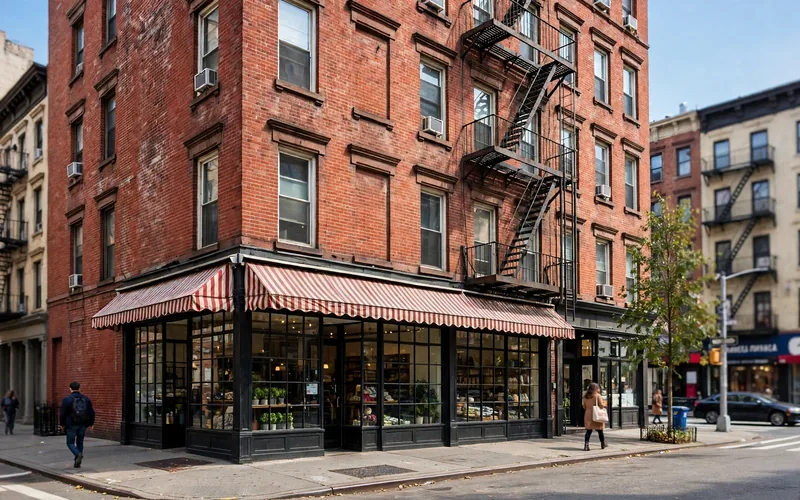
Owning a mixed-use building in New York City — a storefront at street level with apartments above — can be a steady investment right up until the day you decide to sell. That is when most owners discover the sale behaves less like selling a house and more like selling a small business and an apartment building at the same time. Fewer buyers can finance it, the valuation hinges on income math rather than comparable home sales, and the rules governing your tenants split in two. Owners who understand those differences sell faster and negotiate from strength — or sell the property as-is and skip the entire ordeal.
This guide covers what makes a mixed-use sale different, how buyers value these buildings, the legal and tax details to get right, and your options from a traditional listing to a cash sale. It applies whether you own a corner store with two rentals above in Queens or a walk-up over retail in Brooklyn — and if you are still weighing whether to list, our overview of how to sell your house fast in New York covers the broader market first.
What Counts as a Mixed-Use Property in New York
A mixed-use property is any building that combines residential and commercial space under one roof. The classic New York version is a retail storefront or restaurant on the ground floor with apartments above, but the category also covers office or loft space over apartments, and live-work buildings. What matters for your sale is how lenders and the city classify the building: residential units and commercial units are governed by different rules, and the ratio between them drives both financing options and your tax bill. New York City’s Department of Finance places primarily residential properties into Tax Class 1 or 2, while commercial-heavy buildings land in Class 4 — and the assessment ratios and tax rates differ dramatically between them.
For Fannie Mae financing, mixed-use properties are eligible only when the property is a one-unit residence you occupy as your principal residence, with the commercial use subordinate to the residential use and operated by you as the borrower. That is a narrow window. Most mixed-use buildings in NYC — two or three stories over retail — fall outside it, which is why your buyer pool is mostly investors, owner-operators, and cash buyers rather than conventional homebuyers.
Why Selling a Mixed-Use Building Is Harder Than Selling a House
Three things make these sales more complex than a residential resale:
The buyer pool is smaller
Fewer buyers can finance a mixed-use building, and those who can move more slowly. Investment buyers run underwriting on your income and expenses; owner-users need commercial lending. Expect a longer marketing period and more negotiation over deal structure than a comparable single-family sale.
Valuation is based on income, not comparable sales
Buyers value mixed-use buildings on net operating income (NOI) divided by a cap rate. That means every dollar of documented rental income — and every dollar of expenses — moves the price. Current NYC cap-rate benchmarks run roughly 4.5–5.5% for free-market multifamily and 5–6.5% for neighborhood retail. Properties with verifiable income, current leases, and clean books sell for meaningfully more than identical buildings with messy records.
Tenant rules split in two
Your residential tenants may have rent stabilization or Good Cause eviction protections, while your commercial tenants’ rights depend on their leases. A buyer inherits all of it. The more clearly you document leases, rent rolls, and tenant status up front, the fewer surprises kill deals in due diligence.
Sort Out the Legal Details Before You List
Certificate of occupancy
Your certificate of occupancy (C of O) must reflect the building’s actual use. A C of O that lists the ground floor as storage while a store operates there is a common liability — lenders and sophisticated buyers will flag it, and practical guidance on mixed-use deals notes that buyers routinely discount or walk away over C-of-O mismatches. Resolving discrepancies with the Department of Buildings before you sell is almost always cheaper than letting a buyer price them in.
Zoning
Many NYC mixed-use buildings sit in Special Mixed Use (MX) districts, which pair manufacturing and residential districts (ZR 123-00) to allow “mixed buildings” with residential and commercial uses in the same structure. Confirm your building’s legal use conforms to its zoning before a buyer discovers otherwise.
Corporate structure and title
If the building is held in an LLC or corporation, have your operating documents, resolutions, and transfer authority ready. Title issues — liens, open violations, unfiled permits — should be identified early so they don’t surface in the buyer’s title search.
How Buyers Actually Value a Mixed-Use Property
Serious buyers start with your numbers. Prepare a package: current rent roll, all leases with amendments, twelve months of income and expense statements, property tax bills, and insurance costs. Buyers apply a cap rate to your stabilized NOI to derive value, then adjust for deferred maintenance, below-market rents, vacancies, and legal risk.
Key value levers you control:
- Documented income. Reported rental income that matches tax returns and bank deposits commands the highest price. Unreported cash income simply doesn’t exist in a buyer’s underwriting.
- Lease quality. Long-term leases with creditworthy commercial tenants lower risk and cap rates. Month-to-month tenancies and handshake deals do the opposite.
- Expense discipline. Bloated expenses drag down NOI directly. Industry analysis of expense traps shows that sellers who clean up controllable costs before selling consistently achieve higher effective cap rates.
- Condition and compliance. A clear C of O, resolved violations, and maintained systems reduce the buyer’s risk discount.
If your records are incomplete or the building needs significant work, expect traditional buyers to discount heavily — or consider whether selling as-is for cash is the better play (more on that below).
What to Do About Your Tenants Before You Sell
Do not try to empty the building to make it “easier” to sell. Leases transfer to the new owner, and attempting to remove tenants before a sale can trigger legal liability under New York’s tenant protection laws. Instead:
- Get estoppel certificates from commercial tenants confirming lease terms, rent, and any side agreements.
- Disclose the status of any rent-stabilized or Good Cause–protected residential units — buyers will verify independently, and undisclosed protections are a deal-killer.
- Address chronic non-payment or lease violations through proper legal channels before listing, or disclose them.
Tax Implications Worth Planning For
A mixed-use sale has tax dimensions a straight residential sale doesn’t. Depreciation recapture on the commercial portion, capital gains treatment of each use, and New York City and State transfer taxes all apply. A 1031 exchange can defer federal gains if you reinvest in like-kind investment property — see our landlord’s guide to the 1031 exchange. For the residential side, the Section 121 exclusion may shelter gains on the portion you lived in. The details are fact-specific, so consult a tax professional before you commit to a structure — and review our overview of taxes on selling a house in New York for the basics.
Should You List It Traditionally or Sell As-Is for Cash?
A traditional listing can maximize price when your books are clean, tenants are stable, and the building is in good condition — but it also means months of marketing, financing contingencies, appraisals, and inspections that often re-trade the price. Mixed-use deals are particularly vulnerable: financing is harder, inspections uncover commercial-code issues, and appraisals based on income can come in below the agreed price.
If your situation doesn’t fit the traditional mold — deferred maintenance, problem tenants, complicated ownership, or a timeline that can’t wait — selling as-is to a cash buyer avoids the underwriting, the inspections, and the contingencies.
Frequently Asked Questions
Can I get a regular residential mortgage on a mixed-use property in NYC?
Only in narrow cases: Fannie Mae treats a property as residential only when it is a one-unit residence you occupy as your principal residence, with the commercial use subordinate and operated by you. Most mixed-use buildings fall outside that definition and require commercial or investor financing.
Do my tenants’ leases survive the sale?
Yes. Leases and tenant protections transfer to the new owner automatically. Residential tenants keep their leases and any rent stabilization or Good Cause protections; commercial tenants keep whatever rights their lease provides.
What paperwork should I have ready before selling?
At minimum: the certificate of occupancy, all leases with amendments, a current rent roll, twelve months of income and expense statements, property tax bills, insurance policies, and estoppel certificates from commercial tenants.
Is it better to lease a vacant storefront before selling?
Not always. A signed lease adds income but can lock in below-market rent that lowers appraised value, while a vacant storefront attracts owner-user buyers who want to occupy the space themselves and often pay more than investors. Weigh the lease terms against your likely buyer pool before signing anything.
The Bottom Line
A mixed-use property sells on income, documentation, and legal clarity — not on curb appeal. Get your certificate of occupancy, leases, and books in order before you list, understand how buyers will value the building, and be realistic about your timeline. If the traditional path fits your situation, great; if not, a cash sale lets you exit on your schedule without the financing risk.
Want to know what your building is worth as-is? Request a free cash offer — no obligation, and you’ll have a number to compare against the traditional route.

Jeff is part of the team at Cash Buyers NY, a cash home-buying company serving New York City and Long Island from Bellerose, Queens. The company buys houses as-is in any condition — no repairs, no agents, no commissions, and no financing contingencies — through a straightforward cash-offer process. Jeff covers the questions New York homeowners actually ask: how long a cash sale takes, what it costs, how co-op boards and inheritance work, and when selling as-is makes sense.