
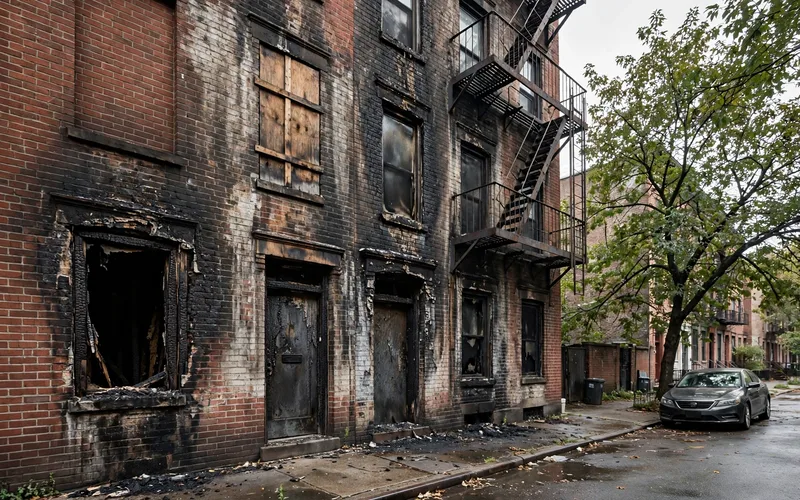
A house fire turns everything upside down in a single night. Once the trucks leave and the smoke clears, owners across New York City face the same hard question: do you rebuild, or do you sell the house as it stands? There is no single right answer. The repair bill, your insurance payout, the condition of the structure, and how fast you need to move all pull in different directions. This guide walks through each one so you can make the call with clear eyes — and if you decide selling is the better move, you can sell your house fast in New York without taking on months of reconstruction first.
Cash Buyers NY buys houses in any condition across the five boroughs and Long Island, including homes with fire, smoke, and water damage. That does not mean selling is always the right choice. Below is an honest look at both paths.
First, Understand What the Fire Actually Damaged
A house fire causes four kinds of damage, and only the first is obvious from the street:
- Flame and heat damage. Charred framing, melted wiring, cracked masonry, and damaged roofing. Heat can weaken steel beams and concrete even where nothing visibly burned.
- Smoke and soot damage. Soot travels far beyond the room where the fire started, settling into walls, ductwork, insulation, and belongings. The smell can linger for months if it is not professionally treated.
- Water damage. Firefighting efforts soak floors, ceilings, and wall cavities. Standing water leads to mold growth within days if the house is not dried out quickly — which is why fire damage and water damage so often arrive together.
- Structural damage. Compromised joists, load-bearing walls, or foundations can make a house unsafe to enter, even if the exterior looks intact.
Do not re-enter a fire-damaged house until the FDNY and the Department of Buildings (DOB) say it is safe. A licensed structural engineer should assess the framing and load-bearing elements before anyone starts planning repairs — in New York City, that assessment is often required before permits are issued anyway.
What Does Fire Damage Restoration Cost in NYC?
Restoration costs vary enormously because no two fires are alike. National 2026 data from Angi, based on 305 verified projects, puts fire damage restoration at $3,083 to $52,031, with a national average of $27,477. Minor smoke cleanup from a small contained fire can run as little as $800, while severe structural fires can reach $180,000 or more. Standard cleanup alone commonly runs $4 to $7 per square foot, before any rebuilding begins.
Expect New York City prices to sit at the higher end of those ranges. Labor, disposal, permits, and DOB inspections all cost more here than the national average. A realistic budget breaks down roughly like this:
- Emergency board-up and tarping: a few hundred to about $1,000
- Water extraction and drying: roughly $1,000 to $6,000
- Soot and smoke cleaning: $200 to $1,200 per room, plus $400 to $800 for ozone treatment if needed
- HVAC cleaning: $500 to $2,000, since soot circulates through ductwork
- Structural repairs and reconstruction: $10,000 to $100,000 or more, depending on severity
Get at least two written estimates from licensed restoration contractors, and ask each one to separate cleanup costs from reconstruction. That split matters: cleanup is usually covered by insurance, while rebuilding decisions are yours to make.
Start With the Insurance Claim
Before you decide anything about repairing or selling, get the insurance claim moving. A few steps protect your payout:
- Notify your insurer immediately. Most policies require prompt notice, and delays can complicate a claim.
- Document everything before cleanup. Photograph and video every room, and list damaged items with approximate values. Do not throw anything away until the adjuster has seen it.
- Mitigate further damage. Board up openings and arrange drying. Insurers expect owners to prevent the damage from getting worse, and they generally reimburse reasonable emergency costs.
- Understand replacement cost vs. actual cash value. A replacement-cost policy pays to rebuild; an actual-cash-value policy pays the depreciated value, which can be far less. Know which one you hold before you accept any settlement figure.
- Keep every receipt. Temporary housing, meals away from home, and emergency repairs may be covered under additional living expenses.
If the settlement offer seems low, a licensed public adjuster can review it — they work for you, not the insurer, and typically charge a percentage of the recovery. A real estate attorney can also advise on how a sale interacts with an open claim, since in some policies the right to collect repair funds can be affected by selling before repairs are complete.
NYC Rules After a House Fire: Vacate Orders, Permits and Inspections
New York City treats a serious house fire as a safety matter, not just a private loss. After a fire, the DOB may issue a vacate order if the building is deemed unsafe to occupy — because of structural danger, inadequate fire protection, compromised egress, or similar hazards. A vacate order can cover part of a building or the whole property, and nobody may legally re-enter until the order is lifted.
Lifting a vacate order generally means hiring a licensed architect or engineer to assess the damage, filing plans with the DOB, obtaining the required permits, completing the repairs, and passing a DOB re-inspection. For a badly damaged house, that process can take months, and the city will not rush it. Owners should also check for DOB and HPD violations filed as a result of the fire — open code violations must be resolved before a traditional sale can close, and they are a matter of public record that any buyer will find.
None of this means the house is worthless. It means the timeline and the paperwork are real costs in the repair-or-sell decision, and they deserve a place in your math alongside the contractor’s estimate.
Can You Sell a Fire-Damaged House in NYC?
Yes. A fire-damaged house can be sold in New York City, but the path depends on the buyer. A traditional buyer using a mortgage will usually struggle: lenders require the home to be habitable and insurable before they release funds, and appraisers discount heavily for visible damage. That leaves most fire-damaged houses to cash buyers, investors, and contractors who can close without lender approval.
Fire damage is one of the classic situations where a distressed property sale makes sense. A cash buyer purchases the house in its current condition, with no repair contingency and no financing contingency, which removes the two biggest reasons traditional deals on damaged homes fall apart. The trade-off is price: a cash offer reflects the repair costs the buyer is taking on, the risk in the structure, and the time the property will sit before it can be resold.
If the damage is light — a contained kitchen fire with smoke in a few rooms — listing traditionally after professional cleaning may still be worth considering. If the structure is compromised or the house carries a vacate order, an as-is sale is usually the faster and more realistic route. Our guide to selling an ugly house covers the same decision in more detail for homes with major condition problems.
Repair or Sell As-Is: How to Decide
Work through these five questions honestly, and the right answer usually becomes clear:
1. How bad is the damage, really?
A contained fire with smoke damage is a repair job. A fire that compromised the structure, the roof, or the electrical system is a reconstruction project. The structural engineer’s report is the document that settles this question — get it before you commit to either path.
2. What will insurance actually pay?
Compare the settlement (or the realistic settlement, if the claim is still open) against the contractor estimates. If insurance covers most of the rebuild and you want to stay, repairing can make sense. If there is a large gap — because of depreciation, a low policy limit, or an uncovered cause — selling as-is stops the bleeding.
3. What are the carrying costs while you decide?
Mortgage payments, property taxes, insurance, and utilities continue whether the house is livable or not. A six-month DOB permit and rebuild timeline in New York City can easily cost tens of thousands in carrying costs alone. Add those to the repair estimate before comparing it with an as-is offer.
4. How fast do you need to move on?
Some owners need to relocate, settle an estate, or stop paying for a house they cannot live in. A cash sale can close in days or weeks, while a full restoration routinely takes months. If time matters more than squeezing out the last dollar, that points toward selling.
5. Do you want to be a construction manager?
Restoring a fire-damaged house means hiring contractors, pulling permits, scheduling DOB inspections, and living with delays. Some owners are up for that. Many, especially after the trauma of a fire, are not — and that is a legitimate reason to sell.
As a rough guide: light smoke damage usually favors repair; severe structural damage, a vacate order, or a large gap between insurance and repair costs usually favor selling as-is. When the numbers are close, the tiebreaker is often your timeline and your appetite for a construction project.
What You Must Disclose When You Sell
New York law requires sellers to be upfront about fire damage. Under the Property Condition Disclosure Act (N.Y. Real Property Law § 462), the standard disclosure statement asks directly: “Is there any fire or smoke damage to the structure or structures?” You must answer based on your actual knowledge, and you must deliver the statement to the buyer before a binding contract of sale is signed.
A 2024 amendment to the law removed the old $500 closing credit that sellers could pay instead of providing the statement — and a seller who willfully provides false or incomplete answers can be held liable for actual damages. Selling as-is does not change any of this: “as-is” means the buyer accepts the condition, not that the seller can hide it. Disclose the fire, describe what was and was not repaired, and keep records of the insurance claim and any restoration work. Honest disclosure protects you after closing and builds trust with the buyer.
This is general information, not legal advice. A New York real estate attorney can review your disclosure statement and your contract before you sign anything.
Frequently Asked Questions
Can I sell a house with fire damage in NYC?
Yes. Fire-damaged houses are regularly sold in New York City, usually to cash buyers who purchase as-is without a mortgage contingency. A traditional financed sale is difficult until the house is repaired and habitable, because lenders and insurers typically will not approve a damaged property.
Will my insurance still pay if I sell instead of repairing?
It depends on your policy. Replacement-cost coverage generally pays for repairs actually made, so selling before rebuilding can reduce what you collect. Actual-cash-value coverage pays the depreciated value regardless. Talk to your insurer and, if needed, an attorney before selling with an open claim.
How long does it take to repair a fire-damaged house?
A small fire with smoke damage can take a few weeks. A major fire involving structural repairs, DOB permits, and re-inspection can take several months in New York City, and complex cases can run longer. Get a timeline in writing from your contractor before you decide.
Does fire damage show up on a home inspection?
Yes. Inspectors look for charred framing, smoke staining, odor, replaced sections of structure, and mismatched materials. Even a well-repaired fire leaves traces an experienced inspector will notice, which is another reason honest disclosure matters.
Can a buyer get a mortgage on a fire-damaged house?
Usually not until the house is repaired and habitable. Some renovation loan programs exist for buyers willing to take on repairs, but most lenders will not finance a fire-damaged property in its current condition — one reason cash buyers dominate this market.
The Bottom Line
A fire-damaged house in NYC is not a lost cause — it is a decision. Light damage with solid insurance coverage is often worth repairing. Severe structural damage, a vacate order, or a repair bill far above the insurance payout usually points toward selling as-is and moving on with your life. Whatever you choose, get the structural assessment, understand your insurance position, and disclose the damage honestly when you sell.
If selling as-is is the right move for you, Cash Buyers NY can make a fair cash offer on your fire-damaged house anywhere in New York City or Long Island — no repairs, no cleaning, no showings, and no waiting on permits. Call 646-920-8900 or request your free cash offer today, and we will walk you through the next steps.

Jeff is part of the team at Cash Buyers NY, a cash home-buying company serving New York City and Long Island from Bellerose, Queens. The company buys houses as-is in any condition — no repairs, no agents, no commissions, and no financing contingencies — through a straightforward cash-offer process. Jeff covers the questions New York homeowners actually ask: how long a cash sale takes, what it costs, how co-op boards and inheritance work, and when selling as-is makes sense.