
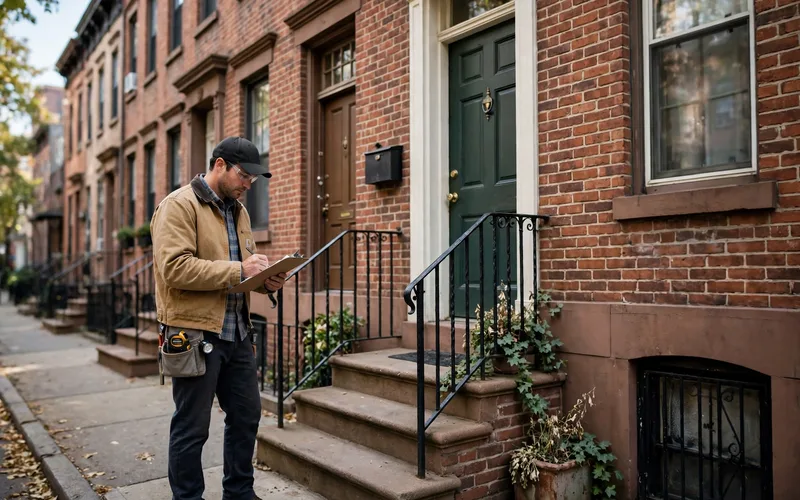
A failed inspection can feel like the sale has collapsed. In most cases it has not. A home inspection does not usually produce a simple pass or fail, and a long report does not automatically mean the house cannot be sold. It usually means the buyer, the lender, or both now have questions — and you have a decision to make: fix the problems, adjust the price, offer a credit, or change the type of buyer you sell to. This guide works through that decision for New York sellers, including when selling your house as-is in New York is the more practical route.
What a “Failed Inspection” Usually Means
Sellers say a house “failed inspection” when a report comes back with serious findings, or when a buyer walks away or asks for major repairs after seeing it. A private home inspection is not a government test with a pass mark, though. The inspector observes the accessible systems — structure, roof, plumbing, electrics, heating, interior, and exterior — and reports their condition. Some findings are maintenance items. Others point to safety risks, active leaks, structural movement, or systems at the end of their life.
Three checks are often confused. A buyer’s home inspection is for the buyer’s information and can lead to a repair request, a renegotiation, or cancellation, depending on the contract. A lender’s appraisal estimates value and, for some loan types, checks minimum condition standards; a lender can require repairs even if the buyer is happy with the house. A municipal inspection may follow a complaint or a permit and can result in a violation notice with its own correction process. First, find out which check produced the problem, and what exactly was found. Do not promise repairs you have not yet priced.
Read the Report Like a Triage List
Start with the summary and any items marked as safety hazards, then sort the rest into three buckets. Safety and structural problems first: active water entry, a failing roof, foundation movement, unsafe electrics, a non-working heating system, and blocked exits. These worry buyers, lenders, and insurers most, and they are where a second opinion is most valuable. Systems near the end of their life next: an ageing boiler or a roof with little life left may still work, but a buyer will price in replacement, so get age and condition in writing. Cosmetics last: worn flooring and dated fixtures rarely kill a sale alone, although peeling paint in a pre-1978 home can raise a separate lead-paint question. Do not spend heavily on cosmetics while a safety item is still unpriced.
If a finding surprises you, get it checked: inspectors report what is visible on the day and do not open walls. A specialist’s written opinion can confirm whether an item is a genuine defect or a false alarm.
Check What Your Contract Actually Allows
Nothing in a generic guide replaces your own contract, and this is where a New York real estate attorney earns their fee. A buyer’s options depend on whether the contract contains an inspection contingency, what it says about repair requests, and what deadlines apply. Some contracts let the buyer cancel within a set period. Others only allow a repair request, which the seller may refuse — after which the buyer may accept the house as it is, negotiate a credit, or walk away if the contract allows it. Still others are written as-is, subject only to the exceptions the contract names.
Three points follow. Do not miss a deadline: a late notice can change who holds the leverage. Put everything in writing: changes should go through the attorneys as a written amendment. Do not authorise work you have not agreed: agree scope, contractor, and who pays, in writing, first.
Your Five Options After a Bad Report
1. Fix the problems before closing
This keeps the widest pool of buyers open, including buyers who need a mortgage. It works best when the list is short, costs are known, and work can be finished and re-checked before closing. Get two written quotes for major items, keep invoices and permits, and allow time for re-inspection.
2. Offer a credit or reduce the price
A credit lets the buyer control the work after closing and spares you managing contractors under time pressure. It does not always solve a lender problem: if a lender requires a repair before funding, a credit alone may not be enough. Check with the buyer’s lender, through the attorneys, before assuming a credit closes the gap.
3. Fix the safety items only
Correct the safety and structural items and price the rest into the deal. This shows good faith, removes the lender’s most likely objections, and avoids spending on work the next owner might redo anyway.
4. Put the house back on the market
If the first buyer walks away, the next buyer will probably inspect too, so relisting without a plan rarely helps. It can work if you first fix the headline items, adjust the price honestly, or target buyers not dependent on the same lender conditions. Our guide to selling a distressed property fast covers that repositioning in more detail.
5. Sell as-is to a cash buyer
A cash sale removes the lender from the equation: no mortgage appraisal to satisfy and no lender repair list, although a cash buyer will still inspect, price the condition into the offer, and expect honest disclosure. For a house needing months of major work, that route can be faster and more certain — but the offer will reflect the work taken on. Compare it honestly with the net result of repairing and relisting, not with the original asking price.
When the Lender Is the Problem, Not the Buyer
Some sellers learn of the problem only when the appraisal comes back “subject to” repairs. For FHA-backed loans, the property must be safe, sound, and secure under HUD Handbook 4000.1, and the loan generally cannot close until required repairs are made and re-inspected, unless the buyer switches loan type or another buyer steps in. Common objections include roof leaks, exposed wiring, a non-working heating system, and water intrusion; cosmetic wear alone is rarely the issue. Conventional lenders can also require repairs. Ask for the lender’s list in writing, price each item, and check whether the buyer can wait.
Disclosure in New York: What You Must Tell the Next Buyer
A failed inspection does not stay private in the way sellers sometimes hope. Once you know about a material defect, that knowledge follows you into the next negotiation, and New York law requires most sellers of one- to four-family homes to complete and deliver a Property Condition Disclosure Statement (PCDS) before the buyer signs a binding contract. The form asks about your actual knowledge of the property’s condition — structure, systems, water and sewer, and environmental conditions — and states that it is not a warranty and not a substitute for the buyer’s own inspections.
Since 20 March 2024, sellers of covered properties can no longer opt out by giving a $500 credit at closing. Answer from what you actually know, attach relevant reports or quotes where the form allows, and do not guess at items you cannot verify. If unsure how to describe a finding, ask your attorney before signing. Related guides deal with specific findings in depth: selling a house with foundation problems, selling a house with mould, and selling a house with a failed septic system.
New York City Specifics Worth Checking
New York City’s older housing stock produces a familiar mix: ageing electrical panels, old boilers, roof and parapet wear, and water damage. Two extra checks are worth making. First, check for open violations: open Department of Buildings or Housing Preservation and Development violations have their own correction process, with HPD deadlines of 90 days for Class A (non-hazardous), 30 days for Class B (hazardous), and shorter periods for most Class C (immediately hazardous) conditions. Our guide to selling a house with code violations in NYC explains how those records affect a sale. Second, inspectors who inspect for compensation must be licensed by the New York Department of State, after approved education, field training, and an examination — so a second licensed opinion on a disputed item is a reasonable step.
Before You Decide: A Short Checklist
Get the full report, not just the buyer’s summary. Confirm contract deadlines and diary them. Get written quotes for major items. Ask, in writing, whether the lender requires any repair before funding. Review your PCDS answers with your attorney before the next buyer signs. Then compare net outcomes, not headline prices.
Frequently Asked Questions
Does a failed inspection mean I cannot sell my house?
No. It affects whether a particular buyer proceeds, whether their lender will fund the loan, and what price the market will support — all of which can be worked around by repairing, repricing, or selling to a buyer who does not need lender approval.
Do I have to fix everything on the report?
Not automatically. Your obligation depends on your contract and, where a mortgage is involved, on the lender’s requirements. You can refuse a repair request, but the buyer may then cancel if the contract allows it, or the lender may decline to fund.
Must I disclose the findings to the next buyer?
You must answer the PCDS honestly from your actual knowledge. That does not always mean handing over the buyer’s report itself, but it does mean not concealing a known material defect. Your attorney can advise on exactly what to disclose.
Can the buyer walk away after a failed inspection?
It depends on the contract. If it contains an inspection contingency allowing cancellation, the buyer may be able to cancel and, depending on the wording, recover their deposit. If there is no such contingency, or the period has expired, walking away may put the deposit at risk. Read the clause; do not assume either outcome.
Will a cash buyer still inspect the house?
Usually, yes, but to price the condition into the offer, not to satisfy a lender’s checklist. That is why a cash offer on a house with major defects will be lower than a retail price for a repaired house — the buyer takes on the repair cost and risk — but the sale is not held up by a lender repair list.
The Bottom Line
A failed inspection is a pricing and timing problem, not a verdict on the house. Get the report in full, separate safety and structural items from cosmetics, check your contract deadlines, price the major work properly, and disclose honestly. Then choose the route whose net result — after repair costs, waiting time, and the risk of a second failed deal — actually leaves you best off.
If that route is a sale without repairs, request a free cash offer and compare it, line by line, with the cost of fixing and relisting. Either way, decide on numbers you have verified, not on the shock of the first report.

Jeff is part of the team at Cash Buyers NY, a cash home-buying company serving New York City and Long Island from Bellerose, Queens. The company buys houses as-is in any condition — no repairs, no agents, no commissions, and no financing contingencies — through a straightforward cash-offer process. Jeff covers the questions New York homeowners actually ask: how long a cash sale takes, what it costs, how co-op boards and inheritance work, and when selling as-is makes sense.