
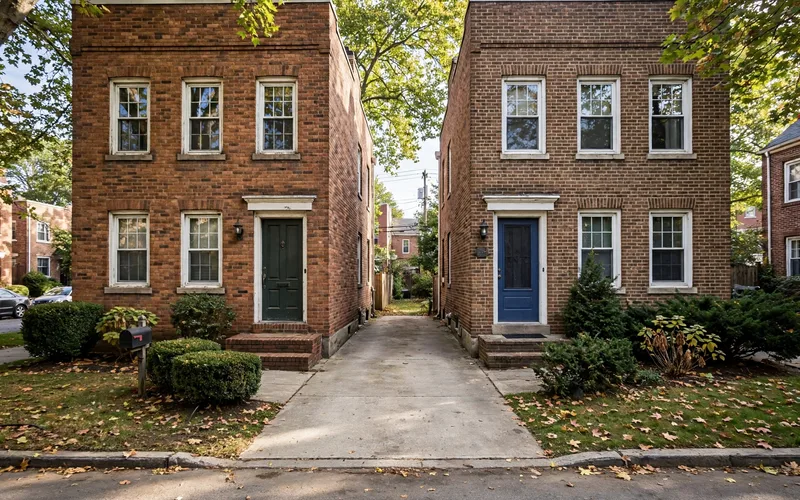
A shared driveway or an easement on your property rarely stops a sale in New York — but it can slow one down, shrink your buyer pool, or spark a last-minute dispute if nobody sorts out the paperwork first. In older Queens and Long Island neighborhoods, shared driveways are common: two houses built close together, one strip of concrete, and an arrangement that may have been formal, informal, or forgotten decades ago. If you want to sell your house fast in New York, it pays to understand what rights your neighbor has, what you must disclose, and how to keep the deal moving.
What Is an Easement — and What Is a Shared Driveway?
An easement is a legal right for someone else to use part of your land for a specific purpose. You still own the land, but the easement holder has a long-term right to use it as the easement describes — for example, to drive across it to reach their own home. Easements usually “run with the land,” so they stay attached to the property when it is sold, and a new owner inherits the same rights and obligations. A shared driveway — the most common residential easement in New York City and Long Island — is simply two neighboring homes using one driveway, often because the lots are narrow or one home sits behind the other with no direct street access.
The Main Types of Easements
- Easement appurtenant — the typical shared-driveway easement. It benefits one property, burdens the neighboring one, and transfers automatically with the land.
- Easement in gross — benefits a person or a company rather than a neighboring property, most often a utility company with the right to run power lines, pipes, or cables across your lot.
- Easement by necessity — when a property has no other access to a public road, a court may recognize an easement over a neighbor’s land. Uncommon, but not unheard of on older Long Island parcels.
- Prescriptive easement — in New York, a person can gain a legal right to use someone else’s land if they have used it openly, continuously, and without the owner’s permission for at least 10 years. Permitted use can never become a prescriptive easement, and a prescriptive easement gives only a right to use the land, not ownership of it.
How Shared Driveways Are Usually Set Up
The cleanest setup is a written easement recorded with the county, spelling out who can use the driveway, who maintains it, and how costs are split. A recorded maintenance agreement is even better: it sets cost-sharing percentages, how repairs are approved, and how disputes are resolved — and because it is recorded, it binds future owners of both properties. Many older New York homes have no written agreement at all; the driveway was shared for decades by habit, and that is where problems usually start.
How a Shared Driveway or Easement Can Affect Your Sale
An easement does not automatically reduce your home’s value. A well-documented shared driveway in good condition has little effect on what buyers will pay — but a disputed, undocumented, or deteriorating one can cost you:
Fewer interested buyers. Some buyers will pass on a home with a shared driveway, especially if the neighbor relationship is strained or the arrangement is unclear. A smaller buyer pool can mean a longer time on market and lower offers.
Appraisal, title, and lender questions. An appraiser will note the easement and compare your home with similar sales; in most residential sales, any effect on value is already reflected in comparable sales data. The buyer’s title search will reveal recorded easements, which the insurer typically lists as exceptions — that is normal. What worries buyers is an easement that is vague, unrecorded, or disputed. A mortgage lender may also ask for the easement and the maintenance agreement before approving the loan, and if no agreement exists, the lender may require one before closing.
Delays and renegotiations. Easement questions tend to surface late, during the title search or attorney review. A buyer who discovers an undisclosed easement at that stage may ask for a price reduction, demand repairs, or walk away entirely.
What New York Law Says About Easements and Disclosure
This section is general educational information about New York law, not legal advice. Easement disputes are fact-specific, so talk to a New York real estate attorney before you act.
Under New York’s Property Condition Disclosure Act (Real Property Law § 462), sellers of one- to four-family homes must complete a Property Condition Disclosure Statement before the buyer signs a binding contract of sale. Question 4 asks directly whether anybody other than the seller has a lease, easement, or any other right to use or occupy any part of the property. The form is based on the seller’s actual knowledge, but a knowingly false or incomplete answer can expose you to a claim for actual damages. Since March 20, 2024, sellers can no longer skip the form by giving the buyer a $500 credit at closing — that opt-out is gone.
A few other points worth knowing:
- Easements run with the land. Selling does not end an easement. The buyer takes the property subject to it, and the neighbor keeps the same rights after closing.
- A prescriptive easement needs 10 years. In New York, use that is open, notorious, continuous, and without permission for at least 10 years can create a prescriptive easement. Courts decide these claims case by case, and the burden of proof is high.
- Removing an easement takes agreement or a court order. You cannot end a neighbor’s easement on your own; it generally takes a written release from the easement holder, recorded with the county — or a court decision.
- Informal permission is not an easement. Letting a neighbor use your driveway as a courtesy does not create one. But if that use continues openly for 10 years without permission being documented, the neighbor may later claim a prescriptive right — which is why putting permission in writing matters.
Common Shared-Driveway Problems That Complicate a Sale
There Is No Written Agreement
This is the most common problem, especially in Queens and older Long Island neighborhoods where driveways have been shared for generations. Without a written agreement, nobody can say with certainty who pays for repaving, who clears snow, or who decides when repairs happen — and a driveway used for years with no recorded easement leaves the buyer guessing whether it is a prescriptive easement in the making or a revocable permission. Buyers see that uncertainty and discount for it, or walk away.
Parking, Blocking, and Maintenance Disputes
A shared driveway only works if both households can get in and out, and parked cars or a neighbor’s guests blocking the drive are the fastest route to a dispute. Driveways also crack, settle, and need resurfacing; when the agreement is silent, the general practice is that the party who benefits bears the maintenance cost, and where both benefit, costs are typically shared in proportion to use. But “typically” is not a contract, and a large resurfacing bill has ended more than one neighborly relationship.
A Neighbor Who Will Not Cooperate
Sometimes the neighbor refuses to sign an agreement, disputes the easement’s boundaries, or claims a wider right than the documents support. You cannot force a neighbor to sign, and litigation over a driveway is expensive relative to what is at stake. In that situation, document everything, let your attorney handle communication, and be realistic with buyers about the status.
How to Sell a House With a Shared Driveway or Easement
You can sell a house with a shared driveway or an easement — thousands of New York homeowners do every year. The difference between a smooth sale and a stalled one is preparation:
1. Get the documents together first. Pull your deed, survey, title report, and any driveway agreement before you list. Your deed and the title search will list recorded easements, and in Manhattan, Brooklyn, Queens, and the Bronx you can check them yourself in ACRIS, the NYC Department of Finance’s Automated City Register Information System (Staten Island records sit with the Richmond County Clerk; Nassau and Suffolk with the county clerk). Gathering the documents you need to sell your house for cash is easier when you start early.
2. Talk to your neighbor early. If there is no written agreement, ask your neighbor to sign a simple shared driveway maintenance agreement before the sale closes — ideally before you list. A cooperative neighbor and a recorded agreement remove the biggest objection a buyer can raise.
3. Disclose honestly. Answer the Property Condition Disclosure Statement truthfully and tell your agent and attorney about the easement up front. A disclosed easement is a manageable fact; one a buyer discovers late looks like a hidden problem, even when it is not.
4. Price with the easement in mind, and keep the driveway presentable. If the driveway is in good shape and the paperwork is clean, price normally. If the arrangement is undocumented or the driveway needs work, be realistic — or fix what you can before listing. Repave or patch what you can, clear clutter, and make sure both households can use the drive on showing days.
5. Consider an as-is sale if the situation is messy. If the neighbor will not cooperate, the paperwork is missing, or you need to move quickly, a traditional buyer may not be the best fit. A sell as-is route skips the repair negotiations, the lender’s easement questions, and the back-and-forth with the neighbor’s attorney. Cash Buyers NY buys houses as-is across New York City and Long Island, including homes with easements and shared driveways, and you can get a cash offer without listing or making repairs.
Frequently Asked Questions
Does a shared driveway lower my home’s value?
Not necessarily. A shared driveway in good condition with a clear, recorded agreement has little effect on value. A deteriorating driveway with no agreement and a history of disputes can put buyers off and lead to lower offers.
Can an easement be removed before I sell?
Only with the easement holder’s agreement or a court order. The usual route is a written release signed by the neighbor and recorded with the county. You cannot remove a recorded easement on your own.
Do I have to disclose an easement when selling in New York?
Yes. The Property Condition Disclosure Statement required by Real Property Law § 462 asks whether anyone else has an easement or other right to use your property. Answer based on your actual knowledge. Even if the sale were exempt from the form, the easement would still appear in the buyer’s title search.
Will a cash buyer purchase a house with a shared driveway or easement?
Yes. Cash buyers evaluate the property as it is, easement included. Because there is no mortgage lender to satisfy and no repair list to negotiate, easement and shared-driveway issues that stall traditional sales are often not deal-breakers for a cash purchase.
The Bottom Line
A shared driveway or an easement is a fact about your property, not a verdict on your sale. Find out what is recorded, put any handshake arrangement in writing, disclose it honestly, and price the home for what it is. Most buyers will accept a documented easement without hesitation — what they will not accept is a surprise. If the neighbor situation is difficult or you need to move fast, selling as-is to a cash buyer can take the easement question off the table entirely. Reach out to Cash Buyers NY for a no-obligation cash offer and see what your home is worth, shared driveway and all.

Jeff is part of the team at Cash Buyers NY, a cash home-buying company serving New York City and Long Island from Bellerose, Queens. The company buys houses as-is in any condition — no repairs, no agents, no commissions, and no financing contingencies — through a straightforward cash-offer process. Jeff covers the questions New York homeowners actually ask: how long a cash sale takes, what it costs, how co-op boards and inheritance work, and when selling as-is makes sense.