
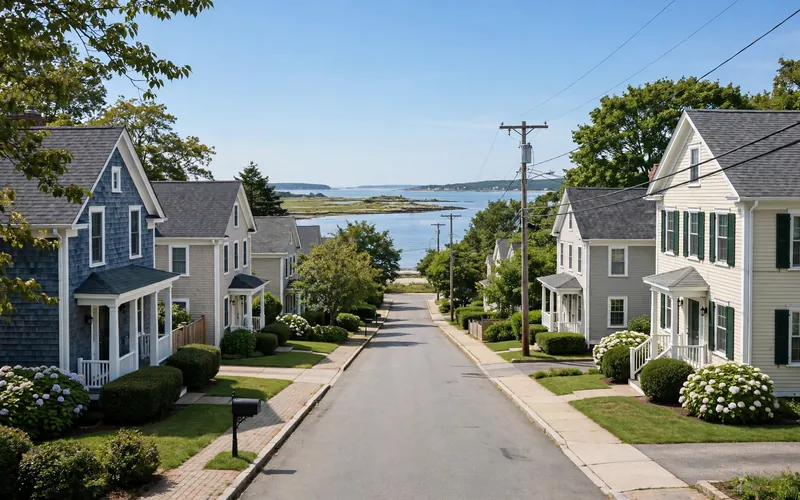
A flood zone designation does not make a New York City home unsellable. Around 32,042 buildings sit inside the 100-year floodplain on the city’s effective flood maps, according to a 2026 analysis of city records — and homes in those neighbourhoods change hands every week. What the designation does change is how the sale works: what you must disclose, who can buy with a mortgage, how the home is priced, and which paperwork keeps the deal moving. If you want to sell your house fast in New York, understanding the designation first is what stops it becoming a problem later.
What Your Flood Zone Designation Actually Means
FEMA’s Flood Insurance Rate Maps sort land into zones. The letters matter more than the colours on the map:
- Zones starting with A or V are the Special Flood Hazard Area (SFHA) — the high-risk “100-year floodplain,” with a 1% chance of flooding in any given year. FEMA puts the chance of flood damage over a 30-year mortgage at 26% for a home in an SFHA.
- Zone AE, AH and VE carry a published Base Flood Elevation (BFE) — the height floodwater is expected to reach in the base flood. AE is the most common high-risk zone in the city; VE adds wave action on the coast; AH covers shallow flooding. A plain Zone A has no published elevation.
- Zone X (shaded) is moderate risk — the 500-year floodplain, with a 0.2% annual chance. Zone X (unshaded) is minimal risk on the map, which is not the same as no risk: FloodSmart reports that nearly one-third of National Flood Insurance Program claims from 2014 to 2024 came from outside high-risk areas.
Check your own address on FEMA’s Flood Map Service Center and on the city’s Flood Hazard Mapper, and note whether any part of the building itself sits inside the zone.
New York’s Flood Disclosure Rules Changed in 2024
Under New York’s Property Condition Disclosure Act (Real Property Law § 462), sellers of one-to-four-family homes must complete the Property Condition Disclosure Statement and deliver it to the buyer before the buyer signs a binding contract of sale. An amendment effective 20 March 2024 eliminated the old $500 credit that let sellers skip the form entirely, and added a block of flood questions — questions 10 to 17 of the current form, plus a question on water penetration. Sellers must state, based on their actual knowledge:
- whether any or all of the property sits in a FEMA-designated floodplain;
- whether it sits wholly or partly in a Special Flood Hazard Area on FEMA’s current maps;
- whether it sits wholly or partly in a moderate-risk (500-year) flood hazard area;
- whether federal law requires flood insurance to be obtained and maintained on the property;
- whether federal disaster flood assistance has ever been received for flood damage;
- whether flood insurance is currently in place, and whether a FEMA elevation certificate is available;
- whether a flood damage claim has ever been filed with any insurer, including the National Flood Insurance Program; and
- whether the property has experienced water penetration or damage from seepage or a natural flood event.
A few points matter in practice. “Unknown” is a permitted answer, and an honest one is far safer than a guess — but a seller who has lived in the home for years and answers “unknown” to everything will lose buyer trust fast. If you learn something new between signing the statement and closing, you must provide a revised one. Liability under the Act is for a willful failure, with the buyer able to claim actual damages — and the statute expressly preserves separate fraud and misrepresentation claims.
Two limits are worth knowing. The Act does not apply to condominium units or cooperative apartments, which are expressly excluded — so a co-op seller in a flood-zone building has no disclosure statement to complete, though the building’s own records still matter to buyers. And estate, foreclosure and other fiduciary sales are generally exempt. The current form is published by the New York Department of State, and a plain-English walkthrough of the 2024 changes is available from Aronov Law NY. This is legal information, not legal advice — talk to a New York real estate attorney about your own transaction before you sign anything.
How a Flood Zone Changes Your Buyer Pool
The designation shapes who can buy your home, not just who wants to. If a property sits in an SFHA and the buyer uses a federally backed mortgage, federal law requires flood insurance to be obtained and maintained — the lender will not close without it. That requirement adds a real monthly cost to a financed buyer’s budget, directly reducing the mortgage they qualify for and the offer they can make. Our companion guide on rising flood insurance costs in NYC breaks down what owners are actually paying and why premiums keep climbing under FEMA’s Risk Rating 2.0 pricing.
It also narrows the pool. Some financed buyers walk away once they see the insurance figure; others stay but negotiate on it, or ask for an elevation certificate, a survey, or extra time for their lender’s flood determination. Each of those steps is a point where a traditional sale can stall.
It also changes the appraisal conversation: appraisers account for carrying costs, so two otherwise identical homes with very different insurance bills do not sell for the same price. If your home has already had flood or water damage, read our guide to selling a house with water damage in New York for how that history affects a sale.
Pricing a Flood-Zone Home Honestly
The most common pricing mistake in a flood zone is comparing your home with the wrong neighbours. Comparable sales should come from the same flood zone, not just the same street — a house two blocks away in unshaded Zone X is not a fair comp for an AE-zone home with a $2,000 annual premium, because the buyer of your home inherits a carrying cost the other buyer does not.
Price the carrying cost in rather than hoping the buyer will not notice it — they will, because their lender and insurer will both flag it before closing. A home priced with the designation already reflected in it tends to sell faster than one priced as if the zone did not exist and then chipped down through renegotiation.
Paperwork That Smooths the Sale
Gather these before you list:
- An elevation certificate, if one exists. Prepared by a licensed surveyor, it records your lowest floor elevation against the Base Flood Elevation. Under Risk Rating 2.0 it is not required for pricing, but if FEMA’s elevation estimate is wrong, a certificate can lower a premium — and providing one can never raise it.
- Your insurance history. Current policy details, past claims, and any FEMA disaster assistance received. The disclosure form asks for all of it, and a documented history negotiates better than gaps.
- Mitigation and repair records. Elevation work, flood vents, sump pumps, regrading, and any repairs after past flooding — with dates, permits and receipts where you have them.
- Any transferable discounts. NFIP discounts are generally transferable to a buyer at sale, which is a genuine selling point in a flood-zone transaction.
There is also a formal route if you believe the map itself is wrong. A Letter of Map Amendment (LOMA) is FEMA’s determination that a structure on natural high ground was drawn into the SFHA in error; a Letter of Map Revision based on Fill (LOMR-F) covers ground raised by engineered fill. Both need a licensed surveyor or engineer and an elevation certificate, and FEMA’s own guidance says a determination can take up to 90 days — so start before you list. A successful LOMA removes the federal mandatory-purchase trigger for a federally backed mortgage, but it does not change the actual flood risk. See FEMA’s Letter of Map Change FAQ for the process.
Your Options for Selling
A flood-zone home can be sold the traditional way, and many are — with full disclosure, honest pricing and the paperwork above in hand. But weigh the trade-offs plainly. A traditional listing reaches the widest audience, yet every financed buyer brings the lender’s flood-insurance requirement, the appraisal risk, and the chance of renegotiation once the insurance quote lands.
The alternative is to sell as-is to a cash buyer. A cash buyer does not need a mortgage, so the lender’s flood insurance requirement does not apply to the purchase in the same way, and there is no appraisal contingency for a lender to trip over. That removes the two most common failure points in a flood-zone deal. It is also the route sellers choose when the home has already flooded: our guide to selling a flooded home in New York covers that situation in detail. A cash offer will reflect the flood risk and the condition of the home — no serious buyer pretends otherwise — but the trade is certainty and speed against the highest possible price. If you want a sense of the timeline, see how long a cash sale takes in NYC: typically days to a couple of weeks from offer to close rather than months.
Frequently Asked Questions
Can you sell a house in a flood zone in NYC?
Yes. A flood zone designation does not prevent a sale. It changes the sale: you must disclose the designation and flood history on the Property Condition Disclosure Statement, financed buyers must carry flood insurance, and the price should reflect the carrying cost. Homes in flood zones across the five boroughs and Long Island sell regularly.
Do I have to tell buyers my house is in a flood zone?
If you are selling a one-to-four-family home, yes. Since the March 2024 amendment to New York’s Property Condition Disclosure Act, the disclosure statement asks directly whether the property is in a FEMA floodplain, in a Special Flood Hazard Area, or in a moderate-risk area, and whether any flood claims or federal disaster assistance were ever received. The old $500 opt-out no longer exists. Condominium and co-op sales are excluded from the Act.
Will a buyer need flood insurance?
If the home is in a Special Flood Hazard Area and the buyer uses a federally backed mortgage, yes — federal law requires flood insurance to be obtained and maintained. Cash buyers are not subject to that lender requirement. Buyers in moderate- and low-risk zones are not legally required to carry it, though many choose to, since a significant share of flood claims come from outside high-risk areas.
Can I get my house removed from the flood zone map?
Sometimes. If your structure sits on natural high ground that FEMA’s map drew into the flood zone in error, you can apply for a Letter of Map Amendment (LOMA) with an elevation certificate from a licensed surveyor. FEMA says a determination can take up to 90 days. A successful LOMA removes the mandatory insurance purchase requirement for federally backed mortgages, but it does not change the actual flood risk.
The Bottom Line
A flood zone designation is a fact about your home, not a verdict on it. The sellers who do best are the ones who treat it that way: learn the exact zone and elevation, answer the 2024 disclosure questions completely and honestly, price the carrying cost in from the start, and gather the elevation certificate and insurance history before the first showing.
If the traditional route looks slow or fragile for your situation — a high-risk zone, a history of claims, or a home that has already flooded — a direct cash sale removes the lender and appraisal friction in one step. Cash Buyers NY buys homes directly across New York City and Long Island, in as-is condition. Call 646-920-8900 or get a free cash offer online to see what your home could bring, flood zone and all.

Jeff is part of the team at Cash Buyers NY, a cash home-buying company serving New York City and Long Island from Bellerose, Queens. The company buys houses as-is in any condition — no repairs, no agents, no commissions, and no financing contingencies — through a straightforward cash-offer process. Jeff covers the questions New York homeowners actually ask: how long a cash sale takes, what it costs, how co-op boards and inheritance work, and when selling as-is makes sense.