
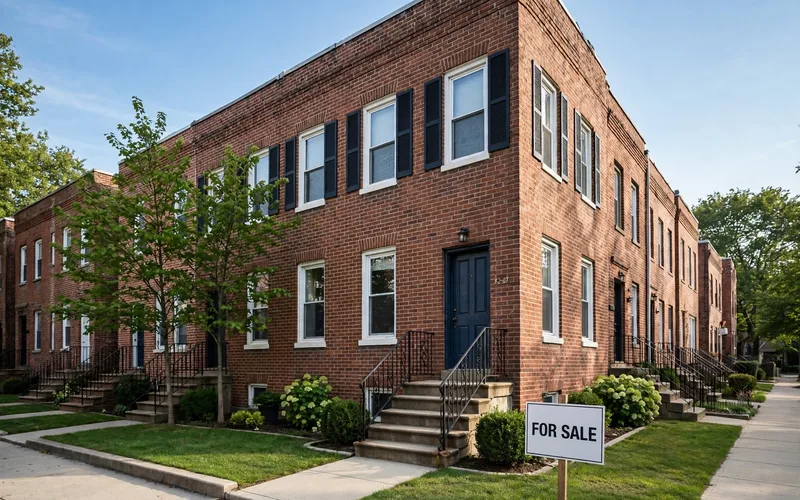
A second mortgage does not stop you from selling your home in New York. Whether it is a home equity loan from a renovation or a home equity line of credit (HELOC) drawn on over the years, the loan is paid off from the sale proceeds at closing — first mortgage first, second mortgage second — and you keep whatever is left. The process only gets complicated when the sale price does not cover everything you owe, or when the second lender is slow to provide a payoff figure. This guide explains how it works in New York, what to do when the numbers are tight, and how to keep the sale on track. If you need to sell your house fast in New York while a second loan is still on the books, the payoff rules are the same — only the timeline changes.
What Counts as a Second Mortgage?
A second mortgage is any loan secured by your home while your first mortgage is still in place. The Consumer Financial Protection Bureau (CFPB) defines it as a loan you take out using your house as collateral while you still have another loan secured by the same house, and calls it a “junior lien” because it is paid off second if the home is sold to repay the debts. The two common forms are a home equity loan, which pays a lump sum at a usually fixed rate, and a HELOC, a revolving line you draw from as needed, usually at a variable rate. A piggyback loan taken out at purchase — for example, an 80-10-10 structure used to avoid private mortgage insurance — is also a second mortgage.
Second mortgages are far from rare. Cotality (formerly CoreLogic) reported that new second mortgages and HELOC originations rose 19.8% in the second quarter of 2026, from $78.2 billion to $93.7 billion, and that the average homeowner with a mortgage holds about $310,000 in equity. Plenty of New York sellers come to the closing table with two loans to clear. A reverse mortgage is a different product with its own repayment rules.
Can You Sell a House With a Second Mortgage in New York?
Yes — you do not need to pay it off before you list the house. Like any lien on a property, it is satisfied at closing from the money the buyer pays. The title company orders a payoff statement from each lender showing the exact balance, including interest through the closing date, and the buyer’s funds pay both loans before the deed transfers. Until both satisfactions are recorded, the buyer does not have clear title.
Payoff statements are usually good for only 10 to 30 days because interest keeps accruing, so they are ordered once a closing date is set. If closing slips past the expiration date, the title company simply orders a fresh one.
How the Payoff Works at Closing
In a typical New York sale with two mortgages, the order of events is straightforward. The title search finds both mortgages on the public record, along with any other liens. The title company or your attorney requests a written payoff statement from each lender. At closing, the buyer’s funds are disbursed in order: the first mortgage is paid in full, then the second, then any remaining liens or unpaid taxes, and the balance goes to you.
For example, on a $650,000 sale with a $380,000 first mortgage payoff and a $60,000 second mortgage payoff, both loans are paid from the proceeds and the remaining equity is yours. You do not need cash in hand to clear the second loan before the sale.
One detail to confirm early: if your second mortgage is a HELOC, the lender may require a written request to close the line and issue a payoff. Under New York law, the lender’s duty to provide a satisfaction of mortgage for a credit-line mortgage arises on the borrower’s written request, and for standard mortgages the lender must present the satisfaction for recording within 30 days of payoff or face penalties of $500, $1,000, or $1,500 at the 30, 60, and 90-day marks. Ask your attorney to request the HELOC payoff and account closure in writing as soon as you accept an offer.
What If the Sale Price Doesn’t Cover Both Loans?
If your first and second mortgage balances add up to more than your home will sell for, the proceeds cannot pay everyone in full. You have three realistic options.
Bring cash to closing. If the shortfall is small, paying the difference out of pocket lets both lenders be paid in full and the sale close normally.
Negotiate a short sale. If you cannot cover the gap, both lenders must agree to accept less than they are owed before the sale can close. The first lender typically controls the process and allocates a small negotiated payoff to the junior lienholder — often just a few thousand dollars — because in a foreclosure the second lender might recover nothing at all once the first mortgage is paid. Approval from the first lender alone is not enough; every lienholder must agree to release its claim.
Explore alternatives before listing. A loan modification may reduce your payments enough to keep the home, and some owners decide to sell their house to pay off debt while they still have enough equity to walk away with cash. Talk the numbers through with your attorney first.
Two warnings matter here. First, a lender agreeing to release its lien is not the same as forgiving the remaining debt — unless the approval letter states in writing that the balance is satisfied and any deficiency is waived, the lender may still pursue the shortfall. Second, check the tax consequence: the federal exclusion that kept forgiven mortgage debt out of taxable income expired for debt discharged on or after January 1, 2026. Forgiven debt from a 2026 short sale is generally taxable unless another exclusion, such as insolvency or bankruptcy, applies. Get advice from a tax professional before you agree to any short payoff.
HELOCs Need Extra Attention Before You Close
A HELOC causes most of the surprises at the closing table, because the line may still be open — a draw taken after the payoff statement is issued changes the balance. Ask the lender to freeze the line as soon as you accept an offer, and do not use the card or checks tied to the account while the sale is pending.
Old second mortgages can also resurface unexpectedly. Some second liens from before the 2008 financial crisis were charged off and sold to debt collectors without ever being discharged of record — so-called “zombie” second mortgages. The CFPB issued guidance in 2023 warning collectors against threatening foreclosure on time-barred second mortgage debt, but a lien that still shows on the title search must be dealt with before closing, even if the debt itself is old. This is one more reason to order a title search early rather than a week before closing.
Finally, check whether any mortgage you paid off years ago was actually discharged on the record. A stale lien can hold up a sale until it is cleared, and in New York City you can search the record yourself through the Department of Finance’s ACRIS system.
Problems That Delay a Sale (and How to Avoid Them)
Most delays are avoidable: a payoff statement that expires before closing, a second lender that takes weeks to respond, an old satisfaction that was never recorded, or a tax lien surfacing late in the title search.
Request payoff figures from both lenders as soon as you have an accepted offer, confirm the HELOC freeze and closure request in writing, and let your attorney order the title search early. If the second lender is unresponsive, your attorney can escalate — a firm written request with a closing date attached usually gets a response.
Selling to a Cash Buyer With a Second Mortgage
A cash sale does not make a second mortgage disappear — the payoff still comes out of the proceeds, and if they fall short you still need a short-sale approval or cash to close. What it removes is the buyer’s mortgage contingency: no bank appraisal, no underwriting, and no lender timeline. That matters when the second lender is slow with paperwork or a traditional buyer’s financing could fall apart over the extra lien.
The appeal is a shorter, simpler path to the closing table: you can sell as-is without repairs or showings, and the title company handles both payoffs the same way it would in any other sale. If you want to see what that looks like for your home, you can get a cash offer and compare the net proceeds against a traditional listing.
Frequently Asked Questions
Do I have to pay off my second mortgage before I list my house?
No. The second mortgage is paid off at closing from the sale proceeds, after the first mortgage. You only need the sale price to cover both payoffs plus closing costs — or a plan, such as a short sale, if it does not.
What happens if my house sells for less than my first and second mortgages combined?
You can bring cash to closing to cover the gap, or negotiate a short sale in which both lenders agree to accept less. Any agreement should state in writing whether the remaining balance is forgiven.
Can a second mortgage lender block my sale?
Only when the proceeds are not enough to pay the lender in full. If the payoff is covered, the lender is simply paid at closing. If it falls short, the lender must agree to a reduced payoff before the sale can close.
How long does it take to get a payoff statement for a second mortgage?
Usually a few business days to a couple of weeks. HELOC payoffs can take longer because the lender must also close the line, so request it in writing as early as possible.
Is a reverse mortgage a second mortgage?
No. A reverse mortgage is a separate type of loan for homeowners age 62 and older, with its own repayment rules. If you have one, see our guide to selling a house with a reverse mortgage.
The Bottom Line
Selling a house with a second mortgage in New York is routine as long as the sale price covers both loans — the title company pays the first mortgage, then the second, and you keep the rest. The work is in the details: written payoff figures early, a frozen HELOC, and confirmation that old liens were discharged. When the price does not cover everything you owe, bring in your attorney early and get any short-payoff agreement in writing — including whether the remaining balance is forgiven — before you sign a contract. If you want a straightforward path without buyer financing delays, request a no-obligation cash offer from Cash Buyers NY and see what your home nets after both mortgages are paid.

Jeff is part of the team at Cash Buyers NY, a cash home-buying company serving New York City and Long Island from Bellerose, Queens. The company buys houses as-is in any condition — no repairs, no agents, no commissions, and no financing contingencies — through a straightforward cash-offer process. Jeff covers the questions New York homeowners actually ask: how long a cash sale takes, what it costs, how co-op boards and inheritance work, and when selling as-is makes sense.