
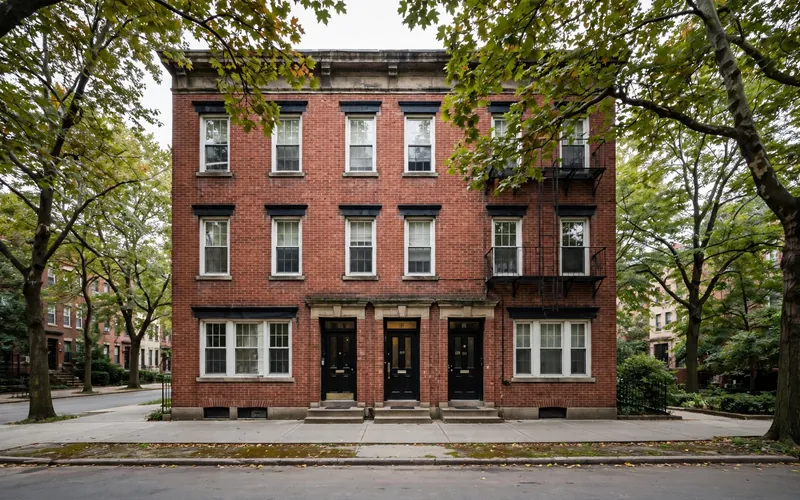
When several people inherit a house together in New York, disagreements are almost inevitable. One sibling wants to sell and split the money, another wants to keep the house in the family, and a third may have already moved out and stopped paying the taxes. If the heirs cannot reach an agreement, New York law gives any single co-owner a way to force the issue: a lawsuit called a partition action. If you have inherited a house in New York and a dispute with your co-owners is brewing, it helps to know how partition works, what it costs, and what alternatives exist before the lawyers get involved. For owners who want to skip the courtroom, selling an inherited house directly is often a far faster way out.
What Is a Partition Action in New York?
A partition action is a lawsuit that asks a court to divide jointly owned real property or, more commonly, order the property sold so each owner can receive their share of the proceeds. Partition actions in New York are governed by Article 9 of the Real Property Actions and Proceedings Law (RPAPL), and Section 901 gives any co-owner — whether a joint tenant or tenant in common — the right to bring one, regardless of how small that person’s ownership share is.
In practice, physically dividing a single-family or two-family house between owners is rarely possible without destroying its value. Courts therefore typically order a partition by sale: the property is sold and the net proceeds are distributed among the co-owners in proportion to their ownership interests, after costs and certain adjustments.
Who Can File a Partition Action?
Any person who holds and possesses real property as a joint tenant or tenant in common may file for partition. That includes siblings who inherited a parent’s house together, unmarried partners who bought a home jointly, and former spouses after a divorce. The right to partition is considered absolute under New York law unless there is a countervailing condition, such as a written agreement in which the owners waived the right to partition.
One important exception: spouses who own property as tenants by the entirety generally cannot force a partition against each other while they remain married. And when the dispute is between a life tenant and the remaindermen who will inherit later, partition is usually the wrong tool — those cases fall under RPAPL Article 16 instead, which asks whether a sale is expedient rather than dividing interests among co-owners.
How a Partition Action Works, Step by Step
Filing the lawsuit and the interlocutory judgment
The action begins in the Supreme Court of the county where the property is located. The co-owner seeking a sale files a complaint naming all other owners (and any lienholders), and must establish joint ownership and that a physical division of the property cannot be made without great prejudice to the owners. Where the facts are not disputed, courts can grant summary judgment on the issue — meaning the case proceeds to sale without a trial. Once the court resolves the ownership shares and whether the property will be divided or sold, it issues what is called an interlocutory judgment.
The court-appointed referee
The court then appoints a referee — a neutral party, typically an experienced real estate attorney — to carry out the sale. The referee lists the property, handles showings, negotiates offers, and can even sign the deed and listing agreement on behalf of any co-owner who refuses to cooperate. This is why partition actions work even when one owner tries to block the sale: the court does not need every owner’s consent once it has ordered a sale.
Sale and distribution of the proceeds
After the sale closes, the court conducts a final accounting. Court costs, the referee’s fees, brokerage commissions, and sometimes the attorneys’ fees that benefited all owners are paid from the proceeds first, and the remainder is distributed according to each co-owner’s adjusted ownership share. The accounting can include credits and offsets — for example, an owner who paid the mortgage or property taxes alone during the dispute may be reimbursed from the proceeds before they are split.
New York’s Heirs Property Protections (RPAPL §993)
In 2019, New York adopted its version of the Uniform Partition of Heirs Property Act, codified at RPAPL §993. The law was designed to stop speculators from buying a small inherited interest and using a partition action to force a sale at a fraction of the property’s real value.
For property that qualifies as heirs property — generally, real estate held by relatives as tenants in common, used for residential or agricultural purposes — the court must order an appraisal, let the co-owners who did not ask for the sale buy out the co-owner who did at the court-determined value, and prefer a physical division of the property over a sale unless division would cause great manifest prejudice to the owners as a group. A sale under these rules is presumptively conducted on the open market rather than by auction.
How Much Does a Partition Action Cost?
Partition lawsuits are not cheap, and the costs come off the top before anyone sees a dollar. Typical expenses include court filing fees (the Supreme Court index number is $210, a request for judicial intervention is $95, and each motion costs $45), a title search, and a court-ordered residential appraisal that generally runs from several hundred to a few thousand dollars. The referee is compensated from the sale proceeds, and a brokerage commission on the sale is charged at the standard percentage.
Attorney’s fees are the largest variable. Uncontested cases where everyone agrees on the outcome can cost a few thousand dollars in legal fees, while contested cases with disputed ownership shares or contribution claims routinely run $20,000 or more. Under RPAPL §981, the court can direct that costs and reasonable counsel fees for work that benefited all the owners be paid from the sale proceeds before distribution — which means even the owners who fought the sale share the expense. For a fuller picture of the paperwork and costs involved in a typical cash sale, see our guide to the documents needed to sell a house for cash in New York.
How Long Does a Partition Action Take?
There is no fixed timeline, and New York’s crowded Supreme Court calendars add to the uncertainty. Buyouts negotiated early can resolve in 30 to 60 days, and straightforward uncontested cases often take four to eight months from filing to distribution. Contested cases — those with disputes over ownership percentages, valuations, or financial contributions — commonly take 12 to 24 months, and appeals can add another year or more. Properties subject to the heirs-property rules tend to take longer because of the mandatory appraisal and buyout waiting periods built into the statute.
Alternatives to a Forced Partition Sale
A partition action is a last resort, and most real estate attorneys will tell you that a negotiated outcome is faster, cheaper, and better for everyone. Before anyone files:
- Negotiate a buyout. One co-owner buys out the others at an agreed price, often based on an independent appraisal. This keeps the property out of court entirely.
- Agree to a voluntary sale. All owners list the property together and split the net proceeds — the same result as a partition sale, without the referee’s fees and legal bills.
- Use mediation. A neutral mediator helps the co-owners reach a written settlement agreement that the court can approve without a full trial.
- Sell as-is to a cash buyer. When the owners agree that the house should be sold but disagree on timing or the hassle of repairs, selling as-is to a cash buyer can close in weeks rather than months, with no appraisal contingencies or court-appointed referee taking a cut. If title or estate paperwork is still unresolved, the guidance in selling property in New York without a deed may also help.
The longer owners wait, the more the property can deteriorate and the more legal fees eat into everyone’s share. Owners who decide to sell before the probate process is fully complete should also review the myths and mistakes that commonly derail New York estate sales.
Frequently Asked Questions
Can one heir force the sale of an inherited house in New York?
Yes. Any co-owner, including an heir who owns only a small share, can file a partition action under RPAPL Article 9 and ask the court to order a sale if the property cannot be divided fairly. Other heirs cannot simply veto it, although heirs-property protections may give them a chance to buy out the heir who filed.
Can a co-owner sell their share without the others’ consent?
Each co-owner can sell or transfer their own interest to a third party without permission from the other owners. The buyer simply steps into the seller’s shoes as a co-owner. This is how speculative investors sometimes acquire a stake in an inherited property — which is precisely the situation New York’s heirs-property law was written to address.
Do partition sale proceeds get divided equally?
Not necessarily equally — they are divided according to each co-owner’s ownership interest, adjusted by credits and reimbursements. An owner who paid taxes, insurance, or maintenance on their own, or one who collected all the rental income, will typically see an adjustment in the final accounting.
Can I stop a partition action filed against me?
Possible defenses include proving the plaintiff has no ownership interest, showing an agreement that waived the right to partition, or — for heirs property — exercising your right to buy out the plaintiff at the appraised value. In most cases, though, the practical move is to negotiate a buyout or an agreed sale rather than fighting the lawsuit itself.
Do I owe taxes on proceeds from a partition sale?
A partition sale is treated as a sale for tax purposes. However, inherited property generally receives a stepped-up basis to its fair market value at the time of the decedent’s death, which often eliminates most or all of the capital gain. If the property was your primary residence, the federal home-sale exclusion may also apply. Tax situations vary widely, so consult a qualified tax professional about your specific circumstances.
The Bottom Line
A partition action gives any co-owner of an inherited house in New York the power to force a sale — but the price is steep: months or years of litigation, thousands in fees paid from everyone’s share, and a sale process you no longer control. In most family situations, a negotiated buyout or an agreed sale leaves every heir with more money and less damage to the relationship. If you and your co-owners agree the house should go, selling it as-is for cash avoids the courtroom, the referee, and the repair list in a single step. Request a free cash offer from Cash Buyers NY today, or call 646-920-8900 to talk through your options.

Jeff is part of the team at Cash Buyers NY, a cash home-buying company serving New York City and Long Island from Bellerose, Queens. The company buys houses as-is in any condition — no repairs, no agents, no commissions, and no financing contingencies — through a straightforward cash-offer process. Jeff covers the questions New York homeowners actually ask: how long a cash sale takes, what it costs, how co-op boards and inheritance work, and when selling as-is makes sense.