
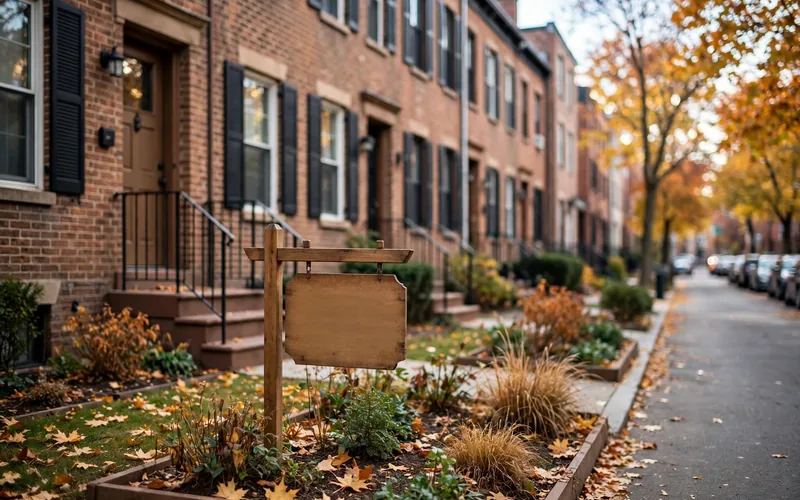
When your listing agreement runs out and the house still hasn’t sold, it’s hard not to feel discouraged. Months of showings and price discussions, and the listing is gone with nothing to show for it. If your listing expired in NYC and you’re wondering what to do next, start here: you are not starting from zero. An expired listing is a signal, not a verdict — and many sellers in this exact position end up selling on better terms the second time around.
This guide covers what an expired listing means in New York, the contract clause to check first, and your six realistic options — relisting, renting, or selling as-is for cash.
What “Expired Listing” Actually Means
A listing expires when your agreement with your broker reaches its end date without a sale. In New York City, exclusive right-to-sell agreements typically run 90 to 180 days (the national median in competitive markets is around 120 days). Once that date passes, the listing comes off the MLS and portals like StreetEasy, and you’re free to make a new decision.
Don’t confuse expired with two other statuses. A withdrawn listing is temporarily removed while the agreement is still active — you’re still under contract. A cancelled listing ends the agreement early, usually requiring a written cancellation. Each status carries different obligations about when you’re free to act: expired, withdrawn, and cancelled listings each have their own rules.
The key point: an expired listing means your agreement ended on its own terms. Nobody needs to fire anyone. What you do need to check is whether your old broker still has any claim on a future sale — more on that below.
Why NYC Listings Expire Without Selling
First, diagnose why the listing failed. Usually it comes down to:
- Pricing. An asking price above comparable recent sales filters your home out of most buyers’ searches from day one — pricing high “with room to negotiate” almost never works in a data-transparent market.
- Stale-listing stigma. The longer a home sits, the more buyers assume something is wrong with it. This stale-listing stigma compounds over time, and relisting at the same price with the same photos rarely breaks it.
- Weak presentation. Dark or dated photos, cluttered rooms, and deferred maintenance quietly kill interest — most buyers tour a home online long before visiting in person.
- Condition and access issues. Tenant-occupied homes, strict showing windows, and properties needing obvious repairs see far fewer serious offers.
- Market timing. Rates near 7% in late 2026 have made buyers more selective and price-sensitive, even with inventory tight.
StreetEasy’s August 2026 market data shows homes entering contract spent a median of 77 days on the market citywide — 93 in Manhattan, 69 in Brooklyn, 73 in Queens — while 21.8% of sales still closed above the latest asking price. Well-priced, well-presented homes are moving. If yours didn’t, the issue was likely positioning rather than the market itself. See our guide to why homes fail to sell in NYC for the full diagnosis.
The One Clause to Check Before You Do Anything
Before you relist, rent, or sell, read the broker protection clause — also called a tail provision — in your old listing agreement. It’s the provision most sellers overlook, and it can cost you a commission months after your listing ended.
A protection clause extends your former broker’s right to a commission — typically for 30 to 90 days after expiration — if the home sells to a buyer they introduced during the listing. How broker protection periods work is straightforward: the trigger is introduction, not an offer. Any buyer who toured the property or attended an open house counts as introduced.
A typical NYC exclusive listing agreement shows what this looks like in practice: a 3-month tail covering no more than six named buyers the broker must deliver in writing within three business days of expiration. Do three things now:
- Ask your former broker for the registered-buyer list. Get it in writing so you know exactly who can trigger the clause.
- Note the tail length. NYC provisions typically run 30 to 90 days; if yours is unclear, have a real estate attorney review it.
- Know that independent buyers are safe. Selling to someone your broker never introduced — for example, a direct cash buyer who found you independently — generally does not trigger the clause.
If you relist with a new agent while the tail is still active, tell them about the clause upfront so everyone understands who owes what if an old lead resurfaces. When in doubt, consult a qualified real estate attorney — this is general educational information, not legal advice.
Your 6 Options After an NYC Listing Expires
The best move depends on your timeline, finances, and patience — start by weighing the agent listing versus a direct cash sale.
1. Relist with the same agent
If your agent marketed aggressively, communicated honestly, and the problem was pricing or timing, staying can make sense. The test: ask what they’d do differently. A concrete answer — new pricing analysis, professional photography, a refreshed launch — signals a second run can work. A vague one suggests the strategy, not the market, was the problem.
2. Hire a new agent
A fresh broker brings new buyer relationships and a clean slate on outreach. But the listing history follows the property, not the agent — a new face doesn’t fix an old price. Interview two or three agents and choose the one with the most data-driven pricing analysis, not the one quoting the highest number to win your business.
3. Take a break, then relist
A 60-to-90-day pause typically resets the days-on-market clock on most platforms, clears the stale-listing stigma, and lets you relaunch with new photos, pricing, and narrative — especially useful if your listing expired in a slow season.
4. Rent the property out
If your timeline is flexible, converting to a rental can be the right call. Manhattan median rent hit $4,900 in September 2026, and Brooklyn has held at or above $4,000 since February — rental demand is real. Only choose this route if you’re prepared for landlord duties (or a property manager, often around 10% of monthly rent) and holding costs don’t strain your finances.
5. Sell it yourself (FSBO)
Once the agreement expires, you’re free to sell without an agent and avoid commissions. This route demands the most: pricing research, marketing, showings, negotiation, closing paperwork. In New York’s attorney-driven process, you’ll still want a real estate attorney. FSBO suits sellers with pricing expertise and time — it’s not a shortcut.
6. Sell as-is to a cash buyer
If you’re done with listings and uncertainty, a direct cash sale closes the loop: the home sells in its current condition — no repairs, no staging, no commissions, no financing contingencies — and can close in days or weeks. For homeowners who want to sell their house fast in New York without relisting, it’s the lowest-effort path from an expired listing to a closed sale. Deal with an established local buyer, not an out-of-area wholesaler.
How to Relist So It Actually Sells This Time
If you go back on the market, don’t just repost the same listing. A successful relisting looks meaningfully different:
- Get a fresh comparative market analysis. Use current pendings and recent closings — not what you hoped the home was worth three months ago.
- Re-shoot everything. New professional photography signals this is a fresh listing, not a recycled one.
- Fix the objections. Address whatever stopped buyers last time — clutter, deferred maintenance, a confusing floor plan.
- Rewrite the copy. Lead with what changed and what the home genuinely offers; buyers who saw the old listing should feel they’re seeing a new opportunity.
- Time the relaunch. Listing in a stronger season gives you the best odds — see the best time of year to sell in New York for how seasonal demand shifts across the boroughs.
Your new agent handles the MLS paperwork; your job is making sure the price, presentation, and timing are all genuinely new.
Frequently Asked Questions
What happens when my NYC listing expires?
Your agreement ends on its own terms, the listing comes off the MLS and portals, and you’re free to relist, sell on your own, rent, or hold. First check the broker protection clause — it may preserve your old broker’s commission claim for 30 to 90 days on buyers they introduced.
Can I relist my home right away after it expires?
Yes — you’re under no obligation to wait. But relisting the next day at the same price with the same photos usually produces the same result, and buyers can see the listing history. A 60-to-90-day pause with a real refresh often performs better.
Does my agent still get a commission after my listing expires?
Only in narrow circumstances. Under the protection (tail) clause, your former broker may be owed a commission if you sell within the tail period — typically 30 to 90 days — to a buyer they introduced during the listing. Selling to an independent buyer they never introduced generally triggers no commission.
Should I relist with the same agent or hire a new one?
Stay if the agent performed well and the problem was pricing or timing — and they have a concrete plan to change. Move on if the marketing was weak or trust has eroded. Either way, choose based on a current comparative market analysis and a specific relaunch strategy.
Is it better to wait before relisting?
Often, yes. A 60-to-90-day break resets days-on-market counters on most platforms, clears the stale-listing stigma, and lets you relaunch in a better season. If you must sell urgently, waiting isn’t required — but the relisting still needs to look and be priced like a new listing.
Can I sell my house for cash after my listing expires?
Yes. Once the agreement expires, you’re free to sell directly to a cash buyer — as-is, with no repairs, commissions, or financing delays. As long as the buyer wasn’t introduced by your former broker during the listing (and any tail period has passed or doesn’t cover them), no agent commission is owed.
The Bottom Line
An expired listing in NYC is frustrating, but it’s also information: the market told you something about price, presentation, or timing. Whether you relist with a sharper strategy, pause and reset, rent for a while, or step off the listing treadmill entirely, the worst move is repeating the same approach and hoping for a different result.
If you’d rather skip the relisting cycle altogether, Cash Buyers NY buys homes directly from NYC and Long Island homeowners as-is — no repairs, no commissions, no waiting for the right buyer. Request a free, no-obligation cash offer and compare your options with real numbers in hand.

Jeff is part of the team at Cash Buyers NY, a cash home-buying company serving New York City and Long Island from Bellerose, Queens. The company buys houses as-is in any condition — no repairs, no agents, no commissions, and no financing contingencies — through a straightforward cash-offer process. Jeff covers the questions New York homeowners actually ask: how long a cash sale takes, what it costs, how co-op boards and inheritance work, and when selling as-is makes sense.