
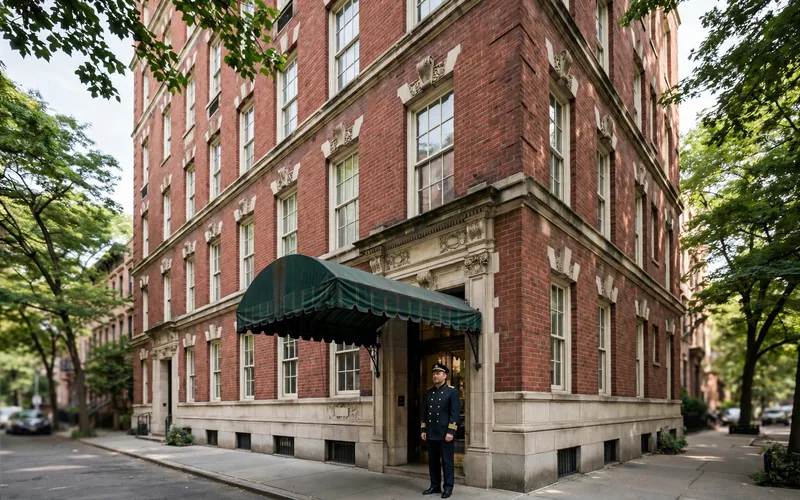
Three out of every four apartments in New York City are co-ops, and co-ops come with something condos, houses, and townhouses don’t: a board of directors that must approve your buyer before you can close. That board review is the single biggest reason co-op sales drag — a financed co-op sale typically takes 75 to 110 days, 30 to 45 days longer than a comparable condo (The Roebling Team, 2026).
But a slow sale isn’t inevitable. If you need to sell a co-op in New York City fast — a relocation, a divorce timeline, maintenance arrears you can’t catch up on, or an inherited unit you don’t want — the playbook below shortens the timeline without forcing you to give the apartment away.
Why Co-op Sales Take Longer (and What Actually Controls the Clock)
When you “own” a co-op, you own shares in the cooperative corporation plus a proprietary lease — not real estate. There’s no deed: at closing, you sign over the stock certificate and lease, and the buyer’s lender records a UCC-1 financing statement instead of a mortgage. Co-op buyers skip mortgage recording tax and title insurance, but financing is a specialized share loan that fewer lenders originate, and buyers must sign a recognition agreement (the standard “Aztech” form) with the co-op (Coltrain Funding, 2026).
The timeline killer is the approval gauntlet: after the contract is signed, the buyer assembles a board package — tax returns, bank statements, employment and reference letters — which the managing agent reviews before it reaches the board, followed by a board interview and then a decision. Boards may legally reject a buyer without giving a reason, as long as the rejection doesn’t violate fair housing laws — which is why an estimated 10 to 20% of co-op contracts fall apart at the board stage (The Roebling Team, 2026). One newer wrinkle works in sellers’ favor: since July 28, 2026, a New York City law requires co-op boards to acknowledge a completed application within 15 days and issue a decision within 45 days — so the board phase now has a legally defined ceiling (HOA Docs Direct, 2026).
The buyer pool is also structurally smaller: foreign buyers, LLC purchasers, investors, and buyers with thin financials are screened out by approval requirements, leaving a pool roughly two to three times smaller than what a condo draws — and most condo boards only hold a rarely exercised right of first refusal (The Roebling Team, 2026). For co-ops, the entire strategy has to be built around the board from day one. If you’re weighing the two ownership types, read how selling a condo in NY differs.
Step 1: Get Your Building Paperwork in Order Before You List
Most co-op sale delays are paperwork delays, and almost all of them are preventable. Before your unit hits the market, pull together:
- Your proprietary lease and the building’s bylaws — this is where your flip tax rate, sublet rules, and resale procedures are spelled out.
- The stock certificate and a copy of your recognition agreement (if you financed the purchase).
- The board’s resale application from the managing agent, so you know exactly what your buyer will need to produce.
- Three years of building financials and the current budget, including any special assessments on the horizon.
- House rules, pet policy, and renovation requirements — common sources of late-stage surprises.
One timing detail: the estoppel and payoff documents the managing agent produces are typically only valid for 30 to 60 days, so order them when the contract is signed rather than months in advance (HOA Docs Direct, 2026). Having a complete, organized document file ready on day one can shave weeks off the process.
Step 2: Price It With the Flip Tax in Your Math
A flip tax is not a government tax — it’s a private transfer fee the co-op charges on every resale, usually 1 to 3% of the sale price, though structures vary by building. The money goes to the building’s reserve fund, and by custom the seller pays it, although the proprietary lease controls the rule and the split is negotiable in some deals (Agarunov Law, 2026). Understand exactly how your building’s flip tax works before you set a price, because it comes straight out of your proceeds: a 2% flip tax on a $900,000 sale is $18,000.
Budget the whole exit before you set a price. Total seller closing costs in NYC typically run 8 to 10% of the sale price — commission, transfer taxes, attorney fees, flip tax, and building fees (Agarunov Law, 2026). Price against recent sales in your building, not your wish number: overpriced co-ops sit, and a stale listing signals desperation to the exact buyers you need to impress. If your unit has already been sitting, read what to do when your NYC listing expires before you relist.
Step 3: Pre-Qualify Buyers for Board Approval, Not Just Price
Here’s the co-op seller’s golden rule: the right buyer isn’t the highest bidder — it’s the buyer most likely to get past the board. Boards care about financial strength far more than price: most want at least 20% down, a credit score of 700 or above, and substantial liquid assets left after closing (Agarunov Law, 2026).
Put that to work when you compare offers. Ask each buyer’s broker for the basics up front: down payment percentage, post-closing reserves, and employment history. An all-cash buyer with clean financials and no financing contingency is almost always the fastest path through a board — there’s no lender underwriting, no appraisal to come in low, and no loan commitment to expire.
Step 4: Clear Maintenance Arrears and Assessments Early
The board will not approve a transfer while maintenance or assessments are in arrears, and the managing agent’s payoff statement will surface every dollar owed. Get a written payoff figure from management early and settle anything outstanding — arrears can sometimes be netted from closing proceeds with board cooperation, but they can’t be hidden.
The Fastest Route: Selling Your Co-op to a Cash Buyer
If the calendar is your real problem — a relocation date, a divorce settlement deadline, or maintenance arrears compounding every month — selling to a cash buyer is typically the fastest way out of a co-op. A traditional financed co-op sale takes 75 to 110 days; a direct cash sale can close in two to four weeks, because there’s no mortgage commitment, no appraisal, and no lender demanding the recognition agreement before it funds (see how long a cash sale takes).
Two honest caveats. First, most co-ops still require board approval even for an all-cash purchase — a cash buyer skips the lender, not the board. The difference is that cash buyers usually have the strong financials boards want to see, and without loan paperwork the package moves through managing-agent review faster. Second, you’ll typically sell below full retail in exchange for speed and certainty. Run your own math: subtract the 5 to 6% commission, the flip tax, transfer taxes, and months of carrying costs from a traditional listing price, then compare that net to a commission-free cash offer with no repair costs. For many sellers in a hurry, the gap is smaller than it looks.
Selling as-is is a legitimate option, too. Boards evaluate the buyer’s finances, not your kitchen’s condition — you don’t need to renovate a co-op to sell it. Cash Buyers NY buys NYC apartments in any condition, with no showings and no repairs required — request your free cash offer or call 646-920-8900 to talk through your timeline.
Closing Costs to Budget for a NYC Co-op Sale
| Cost | Typical amount | Who pays |
|---|---|---|
| Broker commission | 5–6% of sale price | Seller |
| NYC + NYS transfer taxes | ~1.4–2.075% combined | Seller |
| Flip tax | 1–3% of sale price (varies by building) | Usually the seller |
| Attorney fees | $2,500–$4,000 | Seller |
| Managing agent / co-op attorney fee | $500–$1,500 | Seller |
| Move-out deposit / fee | $500–$2,000 | Seller |
Co-op Selling FAQs
Can a co-op board reject a buyer without giving a reason?
Yes. New York courts give co-op boards broad discretion, and boards may reject a buyer without explanation — as long as the rejection isn’t based on a protected category under fair housing laws. In practice, most rejections are financial: weak credit, insufficient post-closing liquidity, or a down payment below the building’s minimum.
Who pays the flip tax — the buyer or the seller?
By custom, the seller pays the flip tax, and most sale contracts say so — but your proprietary lease and bylaws control the rule, and the allocation is negotiable in some deals. Confirm the exact structure with your attorney before you price the unit (Agarunov Law, 2026).
How long does co-op board approval take in NYC?
Expect three to eight weeks after the buyer submits a complete package: the managing agent’s review, a board interview, and then the decision (HOA Docs Direct, 2026). Since July 28, 2026, NYC law requires boards to acknowledge a completed application within 15 days and decide within 45 days. Assembling the package itself can add several more weeks.
Do I need a real estate attorney to sell a co-op in New York?
You’re not legally required to have one, but selling a co-op without an attorney is asking for trouble. The contract, the UCC filings on the share loan, the flip tax terms, and the board-transfer documents all carry legal weight, and mistakes surface at the closing table — the worst possible moment.
Can I sell my co-op as-is?
Yes. Co-op boards evaluate your buyer’s finances, not the condition of your kitchen or bathroom, so cosmetic condition rarely blocks a sale. If the unit needs work you’d rather not take on — or building alteration rules make renovations a headache — selling as-is to a cash buyer lets you skip repairs, showings, and staging entirely.
The Bottom Line
Selling a co-op fast in NYC comes down to respecting the one thing that makes co-ops different: the board. Get your building paperwork together before you list, price with the flip tax in your math, choose the buyer most likely to clear the board — not just the highest offer — and clear any arrears early. Do those four things and you’ll avoid the delays that stretch most co-op sales past three months.
If your timeline can’t absorb a traditional sale at all, a cash sale is worth a look. Cash Buyers NY buys co-ops and apartments across New York City and Long Island in any condition — no repairs, no showings, no commissions — and can close in weeks. Get your free, no-obligation cash offer or call 646-920-8900 to find out what your co-op could sell for on your schedule.

Jeff is part of the team at Cash Buyers NY, a cash home-buying company serving New York City and Long Island from Bellerose, Queens. The company buys houses as-is in any condition — no repairs, no agents, no commissions, and no financing contingencies — through a straightforward cash-offer process. Jeff covers the questions New York homeowners actually ask: how long a cash sale takes, what it costs, how co-op boards and inheritance work, and when selling as-is makes sense.