
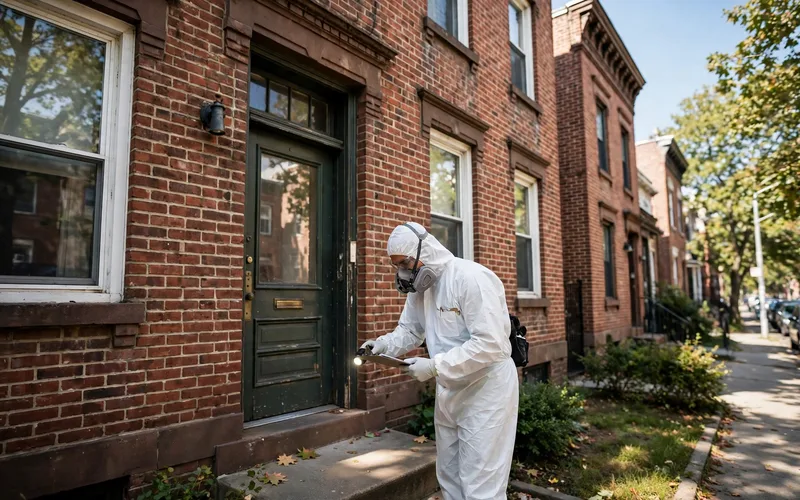
If your New York home was built before the 1980s, there is a real chance it contains asbestos — and many owners only find out when they try to sell. A home inspector flags old pipe insulation, a buyer’s attorney asks about the 9-by-9 floor tiles in the basement, or a survey turns up asbestos in the plaster. The word alone can feel like a deal-killer, but asbestos does not make your house unsellable. It changes the conversation: what the rules require, what removal costs, what you must disclose, and who is willing to buy the house as it stands. Here is what New York sellers need to know, and how to sell your house fast in New York without letting asbestos stall the sale.
Where Asbestos Hides in Older New York Homes
Asbestos is a group of naturally occurring mineral fibers that was prized for most of the 20th century because it resists heat, fire, and chemicals. It went into more than 3,000 products, and New York’s housing stock — much of it built before the 1980s in Brooklyn, Queens, the Bronx, Staten Island, and across Long Island — is full of it. The U.S. Environmental Protection Agency (EPA) banned asbestos in many building materials in the 1970s, and in March 2024 it finalized a rule banning chrysotile asbestos, the last form still in use in the United States. But the ban does not remove what is already in place. In an older home, asbestos is most commonly found in 9-by-9-inch vinyl floor tiles and the black mastic adhesive beneath them, insulation wrapped around heating pipes and boilers, plaster and joint compound, popcorn ceilings, roofing shingles and cement siding, vermiculite attic insulation, window caulking, and duct insulation.
You cannot identify asbestos by looking at it. The only way to know for certain is laboratory testing of a sample, which is why a professional survey — not a guess — is the starting point for any decision about the material.
Why Asbestos Worries Buyers — and What the Risk Really Is
Asbestos is dangerous when its microscopic fibers become airborne and are inhaled. Once lodged in the lungs, they can cause asbestosis (scarring of lung tissue), lung cancer, and mesothelioma, a rare and aggressive cancer of the lining around the lungs or abdomen. Health authorities including the EPA and the World Health Organization state that there is no known safe level of asbestos exposure, and symptoms can take 10 to 40 years or more to appear after exposure.
That sounds alarming, and it is the reason buyers react strongly. But the risk depends heavily on the material’s condition. Asbestos that is intact, sealed, and undisturbed generally poses a low risk, because the fibers stay locked in place. The danger rises sharply when material is damaged, crumbling, or disturbed — during a renovation, a demolition, or a careless removal attempt. This distinction matters for sellers: a house with intact asbestos tile under a rug is a very different situation from a house with crumbling pipe insulation in the basement, and buyers, inspectors, and attorneys will treat them differently. Never try to remove asbestos yourself. Scraping, sanding, or tearing out suspect material releases fibers into the air and can turn a manageable situation into a serious health and legal problem.
What New York Law Requires Before Any Work Begins
New York has some of the strictest asbestos rules in the country, and they apply to work on a building — not to the act of selling it. Two layers of regulation matter for New York City sellers.
In New York City, the Department of Environmental Protection (DEP) regulates asbestos, and the Department of Buildings (DOB) will not issue a work permit until the asbestos requirements are satisfied. For buildings constructed before April 1, 1987, an asbestos assessment is required before almost any renovation, alteration, or demolition that needs a DOB permit. A DEP-certified asbestos investigator surveys the work area and files either an ACP-5 Asbestos Assessment Report, certifying that the project will not disturb asbestos, or an ACP-7 Asbestos Project Notification, when abatement is required. After abatement is completed, the DEP issues an ACP-21 completion form. For a full demolition, the DOB requires an ACP-5 certifying that the entire building is free of asbestos-containing material. Buildings constructed after April 1, 1987 are generally exempt from the certification requirement, unless known asbestos will be disturbed. The DOB’s asbestos project requirements page sets out the full procedure.
Outside the five boroughs, the same work is governed by New York State Industrial Code Rule 56 (12 NYCRR Part 56), enforced by the State Department of Labor. Under Rule 56, a property owner must have an asbestos survey conducted by a certified New York State asbestos inspector before demolition, renovation, remodeling, or repair work that could disturb building materials, and abatement must be performed by licensed contractors using certified handlers. The Department of Labor’s survey requirements make clear that the owner carries the responsibility for arranging the survey and the cleanup.
The key point for sellers: simply selling your house does not trigger these rules. They bite when someone renovates, repairs, or demolishes — which is exactly why a traditional buyer planning a gut renovation will price the asbestos into their offer, while a buyer who plans to hold the house as-is may not care at all.
How Much Does Asbestos Removal Cost in New York?
Abatement is not cheap, and the range is wide because it depends on the material, the area, and how much containment the job needs. National figures from This Old House, based on Angi and HomeAdvisor data, put professional asbestos testing and inspection at $250 to $800, interior removal at $5 to $20 per square foot, and encapsulation — sealing the material in place — at $2 to $6 per square foot. Exterior work, such as asbestos siding or roofing, runs far higher at $50 to $150 per square foot. The average total for a removal project lands around $1,170 to $3,120, while a whole-home remediation can reach $5,700 to $20,000 or more.
New York City and Long Island prices typically run above national averages, because labor costs are higher and the city’s DEP filing and air-monitoring requirements add steps that other states skip. A small, contained job — a stretch of pipe insulation in a basement, for example — may cost a few thousand dollars. Removing asbestos tile and mastic throughout a house, or stripping a roof, can run into five figures. Get written estimates from several licensed, certified contractors, and make sure each quote includes containment, air monitoring, and disposal at an approved facility — those are not optional extras under New York law.
Your Options for Selling a House With Asbestos
There is no single right answer. The best option depends on where the asbestos is, what condition it is in, your budget, and how quickly you need to sell.
Option 1: Remove the Asbestos Before Listing
Full abatement is the cleanest solution and the one traditional buyers and their lenders prefer. Once the work is done and the DEP completion forms are in hand, the asbestos question disappears from the negotiation. The trade-off is cost and time: weeks of scheduling, containment, and air clearance, plus thousands of dollars out of pocket before you see a single offer.
Option 2: Encapsulate or Enclose It
If the material is intact and in good condition, a licensed contractor can seal it with a protective coating or enclose it behind new material, locking the fibers in place. Encapsulation costs roughly $2 to $6 per square foot — far less than removal — and is a recognized abatement method under New York’s rules. It works best for material that will not be disturbed by future work, and it should be documented so the next owner knows exactly what was done.
Option 3: Leave It Undisturbed and Disclose It
There is no law requiring you to remove asbestos from your home before selling. If the material is intact and poses no immediate hazard, you can leave it in place, disclose it honestly, and let the buyer decide. Many older homes in New York sell this way every day. The trade-off is a smaller pool of traditional buyers and a lower price, since buyers will discount for the abatement they expect to do themselves.
Option 4: Sell the House As-Is
You can sell the house as-is with the asbestos in place. Cash buyers regularly purchase homes with asbestos, taking the material and its condition into account in the offer. That means no abatement bill, no weeks waiting on contractors and air-clearance tests, and no renegotiation after a buyer’s inspection. Compare the net proceeds: abatement plus carrying costs plus months on the market, against an as-is price. For owners who need to move quickly, cannot fund a removal, or inherited a property with asbestos they never asked for, as-is is often the practical choice.
Disclosure: What New York Law Requires You to Tell Buyers
New York law requires sellers of one-to-four-family homes to deliver a completed Property Condition Disclosure Statement to the buyer before the buyer signs a binding contract of sale (Real Property Law §462). The form asks directly about asbestos: Question 22 asks, “Is there asbestos in the structure?” — and if so, where. The same form also asks about lead paint, fuel storage tanks, and hazardous-substance spills, so asbestos sits alongside the other environmental issues buyers care about.
One change catches many sellers off guard. Until March 2024, sellers could skip the disclosure form entirely by giving the buyer a $500 credit at closing. That option was eliminated when the legislature amended Real Property Law §465, effective March 20, 2024 — sellers must now complete the form. Answer from your actual knowledge, mark “unknown” where you genuinely do not know, and never hide asbestos you know about. A willful failure to disclose can leave you liable for the buyer’s actual damages. If you are unsure how to answer a question, a real estate attorney can advise you — and if you want to know whether you need a lawyer to sell your house for cash, a known environmental issue is exactly the kind of situation where legal advice pays for itself. Like mold and lead paint, asbestos is a disclosure item first and a repair decision second. Gather the documents you will need for the sale early — survey reports, abatement records, and air-clearance results all help a buyer move forward with confidence.
Can You Sell a House With Asbestos As-Is?
Yes. Asbestos does not make a house unsellable — it makes the sale a question of price, paperwork, and who takes on the material. Traditional buyers may insist on testing or abatement before closing, and their lenders may require it, especially if the buyer plans a renovation that would disturb the material. Cash buyers, who do not answer to a lender’s property-condition rules, regularly buy homes with asbestos in place and factor the material into the offer instead of making it a closing condition. Start by finding out what you actually have: a professional survey tells you where the asbestos is and whether it is a real problem or simply old material doing no harm. Honest disclosure and a realistic price protect you far better than hoping the asbestos goes unnoticed — and if a buyer’s inspection does flag it, as it did for many owners whose house failed inspection in NYC, an as-is sale is often the fastest way past it.
Frequently Asked Questions
Can you sell a house with asbestos in New York?
Yes. No New York law requires you to remove asbestos before selling. You must disclose known asbestos on the Property Condition Disclosure Statement, and traditional buyers may ask for testing or abatement, but a cash buyer will typically purchase the house as-is with the asbestos in place.
Do I have to remove asbestos before selling my house in NY?
Not by law. New York’s asbestos rules (NYC DEP regulations and Industrial Code Rule 56) apply to renovation, repair, and demolition work, not to the sale itself. In practice, though, buyers planning renovations may require abatement before closing, and their lenders may too.
How much does asbestos removal cost in New York?
National averages put interior removal at $5 to $20 per square foot, encapsulation at $2 to $6 per square foot, and testing at $250 to $800, with typical total projects averaging $1,170 to $3,120. New York City and Long Island prices usually run higher because of labor costs and DEP filing and air-monitoring requirements. Whole-home remediation can reach $5,700 to $20,000 or more.
Do I have to disclose asbestos when selling a house in New York?
Yes. The Property Condition Disclosure Statement (Real Property Law §462) asks directly — Question 22: “Is there asbestos in the structure?” — and it must be delivered before the buyer signs a binding contract. The old $500 credit that let sellers skip the form was eliminated on March 20, 2024. Answer from your actual knowledge, and mark “unknown” where you genuinely do not know.
Is it safe to live in a house with asbestos?
Asbestos that is intact, sealed, and undisturbed generally poses a low risk, because the fibers stay locked in place. The danger comes when material is damaged or disturbed, releasing fibers into the air. Health authorities state there is no known safe level of exposure, so damaged material should be assessed by a certified professional and never removed by the homeowner.
Will a mortgage lender approve a house with asbestos?
It depends. Many lenders will approve a loan on a home with intact, undisturbed asbestos, but they may require an inspection, an abatement plan, or removal before closing — especially if the buyer plans renovations. This is one reason asbestos homes often sell faster to cash buyers, who do not face lender property-condition requirements.
The Bottom Line
Asbestos in your New York home is a solvable problem, not a dead end — but it rewards sellers who deal with it early. Find out what you actually have with a professional survey, understand the NYC and state rules that apply to any work on the house, disclose it honestly, and weigh abatement against the speed and certainty of an as-is sale. If paying for removal and waiting on contractors and air-clearance tests does not fit your timeline or your budget, you do not have to fix the asbestos to sell the house. Request a free cash offer from Cash Buyers NY or call 646-920-8900 to talk through your options — no obligation, no repairs, and no pressure to decide on the spot.

Jeff is part of the team at Cash Buyers NY, a cash home-buying company serving New York City and Long Island from Bellerose, Queens. The company buys houses as-is in any condition — no repairs, no agents, no commissions, and no financing contingencies — through a straightforward cash-offer process. Jeff covers the questions New York homeowners actually ask: how long a cash sale takes, what it costs, how co-op boards and inheritance work, and when selling as-is makes sense.