Blog

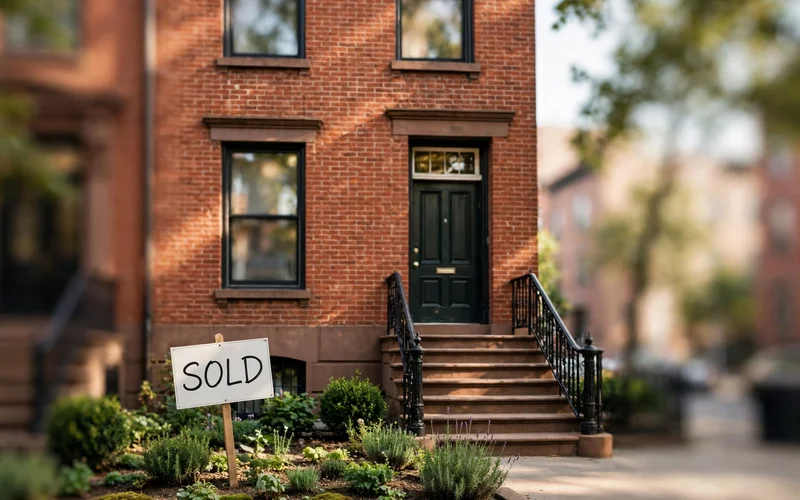
Brick Brooklyn brownstone townhouse with a SOLD sign in its front garden on a sunny day

NYC Mansion Tax Explained: What Home Sellers Need to Know

If you are selling a home in New York City valued at $1 million or more, there is a state transfer tax that will shape your transaction — even though you are not the one who pays it. New York’s “mansion tax” is paid by the buyer at closing, but its effects land on sellers: it influences how you price your home, how much leverage buyers have near the $1 million line, and how buyers calculate what your property truly costs them. Here is the seller’s guide: What Is the NYC Mansion Tax? Despite its name, the mansion tax has nothing to do with actual mansions. It is an additional New York State real estate transfer tax — officially the additional tax on transfers of residential real property — that applies to the sale of residential property anywhere in New York State when the sale price (the “consideration”) reaches $1 million or more. It was introduced in 1989 as a flat 1% charge and has applied to every qualifying residential sale since. A few things make this tax unusual: It applies to the entire sale price, not just the amount above $1 million. A $1 million sale triggers a $10,000 tax, not a tax on $0. It is paid by the buyer, not the seller — one of the few New York transfer taxes that works this way. It applies statewide, but bites hardest in New York City, where a large share of home sales cross the $1 million threshold. The New York State Department of Taxation and Finance publishes detailed guidance on the additional transfer tax, including which property types qualify and how the tax is calculated. The 2019 Progressive Rate Tiers The flat 1% mansion tax stood unchanged for thirty years. Then, effective July 1, 2019, New York added a progressive supplemental tax on top of it for residential sales in New York City, with the added revenue directed toward mass transit: Sale price Base mansion tax Supplemental tax Combined rate $1M to under $2M 1% — 1% $2M to under $3M 1% 0.25% 1.25% $3M to under $5M 1% 0.5% 1.5% $5M to under $10M 1% 1.25% 2.25% $10M to under $15M 1% 2.25% 3.25% $15M to under $20M 1% 2.5% 3.5% $20M to under $25M 1% 2.75% 3.75% $25M and above 1% 2.9% 3.9% To put that in concrete terms: on a $1.5 million sale, the buyer owes 1% — $15,000. On a $2.5 million sale, the combined 1.25% rate means $31,250. These are real closing-table dollars, on top of the typical closing costs for sellers in New York that the seller side of the ledger carries. Who Actually Pays the Mansion Tax? The legal answer is clear: the buyer pays the mansion tax. It is reported and paid at closing, typically handled by the buyer’s closing attorney or title company on Form TP-584, the state’s Combined Real Estate Transfer Tax Return, due within 15 days after the deed is delivered. But there are two important wrinkles sellers should know: 1. The seller is the backstop If the buyer fails to pay the tax — or is exempt from it — the seller becomes liable, jointly and severally with the buyer. This is rare in ordinary arm’s-length sales, but it is why your attorney will confirm the tax was paid before the file closes. 2. Payment can be negotiated Nothing in the law prevents the parties from agreeing, in the contract of sale, that the seller will cover part or all of the buyer’s mansion tax — for example, as a closing credit. Near the $1 million threshold this becomes a genuine bargaining chip: a buyer facing a $10,000 tax bill on a $1,000,001 purchase may ask the seller to absorb it, effectively pushing the negotiation back under the line. Contrast this with the other transfer taxes in the deal, which are the seller’s responsibility: the New York State base transfer tax of $2 per $500 of consideration (0.4%), plus New York City’s own Real Property Transfer Tax. Those are covered in more detail in our guide to taxes that apply when selling a house in New York. The $1 Million Cliff: Why Pricing Near the Threshold Matters The mansion tax creates one of the sharpest “cliffs” in American real estate taxation. Consider two identical homes: Sold for $999,999: mansion tax = $0 Sold for $1,000,000: mansion tax = $10,000 (1% of the entire price) A single extra dollar in the contract price costs the buyer ten thousand dollars. That discontinuity has real consequences for sellers: Offer negotiations. Expect buyers near the line to model both outcomes. An offer of $1,005,000 with a request that the seller credit the $10,050 mansion tax is economically similar to a clean $995,000 offer — compare the net, not the headline number. Deal structure. The tax applies to the full consideration, which can include personal property bundled into the deal. Small add-ons that nudge the price over a threshold can have outsized tax consequences — review the contract price with your attorney before signing. Does the Mansion Tax Apply to Co-ops and Condos? Yes. For mansion-tax purposes, “residential real property” includes one-, two-, and three-family houses, individual condominium units, and cooperative apartment units. A four-family (or larger) multifamily building is not treated as residential real property under this rule, so its sale does not trigger the tax even above $1 million. There is also a unit-by-unit rule worth knowing: when multiple condo or co-op units in the same building are sold to one buyer, each unit is generally evaluated separately against the $1 million threshold — unless the units have been combined or are used together as a single residence. Co-op sellers face an additional NYC-specific layer on top of all this: the flip tax, a separate transfer fee charged by many co-op boards. It is a different tax with different rules, but it stacks onto the same closing statement. What the Mansion Tax Means for a Cash Sale

NYC Mansion Tax Explained: What Home Sellers Need to Know Read More »
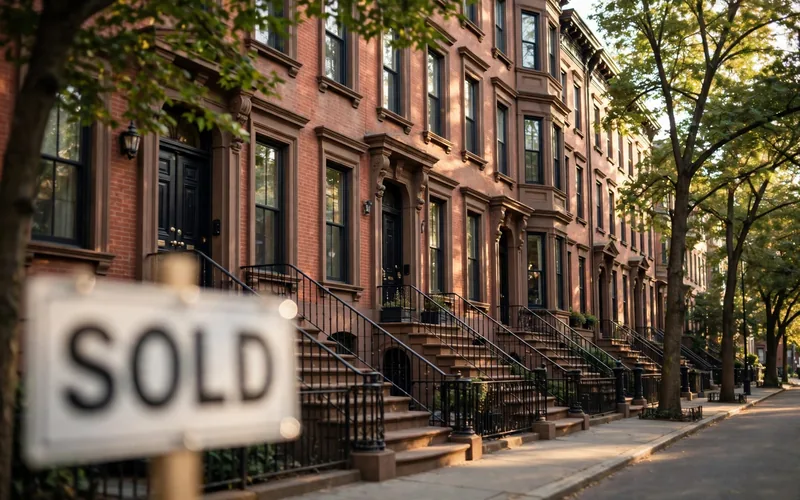
SOLD sign in front of a row of brick brownstone townhouses on a tree-lined street in Brooklyn, New York City

How Real Estate Commissions Work When Selling in New York in 2026

When you sell a house in New York, one line on the settlement statement often dwarfs everything else: the real estate commission. On a $500,000 sale, a typical commission adds up to more than $23,000 — more than the transfer taxes, attorney fees, and title costs combined. And the way that money gets split up changed significantly in August 2024, when new industry rules took effect nationwide. This guide explains how real estate commissions work for New York sellers in 2026: what the fees are, who gets paid, how the national commission settlement reshaped the process, current rates in New York City and Long Island, and how to keep more of your equity. What Is a Real Estate Commission? A real estate commission is a fee paid to licensed agents for their role in a home sale. It is calculated as a percentage of the final sale price and is paid at closing, deducted from the seller’s proceeds — you don’t write a check upfront. Traditionally, two agents were involved in most sales: a listing agent (who represents you, the seller) and a buyer’s agent (who represents the buyer). Historically, the seller paid the full commission, which was then split between the two sides through an arrangement advertised on the Multiple Listing Service (MLS). That long-standing default is what the 2024 settlement dismantled, so it helps to understand exactly what changed. How the NAR Settlement Changed Commissions In 2024, the National Association of Realtors (NAR) agreed to pay $418 million to settle class-action lawsuits alleging that its rules artificially inflated commission costs for home sellers. Final court approval came in November 2024, but the two key practice changes took effect on August 17, 2024: Buyer-agent compensation can no longer be advertised on the MLS. The field where listing agents used to state what the buyer’s agent would be paid is gone. Any offer to contribute to the buyer’s agent must now be negotiated off the MLS or written directly into the purchase contract. Buyers must sign a written agreement with their agent before touring homes. That agreement spells out the agent’s fee, states that fees are negotiable, and identifies who is expected to pay it. There is a New York wrinkle worth knowing: many brokerages in New York City and the surrounding region operate under REBNY (the Real Estate Board of New York) rather than NAR, and REBNY implemented its own parallel rule changes, as a Long Island brokerage’s explanation of how the settlement applies locally notes. The principle is the same — buyer compensation is now separately negotiated and documented, not bundled invisibly into a seller-side split. Average Real Estate Commission Rates in New York in 2026 According to a 2026 survey of commission rates by state, New York’s average total commission is about 4.62% of the sale price — among the lowest in the country and below the national average of 5.46%. That breaks down to roughly 2.41% for the listing agent and 2.21% for the buyer’s agent. What that means in dollars: On a $395,000 sale — about $18,250 in commission On a $527,000 sale (roughly the New York median) — about $24,300 On a $1,316,800 sale — about $60,800 Keep in mind these are averages. In practice, rates vary by market, price point, and how much leverage you have when negotiating. There is no law in New York setting commission rates — any agent who tells you a rate is “standard” is describing a local norm, not a legal requirement. New York City and the five boroughs Within the city, Clever Real Estate’s NYC commission survey found an average listing commission of 2.57%, with most listing rates falling between 2.00% and 4.00%. When sellers also offer a concession toward the buyer’s agent, the total averages about 4.95%. On New York City prices, small percentage differences translate into big money — the gap between 2% and 3% on an $800,000 sale is $8,000. Long Island, upstate, and the rest of the state Outside the five boroughs, rates broadly track the state average of 4.62% total, though they can run a bit higher in slower or lower-priced markets where agents handle fewer transactions. Nassau and Suffolk counties sit close to the New York City metro pattern, while some upstate markets skew toward the higher end of the national range. Who Pays the Commission When You Sell in New York? The seller is always responsible for paying their own listing agent, as agreed in the listing contract you sign. Whether you also pay anything toward the buyer’s agent is now a genuine choice rather than an automatic term. Before the settlement, sellers routinely covered both sides and buyers rarely thought about what their agent cost. Now buyers negotiate their agent’s compensation directly in their written agreement. As a seller, you can still choose to offer a concession toward the buyer’s agent — and many listing agents recommend it, since some buyers can’t easily afford to pay their agent on top of a down payment and closing costs — but you are no longer obligated to do so. If you don’t offer a concession, the buyer pays their agent separately, typically out of pocket at closing. This is the single most consequential change for sellers: the buyer’s side is no longer bundled into your bill by default. Whatever you offer (or don’t offer) toward the buyer’s agent is negotiated property by property, not set by the MLS. How and When Commission Gets Paid Commission is paid at closing, taken directly from your sale proceeds before you receive your check. The title or closing company disburses the agreed amounts to each brokerage, and each agent then splits their share with their brokerage under a separate agreement — so the “listing commission” you negotiate isn’t the full amount your individual agent keeps. The commission is calculated on the final sale price, not on your profit. If you sell for $500,000 and still owe $380,000 on the mortgage, a 4.62% commission still

How Real Estate Commissions Work When Selling in New York in 2026 Read More »

Crowd of homebuyers gathered on the sidewalk in front of a Brooklyn brownstone during a busy open house

NYC Bidding Wars Are Back: Should You Sell Your House in 2026?

If you have been watching the New York City housing market this year, you may have noticed something familiar: multiple buyers circling the same listing, offers flying past the asking price, and agents talking about “highest and best” again. After a cooler stretch, fresh 2026 data shows competition is genuinely back in parts of the city. If you own a home in NYC or Long Island and have been wondering whether this is your moment to sell your house fast in New York, here is a data-driven look at what is really happening, how over-ask sales work, and whether your home is likely to benefit. Are Bidding Wars Really Back in NYC in 2026? Yes. According to StreetEasy’s August 2026 sales market report, 25.0% of NYC homes sold above asking in July 2026 — the highest share since July 2022 — followed by 21.8% in August, up from 20.5% a year earlier. That is roughly one in five completed sales going for more than the last asking price, despite mortgage rates far above the lows of a few years ago. That stands out because the national picture looks different: in September 2026, only 16% of U.S. homes sold above list, down from 21% a year earlier, per the National Association of Realtors’ September survey. New York is running against the grain — national headlines rarely describe local reality. Between April and July 2026, 18 of 21 weeks saw year-over-year increases in new signed contracts, while inventory fell 5.0% to 15,324 homes for sale. Where the bidding is hottest: borough by borough In August 2026: Brooklyn led the city at 31.9% above asking, with its Q3 median sale price up 5.4% year over year to $1.15 million (Douglas Elliman’s third-quarter report). Queens was second at 24.2% above asking, and offers the most options: inventory rose 3.3% while every other borough shrank. Manhattan trailed at 16.0% above asking, though the median co-op and condo price hit a record $1.25 million in Q3, up 6% year over year (Elliman). The neighborhood contrast is sharper still: in August, 61.3% of Park Slope sales went above ask, followed by Greenwich Village at 40.0%, Bedford-Stuyvesant at 34.8%, and Forest Hills at 30.4%. Why Buyers Are Competing Again Several forces are converging. First, years of sidelined demand are spilling over from the rental market: StreetEasy reported the median asking rent hit a record $4,200 in August 2026, pushing plenty of long-term renters to buy. Second, the remaining buyer pool skews strong: with the 30-year fixed rate at 7.40% in early October (up from 6.30% a year earlier, per Freddie Mac’s weekly mortgage survey), marginal buyers are priced out — those left are well-qualified, often with large down payments or cash, and bid without financing worries. Third, scarcity does the rest: Manhattan’s sales inventory dropped 11.2% year over year, so the homes that hit the market at a sensible price attract crowds. Higher rates didn’t kill demand — they made buyers more selective, concentrating competition on the best-priced, best-presented listings. How an Over-Ask Sale Actually Happens When a listing draws multiple offers, the seller sets a deadline and asks for each buyer’s “highest and best.” Here is what buyers typically offer beyond price — and what it means for you. Our broader guide to navigating a competitive New York market covers the bigger picture. Appraisal gaps An appraisal gap happens when the lender’s appraiser values the home for less than the agreed price. Lenders size the loan on the lower of the two figures, so without a fix the deal gets renegotiated or falls apart. In competitive offers, buyers frequently agree in writing to cover a shortfall in cash on top of their down payment — for sellers, an offer with appraisal-gap coverage is far stronger than a higher offer without it. Nationally, 18% of buyers waived the appraisal contingency entirely in September 2026, per NAR. Waived inspection and financing contingencies Every contingency is an escape hatch for the buyer — and a risk for the seller. In bidding wars, buyers often waive the inspection contingency, the mortgage contingency, or both, sometimes after a pre-inspection. A waived financing contingency means the buyer closes even if their loan falls through — which is why all-cash offers remain the gold standard: no loan to deny, no appraisal to miss, no weeks of bank underwriting. Escalation clauses and best-and-final deadlines An escalation clause lets a buyer automatically outbid any verified competing offer by a set increment — say $2,500 or $5,000 — up to a maximum cap, staying competitive without revealing their full maximum upfront. Sellers then compare escalated prices alongside terms and pick a winner, often countering on timeline or deposit. One New York wrinkle: in Manhattan, where co-ops and condos dominate, winning the bidding war is only step one — co-op boards must approve the buyer, a process that can take weeks and sink deals that look great on paper, so sellers routinely prefer a lower offer from a board-ready buyer. Which Homes Attract Bidding Wars — and Which Don’t Bidding wars are won by homes that are move-in ready, priced in line with recent comparable sales, and marketed aggressively. StreetEasy found above-ask sellers stood out on buyer engagement — a median listing performance score of 73.5%, versus 55.8% for homes that sold at or below ask. Saves, views, and open-house traffic mattered more than the asking price itself. The flip side is just as clear. Homes that rarely see bidding wars include: Overpriced listings — a price disconnected from comparable sales sits, then gets reduced. Homes needing major work — buyers bidding over ask want to move in, not renovate. Properties with legal baggage — open code violations, unresolved permits, tenant complications, or estate and title issues make traditional buyers and their lenders nervous. The uncomfortable truth: bidding wars are not lifting every home. They are concentrating on a subset of desirable, problem-free properties — waiting for one to rescue a problem property is usually the wrong

NYC Bidding Wars Are Back: Should You Sell Your House in 2026? Read More »

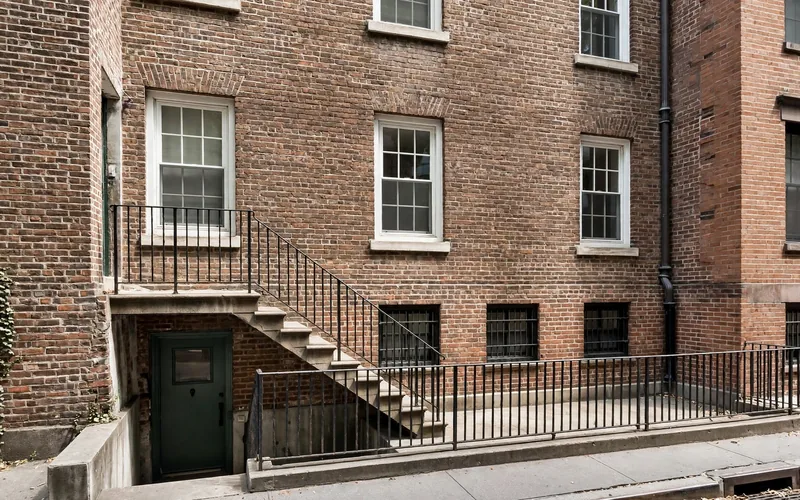
Street-level view of a New York City brick rowhouse with stairs leading down to a below-grade basement apartment entrance

Should I Legalize My NYC Basement Apartment or Sell As-Is?

Thousands of New York City homeowners rent out basement apartments that were never approved by the Department of Buildings — and many inherited the setup when they bought the house. If that’s your situation, you’ve probably weighed the same question: is it worth legalizing the unit, or would you be better off selling the property as-is and leaving the problem behind? Since late 2024, New York City has opened real pathways to legalize basement and cellar apartments through Local Laws 126 and 127 and the City of Yes housing plan. But legalization remains a slow, expensive construction project with strict safety requirements — and the main pilot program isn’t fully open yet. This guide breaks down what legalization actually takes in 2026, what it costs, the risks you’re carrying in the meantime, and when selling as-is is the smarter move. (This is general educational information, not legal advice; talk to a licensed design professional and a New York real estate attorney about your specific property.) Why So Many NYC Basement Apartments Are Illegal For decades, legalizing a basement or cellar apartment in most one- and two-family homes was effectively impossible, so owners built them anyway. These unregulated units now number in the tens of thousands across the five boroughs, filling affordable-housing demand in a city with a rental vacancy rate of roughly 1.4 percent. The push to make these spaces safe sharpened after Hurricane Ida’s flooding in 2021 killed 11 New Yorkers living in basement apartments. That led to Local Laws 126 and 127 of 2024, passed alongside the City of Yes for Housing Opportunity plan — the first realistic framework to bring these units into compliance. What Legalization Actually Takes in 2026 The standard route: build a legal ADU under Local Law 127 New York City now allows Ancillary Dwelling Units (ADUs) — including basement or cellar apartments — in one- and two-family homes. The Department of Buildings began accepting ADU construction applications through DOB NOW: Build on September 30, 2025 (see the DOB’s ADU rules page). Requirements are strict: an ADU can’t exceed 800 square feet, the owner must live in the primary home or the ADU, and cellar units need automatic sprinklers plus water sensors. Units need adequate ceiling height, light and ventilation, two safe means of egress (typically emergency escape windows or window wells), fire separation from boilers and furnaces, and central heating. Flood-prone areas don’t qualify. Getting there means hiring a registered design professional (an architect or engineer) to file plans, obtaining DOB permits, having licensed contractors perform the work to the approved plans, passing inspections, and securing an amended Certificate of Occupancy — the same heavyweight process as any regulated alteration in the city. The pilot route: legalize an existing illegal unit under Local Law 126 If your basement or cellar apartment already existed before April 20, 2024, and sits in one of the community districts covered by Local Law 126, a pilot program lets you legalize it gradually instead of all at once. Accepted homeowners receive an Authorization for Temporary Residence (ATR) letting tenants stay while the owner brings the unit into full compliance over up to ten years — sprinklers and flood sensors, emergency escape openings, and eventually a new Certificate of Occupancy. The program also protects occupants: tenants who temporarily vacate for renovation work have a right of return, and participating owners can legalize without the usual penalties. Applications are due by April 20, 2029. One catch: the pilot program’s applications were not yet being accepted as of early 2026, pending the Department of Buildings’ final rules. Proposed rules were published in November 2025 (see the DOB’s announcement and 6sqft’s coverage), so eligible owners should watch for the program’s opening rather than assume it has begun. A cautionary note: the earlier pilot never finished a single conversion The city has tried this before. A 2019 pilot in East New York offered homeowners loans of up to $120,000 plus technical assistance — yet the Citizens Housing & Planning Council’s final report on the pilot found no conversions completed by mid-2025, with costs and inflexible code requirements cited. The new laws address some barriers, but the track record shows legalization routinely costs more and takes longer than owners expect. How Much Does It Cost to Legalize a Basement Apartment? There is no standard price — it depends on how far your unit is from code. But the city’s own programs size the job honestly: the 2019 pilot capped loans at $120,000, and the “Plus One ADU” construction program offered single-family owners up to $395,000 for new units. Costs come from design fees, DOB permits and inspections, and the construction itself: egress windows or window wells, sprinklers, electrical and plumbing brought to code, waterproofing, and upgrades to ceiling height, ventilation, and fire separation. Any one of those can run into the tens of thousands of dollars. Then there’s the clock: straightforward projects take many months, complicated ones stretch into years, with tenants to manage and inspections to schedule throughout. If the rental income isn’t essential — or the money simply isn’t there — the timeline alone can be the deciding factor. The Risks of Keeping an Illegal Basement Apartment While you decide, the risks keep accruing: Fines. Illegally converting a one- or two-family home carries civil penalties of $1,000 to $5,000 per dwelling unit for a first offense, rising to $2,500–$15,000 for a second offense and $10,000–$20,000 for a third. Violations heard before the Office of Administrative Trials and Hearings (OATH) carry mandatory penalties, with default penalties of up to $25,000 per violation. Violations on the public record. DOB violations and stop-work orders attach to the property and are visible to buyers, their attorneys, and their lenders. The DOB’s guidance on illegal conversions lays out exactly how enforcement works. Liability. In a fire or flood, an illegal unit without proper egress or alarms puts tenants, neighbors, and first responders at risk — and your insurance carrier may not cover claims tied to unpermitted

Should I Legalize My NYC Basement Apartment or Sell As-Is? Read More »

House keys and signed sale documents on a desk in front of a New York City skyline

What Documents Do You Need to Sell Your House for Cash in NY?

One of the biggest advantages of selling your house for cash is the paperwork — or rather, the lack of it. A cash sale skips the mortgage lender, the appraisal, and most of the financing contingencies, which means the document list is noticeably shorter than in a traditional New York sale. But “less paperwork” doesn’t mean “no paperwork.” You still need a core set of documents to prove you own the property, satisfy title, and record the transfer legally under New York law. Having these documents ready before you accept an offer can shave days off the process — often the difference between a sale that closes in a week and one that drags on for a month. Here’s what a cash sale in New York actually requires, what you can skip, and which extra documents apply to special situations like inherited homes or divorce. The Core Document Checklist for a New York Cash Sale For a standard cash transaction on a New York house, these are the documents that matter. 1. Proof of Ownership (Your Deed) The deed is the first thing any buyer or title company will ask for. It shows how you received the property — purchase, inheritance, gift — and confirms the name on title matches the person signing the contract. If you can’t find your deed, you can request a copy from the county clerk’s office; in New York City, records are available through the City Register or ACRIS (see our guide on how to get a copy of your house title). The deed type matters too. Most New York sales use a bargain and sale deed with covenant against grantor’s acts. If you need a refresher on deed types and what each one conveys, our article on selling a home with a quitclaim deed breaks down the differences. 2. Mortgage Payoff Statement If you still owe on your mortgage, your lender must provide a payoff statement showing the exact balance, per-diem interest, and any fees required to release the lien at closing. This is critical because the payoff amount — not your last monthly statement — determines how much of the sale proceeds actually goes to you. Old, already-satisfied loans can also cause surprises: if a mortgage satisfaction was never recorded, flag it early so the title company can clear it. 3. Property Tax and Utility Records Recent property tax bills, water and sewer bills, and any city or town notices help the title company prorate charges between you and the buyer and confirm there are no outstanding municipal liens. Unpaid water charges and property taxes in New York can become liens against the property, so pulling these early avoids closing-day delays. 4. Seller Disclosure: New York’s Property Condition Disclosure Statement New York law requires sellers of one-to-four-family homes to deliver a completed and signed Property Condition Disclosure Statement (PCDS), based on the seller’s actual knowledge, before the buyer signs a binding contract (Real Property Law § 462). Note that the rules changed: effective March 20, 2024, amendments to the Property Condition Disclosure Act removed the old option of giving the buyer a $500 credit at closing instead of completing the form. Sellers can no longer opt out — the disclosure must be delivered. The amended form also adds flood-risk and water-damage questions. According to the New York State Bar Association’s real estate guide, the statement covers the seller’s actual knowledge of the property’s condition, and PropertyShark’s summary of the 2024 amendments confirms the $500 credit opt-out is gone and flood-related questions were added. (Condominium units and cooperative apartments are generally exempt.) This is general information only — if you’re unsure how the disclosure rules apply to your sale, a New York real estate attorney can advise you. 5. The Contract of Sale Even in a cash deal, you need a written contract of sale setting out the price, closing date, earnest money, and each party’s obligations. In New York, attorney involvement is the norm — both sides typically have their own real estate attorney draft or review the contract before signing. 6. Government-Issued Photo ID You’ll need valid identification for the contract signing and the closing. Title companies and attorneys verify the identity of everyone signing, and any mismatch between your ID and the name on the deed can hold up the deal — resolve name discrepancies (marriage, divorce, misspellings) before closing day. 7. Lien and Judgment Payoff Information Any open liens — mortgages, HELOCs, tax liens, mechanic’s liens, court judgments — must be satisfied or cleared at closing. If you know about an old refinance, a home equity line, or a judgment, raise it early. Your attorney or the title company will run a title search regardless, but advance notice keeps the timeline on track. 8. New York Transfer Forms (TP-584 and RP-5217) Two state forms accompany virtually every New York deed. Form RP-5217 (Real Property Transfer Report) documents the details of the transfer and must be signed by both seller and buyer — the City Register or county clerk will not record the deed without it. Form TP-584 (Combined Real Estate Transfer Tax Return) is the return on which the real property transfer tax is calculated; in New York City, both state and city transfer taxes apply, and the tax is typically paid by the seller unless the contract says otherwise. Per county deed guidelines, the RP-5217 must be computer-filled and printed on legal-size paper, and USLegalForms’ RP-5217 reference notes that NYC transfer tax is 1.425% of the price up to $500,000 and 2.625% above that. In practice, your attorney prepares both forms — you just sign them — but it’s worth knowing they exist and that they’ll appear in your closing costs for sellers in New York. Documents a Cash Sale Lets You Skip Because there’s no mortgage lender involved, cash buyers and sellers can leave a whole stack of paperwork out of the file: No appraisal. Lenders require appraisals; cash buyers don’t. Your buyer evaluates the property themselves

What Documents Do You Need to Sell Your House for Cash in NY? Read More »

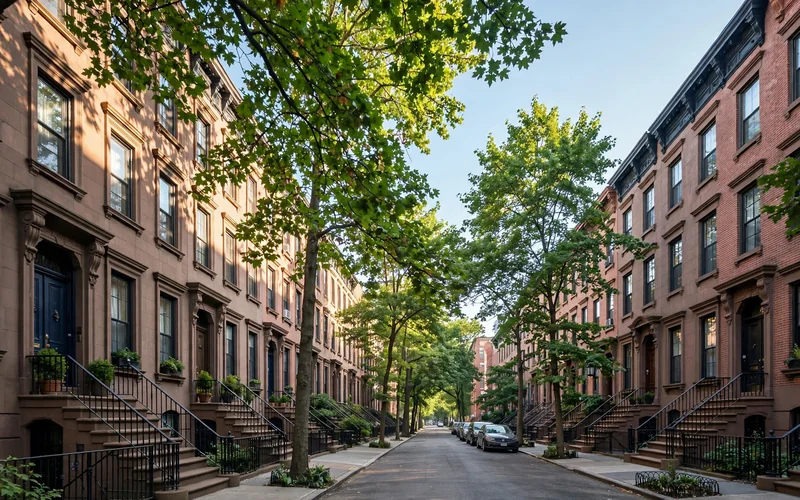
Tree-lined street of brownstone townhouses in New York City in daylight

How Long Does It Take to Sell a House for Cash in NYC?

If you’re thinking about selling your house for cash in New York City, the timeline is probably one of your first questions. The short answer: most cash sales go from first contact to closing in about 7 to 28 days. But that range is wide for a reason — how quickly your sale closes depends on your title, your property type, and a few NYC-specific quirks (co-op boards, we’re looking at you). Here’s an honest, day-by-day look at how long a cash sale really takes in NYC, and what you can do to keep yours on the fast end of the range. The Short Answer: How Fast Can a Cash Sale Close in NYC? A cash purchase in NYC can typically close in 7 to 14 days once a contract is in place and the title is clean. Measured from your first call to the buyer, the full process usually lands between 7 and 28 days. To put that in context: Sale method Typical timeline Cash sale, as-is (first call to closing) 7–21 days Cash purchase (signed contract to closing) 7–14 days Financed closing (signed contract to closing) 30–45 days Traditional NYC sale (accepted offer to closing) 60–120 days The financed-closing figure isn’t a guess: ICE Mortgage Technology’s 2026 closing data put the average at 36.8 days, and industry closing guides consistently cite 7–14 days for cash purchases. The gap exists because a cash deal skips the two slowest parts of a traditional sale: finding a buyer on the open market and waiting on mortgage underwriting. The Cash Sale Timeline, Day by Day Every transaction is different, but most NYC cash sales follow the same sequence. For how the offer itself works, see our guide to the cash offer process. Days 1–2: First contact and the cash offer You reach out to the buyer — through an online form or a phone call — and share basic details: the address, property type, condition, and why you’re selling. Many buyers also do a brief walkthrough, in person or virtual, to confirm the condition. Most professional cash buyers present a no-obligation offer within about 24 hours of seeing the property. Days 2–7: Attorney review and the purchase agreement Once you accept the offer, the buyer’s side prepares a purchase agreement. New York deals go through attorney review: each side’s attorney typically has 3 to 5 business days to review and approve the contract terms before the deal becomes binding. During this window the deal isn’t fully locked in yet, which is why it’s smart to have your own attorney lined up beforehand — scrambling to find one is one of the most common avoidable delays. Our seller’s guide to the closing process walks through what happens at each stage. Days 7–21: Title search — usually the longest stage After the contract is signed, the title company runs a title search to verify ownership and surface anything that could block the transfer: old mortgages, tax liens, judgments, or ownership disputes. In NYC, this step frequently turns up open building permits from prior renovations, Department of Buildings or Housing Preservation and Development violations, unpaid municipal liens, or estate and probate complications in the chain of title. A clean title usually clears in about a week or two. Resolving problems can add days or weeks — and this stage is mostly out of your hands, which is why it’s the pacing item in nearly every cash sale. Closing day: signatures and funding Once the title is clear and the paperwork is ready, you sign the closing documents — typically at the title company’s office or your attorney’s — and the funds are sent by wire transfer or certified check. Ownership transfers the same day. What Determines How Fast Your Cash Sale Closes The biggest variables, roughly in order of impact: Title condition. A clean title is the single biggest accelerator. Liens, violations, and ownership disputes are the most common reason cash sales stretch past three weeks. Property type. A house or condo with a clear deed moves fastest. Co-ops involve board approval, which runs on its own schedule. Outstanding liens or back taxes. These must be identified and resolved before closing — the earlier they’re disclosed, the faster this goes. Estate, probate, or divorce situations. Missing heirs, unclear authority to sell, or court involvement can add significant time regardless of how the buyer pays. Tenant-occupied properties. Lease terms and local tenant protections can affect timing and transfer logistics. Your responsiveness. Deals stall when sellers take days to return documents or grant property access. Same-day responses keep things moving. NYC-Specific Delays to Know About New York adds wrinkles that don’t exist in most markets. None of them make a cash sale impossible — but they can quietly add weeks if you’re not expecting them. Co-op board approval is the big one. Even in an all-cash deal, co-op boards still have to approve the buyer — cash doesn’t skip the line. Board packages typically take 2–4 weeks to assemble, managing-agent review adds another 1–4 weeks, and interviews are usually scheduled around monthly board meetings. Manhattan co-op approvals averaged 8–12 weeks in 2025, and even an all-cash co-op sale can take 60–90 days all in. Condo right of first refusal. Condos don’t require full board approval, but the board or managing agent typically gets a waiver period — usually a few weeks — before you can close. Attorney review. The 3-to-5-business-day review window after signing is standard practice in NYC, as local closing guides confirm. It protects both sides but adds the better part of a week to every deal. Title complexity. Older NYC buildings have long histories — open permits from renovations done decades ago, unresolved violations, and estate claims are common findings in the five boroughs, and each one needs clearing before the deed transfers. How Selling for Cash Compares to Listing Traditionally A traditional NYC sale means weeks of prep and repairs, then time on the market: Redfin reported a 54-day median days on

How Long Does It Take to Sell a House for Cash in NYC? Read More »

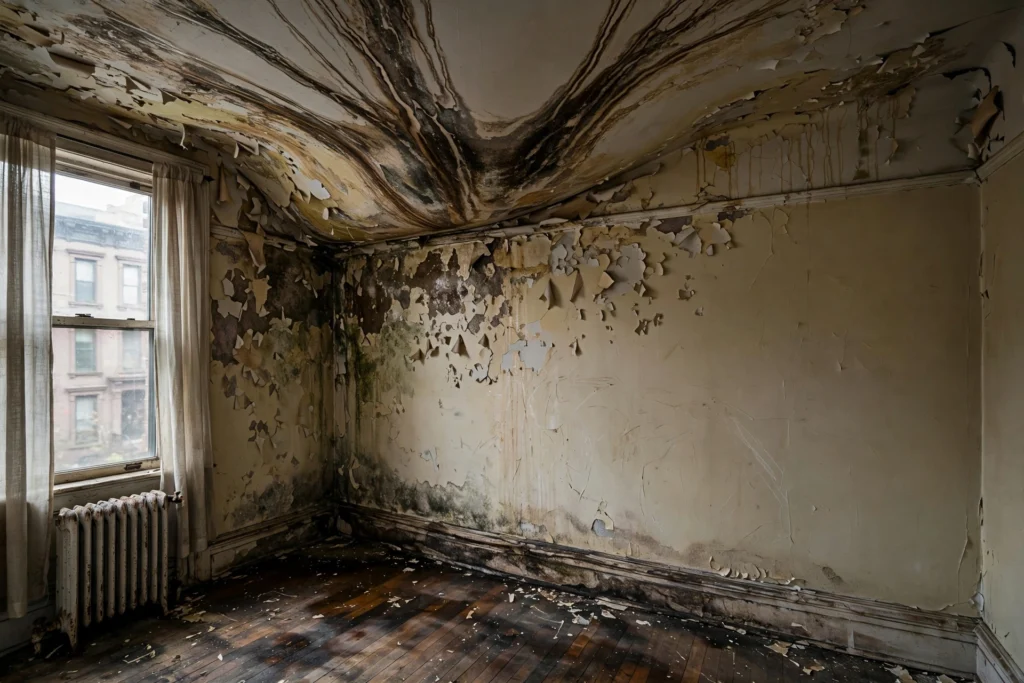
Water-damaged ceiling and walls inside a New York house

How to Sell a House With Water Damage in New York

A burst pipe in January, a basement that floods every time it rains, a roof leak you didn’t notice until the ceiling started sagging — water damage is one of the most common reasons New York homeowners end up needing to sell fast. It scares off traditional buyers, complicates mortgage approvals, and can turn a straightforward listing into months of stalled negotiations. But a water-damaged house is far from unsellable. Thousands of New York homeowners sell homes with water damage every year, and those who understand their options consistently walk away with better outcomes than those who list blindly and hope for the best. This guide covers everything you need to know about selling a house with water damage in New York: what counts as water damage, what New York’s disclosure laws require of you, why conventional buyers struggle with these properties, what your three real options are, and how to price your home so it actually sells. What Counts as Water Damage When Selling a House in NY? Water damage isn’t just a flooded basement. In the New York market, buyers, inspectors, and insurers treat the following as water damage, and all of it matters at sale time: Active leaks: burst or corroded pipes, leaking roofs, failed flashing, or compromised gutters that are still letting water in. Historical damage: past flooding or leaks that were dried out but never properly remediated — warped flooring, swollen drywall, or water-stained ceilings. Basement and foundation seepage: chronic dampness, efflorescence on basement walls, or water intrusion during heavy rain. Mold growth: mold is water damage’s near-constant companion. Visible mold — or the musty smell that signals hidden mold — is treated as part of the same problem. Structural rot: rotted subflooring, framing, or sill plates caused by long-term moisture exposure. The key point: even if the leak stopped years ago, the visible evidence and the underlying damage still affect your sale. Buyers’ inspectors will find it, lenders will ask about it, and New York’s disclosure rules require you to address it honestly. New York’s Seller Disclosure Rules for Water Damage New York State’s Property Condition Disclosure Act requires sellers of 1-to-4 family homes to either complete a detailed property condition disclosure statement or give the buyer a $500 credit at closing in lieu of the disclosure. Most sellers choose the credit — but that choice does not give you a free pass to hide known defects. Here’s what sellers commonly misunderstand: The $500 credit is not a licence to conceal. If you know about water damage and actively hide it — fresh paint over a water-stained ceiling, for example — you can still face legal liability for fraud, credit or not. “As-is” doesn’t override fraud either. Selling as-is means you’re not making repairs; it does not mean you can misrepresent the property’s condition. If a buyer asks directly about water history, you must answer truthfully. Mold has its own rules. In New York, professional mold remediation on larger jobs must be performed by a licensed mold remediator, and sellers should disclose known mold problems. For more on this specific angle, see our guide on selling a house with mold in New York. Water damage can also trigger NYC Department of Buildings violations — for instance, if a leak has damaged structural elements or created unsafe conditions. Open violations attach to the property and complicate any sale, which is why we recommend reading our breakdown of selling a house with code violations in NYC if your property has outstanding violations. The practical takeaway: disclose honestly, document what you know, and don’t spend money on cosmetic cover-ups. Serious buyers — especially cash buyers — price around known damage. They walk away from suspected concealment. Why Traditional Buyers Walk Away From Water-Damaged Homes Listing a water-damaged house on the open market with an agent is possible, but you should understand the headwinds before you commit months to the process. Mortgage lenders are the biggest obstacle. Conventional, FHA, and VA loans all require the property to meet minimum condition standards. An appraiser who spots active water intrusion, significant mold, or structural rot will flag the property, and the lender will require repairs before funding the loan. FHA and VA appraisals are particularly strict. When the lender says “fix it first,” the buyer either pays for your repairs, renegotiates, or walks — and walking is what happens most often. Insurance complications follow. A buyer who can’t get affordable homeowners insurance can’t close a mortgage. Properties with a history of water claims — especially in FEMA-designated flood zones common across parts of Brooklyn, Queens, Staten Island, and Long Island — can carry eye-watering premiums or require separate flood insurance policies. Many buyers simply move on to an easier property. Inspection contingencies kill deals slowly. Even if you find a willing buyer, the inspection report becomes a renegotiation weapon. Every water stain becomes a demand for credits or repairs, and each round of negotiation adds weeks. The average “sale” of a water-damaged home through traditional channels frequently falls through once or twice before closing — if it closes at all. None of this means listing is always wrong. But if your damage is significant, your timeline is tight, or you’ve already had a deal collapse, the traditional route’s costs in time, carrying costs, and stress deserve an honest accounting. Our analysis of what selling as-is actually costs walks through the real math. Your Options: Repair, List As-Is, or Sell to a Cash Buyer You have three genuine paths. The right one depends on the extent of the damage, your budget, and how fast you need to move. Option 1: Remediate and Repair Before Listing Full remediation makes sense when the damage is localised and the repair cost is clearly recoverable in the sale price — say, a single bathroom leak with contained damage in an otherwise solid house. Get a licensed contractor’s assessment, remediate any mold properly (New York requires licensed remediators for larger jobs), and keep all receipts

How to Sell a House With Water Damage in New York Read More »

Cracked concrete foundation wall of an older brick house in New York

How to Sell a House With Foundation Problems in New York

A cracked foundation is one of the most dreaded discoveries a New York homeowner can make. It suggests serious structural trouble, enormous repair bills, and — for anyone hoping to sell — a buyer pool that evaporates the moment an inspector says the words “foundation issue.” If you’ve noticed cracks in your basement walls, uneven floors, or doors that no longer close properly, you may be wondering whether your house is still sellable at all. It is. You can sell a house with foundation problems in New York, and you don’t necessarily have to spend tens of thousands on structural repairs first. In this guide, we’ll cover the foundation problems New York’s housing stock is most prone to, realistic repair costs in this market, what the law requires you to disclose, your options as a seller — and the fastest way to sell a foundation-damaged house as-is for cash. Why Foundation Problems Derail Traditional Home Sales Foundation damage is scary because the foundation is literally what everything else stands on. Buyers hear “foundation problems” and imagine the house sinking, the walls collapsing, and a repair bill that dwarfs the home’s value. That fear — even when the actual damage is modest — is what kills deals. Here’s how foundation issues typically unravel a conventional sale: 1. Home inspectors flag them immediately. Cracks, bowing walls, water intrusion, and uneven settlement are among the first things a competent inspector looks for. A report that says “evidence of foundation movement — recommend structural engineer evaluation” sends most buyers running, because the next step (an engineer’s assessment) costs hundreds and can delay the deal by weeks. 2. Mortgage lenders get nervous. FHA, VA, and many conventional loan programs require the property to be structurally sound. Significant foundation damage can cause a home to fail the appraisal, which kills the buyer’s financing outright — even if the buyer was willing to accept the problem. Lenders don’t want collateral that’s literally sinking. 3. Repair estimates become negotiation weapons. When a buyer’s contractor quotes $40,000 for foundation repair, the buyer doesn’t ask for a $40,000 discount — they ask for $60,000 “to be safe,” or they walk away entirely. Structural quotes have a way of growing in the buyer’s imagination. 4. Disclosure shrinks your buyer pool before you even list. In New York you must disclose known material defects, which means foundation problems will be in writing for every prospective buyer to see. Many agents won’t even bring their buyers to a house with known foundation issues. The result: selling a house with foundation problems on the open market is possible, but it’s slow, uncertain, and expensive. There are faster paths. Common Foundation Problems in New York Homes New York’s housing stock is old, and its geology and climate are rough on foundations. Much of Long Island sits on sandy soil with a high water table; parts of the city have clay soils that swell and shrink with the seasons; and the annual freeze-thaw cycle works water into every crack, expanding it year after year. These are the foundation issues that show up most often: Cracked foundation walls. Hairline cracks are common in poured concrete and block foundations and are often cosmetic — but horizontal cracks, stair-step cracks in block walls, and cracks wider than about a quarter of an inch can indicate serious lateral pressure from saturated soil. Bowing or bulging walls. When expansive clay soil or waterlogged backfill pushes inward, basement walls can bow. This is a structural problem that typically requires wall anchors or steel bracing to stabilise. Uneven settlement. All houses settle, but differential settlement — where one part of the foundation sinks faster than the rest — shows up as sloped floors, doors and windows that stick, and cracks in interior drywall radiating from door frames. Older homes on Long Island’s sandy soils are especially prone to this. Water intrusion. Cracks that let water into the basement do double damage: they worsen the foundation problem and invite mold. If your basement walls are damp and musty as well as cracked, you’re dealing with two problems at once — see our guide on selling a house with mold in New York. Deteriorated mortar and block. In pre-war homes, mortar joints in block and brick foundations can crumble over decades of moisture exposure, weakening the wall’s ability to bear loads. Not every crack means disaster. But only a qualified structural engineer or foundation contractor can tell the difference between a cosmetic crack and a structural one — and the uncertainty alone is what frightens buyers. What Does It Cost to Fix Foundation Problems in New York? Foundation repair is one of the most expensive categories of home repair, and New York’s labour costs sit at the high end of the national range. Typical costs in this market: Minor crack repair (epoxy or polyurethane injection): $500–$1,500 per crack. Appropriate for non-structural cracks that are leaking water but not indicating movement. Wall anchors or steel bracing (bowing walls): $5,000–$15,000, depending on the length of wall and number of anchors. Underpinning or piering (settlement): $1,000–$3,000 per pier, with a full house commonly needing 8–20 piers. Total bills of $15,000–$40,000+ are routine in the NYC metro. Full foundation replacement (worst case): $30,000–$100,000 or more. Rare, but it happens — usually in homes where decades of water damage have destroyed the original foundation. On top of the repair bill, add the cost of the engineer’s assessment ($500–$1,000), permits (foundation work in NYC generally requires DOB permits and may trigger other requirements), and the months of disruption while the work is done. And as with many major repairs, you rarely get the full cost back in the sale price — which is why so many owners in this position explore selling their house as-is instead. For a broader look at which repairs actually pay off, read our guide on what not to fix when selling your house. Do You Have to Fix Your Foundation Before Selling in New York?

How to Sell a House With Foundation Problems in New York Read More »

Mold-damaged basement wall in a New York house — sell as-is for cash

How to Sell a House With Mold in New York

Mold is one of the most feared words in New York real estate. It scares buyers, spooks inspectors, and can kill a conventional sale in a single afternoon. If your house has a mold problem — a damp basement in Queens, a leaking roof in Staten Island, a poorly ventilated bathroom in a Brooklyn brownstone — you may assume it makes your house unsellable. It doesn’t. You can sell a house with mold in New York, and you don’t necessarily have to spend thousands on professional remediation before you list. In this guide, we’ll explain why mold derails traditional sales, what New York law actually requires of sellers and remediators, realistic remediation costs, your options as a seller — and the fastest way to sell a mold-damaged house as-is for cash. Why Mold Kills Traditional Home Sales in New York Mold is rarely just a cosmetic problem. In New York’s older housing stock — pre-war brownstones, post-war Cape Cods on Long Island, wood-frame colonials in Queens — mold usually signals something deeper: chronic moisture, a slow roof or plumbing leak, failed grading, or a basement that floods every spring. Buyers and their inspectors know this, and they price in the worst case. Here’s how mold typically derails a conventional sale: 1. Home inspections turn into deal-breakers. A buyer who loved your house at the open house will often walk away — or demand a big price cut — once the inspector’s report mentions “visible mold growth” or “conditions conducive to mold.” The fear is less about the patch on the wall and more about what might be hiding inside it. 2. Mortgage lenders won’t touch it. FHA, VA, and most conventional lenders require the home to be habitable and free of health hazards. Widespread mold can make a property fail the appraisal, which means the buyer’s financing falls through — even if the buyer was perfectly willing to accept the mold. 3. Stigma outlasts the cleanup. Even after professional remediation, the word “mold” lingers in the buyer’s mind. Many sellers find themselves negotiating against a discount far larger than the remediation actually cost. The takeaway: selling a house with mold through the traditional MLS route is possible, but it’s slow, expensive, and uncertain. There are faster alternatives. What New York Law Says About Mold and Home Sales New York has specific rules worth knowing before you sell a mold-affected house: Disclosure is mandatory. New York’s Property Condition Disclosure Act requires sellers of 1–4 family homes to disclose known material defects — and a known mold problem counts. (Sellers can opt out by giving the buyer a $500 credit, but most cash transactions involve direct disclosure anyway, since the buyer will see the condition.) A condemnation or vacate order is a matter of public record; mold is not, so put it in writing. Remediation work is licensed. Under New York Labor Law Article 32, any mold remediation project covering more than 10 square feet must be performed by a licensed mold remediator, and — importantly — the same company cannot both assess the mold and remediate it. An independent licensed assessor must write the remediation plan first. This protects you from contractors who “find” expensive problems they just happen to be able to fix. NYC landlords face extra rules. In New York City, mold is treated as an indoor allergen hazard that landlords must address. If you’re selling an investment property or a multi-family building with tenants, unresolved mold can trigger tenant complaints and HPD violations — one more reason to resolve or sell the property promptly rather than sit on it. If your mold problem has already escalated into a vacate order, you’re dealing with a different category of sale — see our guide on selling a condemned house in New York. How Much Does Mold Remediation Cost in New York? Remediation costs vary wildly with the size and cause of the problem. As a rough guide for the New York market: Small, surface-level mold (under 10 sq ft): $500–$1,500. Often a DIY-able cleanup if the moisture source is fixed, though a landlord or seller may still want a professional paper trail. Moderate mold (10–100 sq ft): $1,500–$4,000. Licensed assessor’s plan plus licensed remediator, typical for a basement wall or bathroom that has been damp for a while. Widespread or hidden mold: $4,000–$10,000 or more. Mold inside wall cavities, under flooring, or in HVAC ductwork requires demolition, containment, and reconstruction — and that’s before you fix the leak or grading problem that caused it. In older New York homes where mold has been growing unchecked for years, costs can climb well beyond $10,000. Two things to keep in mind. First, remediation without fixing the moisture source is money down the drain — mold comes back if the basement still floods or the roof still leaks. Second, remediation does not restore value dollar-for-dollar: buyers rarely pay you back the full cost. That’s why so many owners with mold problems choose to sell as-is instead. Do You Have to Remediate Mold Before Selling in New York? No. There is no New York law that requires you to remediate mold before selling your home. You must disclose it, but you are not required to fix it. The practical question is whether remediation pays for itself in your situation: Remediation makes sense when the mold is small, the moisture source is simple to fix, and you’re selling a desirable, move-in-ready home in a hot neighborhood where a clean listing will draw competing offers. In that case, a $2,000 cleanup can protect tens of thousands in sale price. Selling as-is makes sense when the mold is widespread, the moisture problem is structural (grading, foundation, roofing), the house needs other major work anyway, or you simply can’t afford — or don’t want — months of contractor drama. Many mold-damaged houses in New York also carry code violations, water damage, or deferred maintenance; at that point, selling as-is to a cash buyer usually nets you more

How to Sell a House With Mold in New York Read More »

Boarded-up condemned brick house in New York City with plywood-covered windows

How to Sell a Condemned House in New York

A condemned house notice is one of the scariest things a New York property owner can find taped to their front door. A vacate order means the city has decided the building is unsafe to live in — and many owners assume that means it’s also impossible to sell. It isn’t. You absolutely can sell a condemned house in New York, and you can do it without spending a fortune on repairs first. In this guide, we’ll explain what condemnation actually means in New York City and across the state, what your realistic options are, how cash buyers value condemned properties, and the exact steps to get a condemned house sold — often in weeks rather than months. What Does It Mean When a House Is Condemned in New York? In New York, a house is typically “condemned” when the Department of Buildings (DOB) or another agency issues a vacate order declaring the structure unfit for occupancy. This happens after an inspection finds conditions that make the building dangerous — severe structural damage, a collapsed roof, fire damage, dangerous electrical systems, or an illegal condition that can’t be fixed while people live inside. Condemnation is not the same as a code violation. A code violation — even a serious one — tells you to fix something within a deadline. A vacate order tells everyone to get out. The property remains in your name, the title stays yours, and your right to sell it stays yours too. If your house is sitting under a pile of violations rather than a vacate order, the process is different — see our guide on selling a house with code violations in NYC for that situation. Can You Legally Sell a Condemned House in New York? Yes. There is no New York law that stops you from selling a property that has been condemned or vacated. The buyer’s lender is usually the obstacle, not the law — conventional mortgage lenders will not finance a home that isn’t habitable, which is why condemned houses almost never sell through the traditional MLS route. But cash buyers don’t need a lender’s permission, and they buy condemned houses in New York regularly. What you cannot do is misrepresent the property’s condition. New York’s Property Condition Disclosure Act requires sellers to disclose known defects and the condition of the property. Condemnation and vacate orders are public records anyway — any serious buyer will find them during due diligence. The right move is to be upfront: price reflects condition, and the buyers who purchase condemned houses are doing so precisely because of the condition. Why Do Houses Get Condemned in New York? Understanding why your house was condemned helps you talk to buyers and price realistically. The most common causes include: Structural failure Crumbling foundations, failing load-bearing walls, collapsed or rotting roofs, and sinking floors are the classic triggers. Older wood-frame houses in Queens and Staten Island and aging brick rowhouses in Brooklyn and the Bronx are especially vulnerable after decades of deferred maintenance or water intrusion. Fire and water damage A major fire often leads directly to a vacate order. So does catastrophic water damage — burst pipes in a vacant winter house, for example — which weakens structure and breeds hazardous mold. Illegal or dangerous construction Illegal subdivisions, removed load-bearing walls from unpermitted renovations, overloaded electrical panels, and missing fire separations between units can all prompt the DOB to vacate a building. These cases often come bundled with heavy ECB (Environmental Control Board) violations and fines that attach to the property. Abandonment and neglect A house that sits vacant and unsecured for years gets stripped of copper, infested with squatters, and damaged by the elements. In some cases the city steps in, vacates it, and eventually refers it to programs that sell tax-lien or distressed inventory. If you inherited a property that went this way, acting sooner rather than later protects your equity. Your Options for Selling a Condemned House in New York You have four realistic paths. They differ in speed, effort, and net proceeds. Option 1: Sell as-is to a cash buyer (fastest) This is the route most condemned-house owners take, for a simple reason: it’s the only one that doesn’t require you to fix the house first. A cash home buyer in New York purchases condemned properties in any condition, closes in as little as 7–14 days, and handles the violations, liens, and legal clean-up after closing. You get a fair cash offer based on the property’s after-repair value minus renovation costs — and you skip listing fees, agent commissions, and months of carrying costs. Option 2: Sell for land value / as a teardown In neighborhoods where land is worth more than the structure — much of Brooklyn, parts of Queens, and hot Long Island corridors — your condemned house may be most valuable as a teardown sale. Builders and developers buy condemned houses specifically to demolish and build new. If your lot is large or well-located, get opinions on the land value before you accept any offer. Option 3: List with a distressed-property specialist agent An agent experienced with condemned and distressed inventory can list the property on the MLS marketed explicitly to investors and builders. Expect a smaller buyer pool, longer timelines, and offers well below asking. This can work when the condemnation is partial (one unit vacated, rest fine) and the property is in a high-demand area. Option 4: Auction Auctions create a hard deadline and competitive bidding among investors, but reserve prices on condemned houses often go unmet, and auction fees eat into proceeds. It’s a reasonable backup plan if direct cash offers disappoint. How Cash Buyers Value a Condemned House Cash buyers don’t use comparable sales the way an agent pricing a move-in-ready home would. They use a version of the MAO formula (Maximum Allowable Offer): take the property’s after-repair value (ARV), subtract the full cost of renovation including demolition of unsalvageable structure, subtract holding and resale costs, and

How to Sell a Condemned House in New York Read More »