
Blog

New York apartment living room filled with stacked boxes and books in daylight

How to Sell a Hoarder House in New York

A hoarder house is not simply a messy house. It is a home where years of belongings have filled rooms, blocked walkways, hidden damage, and made normal living, showing, and inspecting the property difficult or unsafe. If you own such a home in New York, or you have inherited one, the scale of the job can feel paralysing — and the usual advice to “just clean it out and list it” can feel out of touch with reality. You do not have to empty the house before you can sell it. You do need a clear plan, honest information about what sits underneath the clutter, and the right selling route for your situation. This guide covers safety and legal authority first, then the three realistic ways to sell your house as-is in New York, how pricing works, and what New York disclosure rules require. It is general information, not legal advice: for questions about title, probate, or disclosure on your specific property, speak to a New York real estate attorney. What Counts as a Hoarder House — and What Does Not Hoarding is a pattern of difficulty discarding possessions, whatever their apparent value, which leads to clutter that congests living areas and interferes with their use. A house full of boxes after a move, or a collector with shelved and labelled items, is not the same thing. In a hoarder house, the clutter itself creates the problem: rooms cannot be used as intended, exits and stairways may be blocked, and plumbing, heating, and electrics cannot be reached or inspected. That distinction matters for selling, because buyers, appraisers, and inspectors judge the home on access, safety, and condition, not tidiness alone. A buyer can look past dated wallpaper, but not a blocked exit, an inaccessible boiler, or a bathroom that cannot be entered. Hoarding also differs from the broader “ugly house” category. Our guide to selling an ugly house in New York covers dated, damaged, and neglected homes in general. This article focuses on the issues specific to hoarded homes: cleanout, hidden damage, safety and code risk, privacy, and the family and estate questions that often come with them. First, Check Safety, Access, and Authority to Sell Before you price anything or invite anyone in, sort out three questions: is the home safe to enter, can every room and system be reached, and does the person signing have the legal right to sell? Do a careful safety walkthrough Do not start by hauling items out on your own. Walk through with a torch, sturdy shoes, and gloves, and note blocked exits, sagging floors, water stains, pest signs, strong odours, and any area that feels unstable. If you find animal waste, mould growth, sharps, chemicals, or signs of a death that went undiscovered, stop and bring in a professional cleanout or biohazard firm. Those materials carry health risks that a family cleanout should not take on. Clear one safe path first — from the front door to an exit, and to the heating system, electrical panel, and water shut-off. Photograph the home as you find it, room by room, for your own records. Confirm who can sign If you own the home outright, you can sell it. If the owner has died, the sale generally cannot close until the Surrogate’s Court has issued letters naming an executor or administrator, and that person signs the deed. If several heirs share the property, get agreement in writing early about the route, the asking price, and who handles the cleanout. Disagreements among heirs stall more hoarder-house sales than the clutter does. Our guide to selling a house in probate in New York explains that process in more detail. What Is Hiding Under the Clutter The clutter is rarely the only problem. Years of accumulation can hide, and sometimes cause, damage that changes the value of the home: water damage and mould behind stacked items, pest infestation, damaged flooring, leaking plumbing, and old roof leaks. In New York City, severe conditions can also draw complaints and Housing Maintenance Code violations. Community legal guidance on hoarding notes that blocked entrances and exits, pest-conducive conditions, and unsanitary conditions can each breach the Housing Maintenance Code. In the most serious cases, the city can order a building vacated where conditions are unfit for habitation or perilous in a fire — the city’s powers are set out in the Administrative Code provisions on vacating perilous buildings. That does not mean every hoarder house faces enforcement, or that the home cannot be sold. It does mean you should check for open violations before you set a price — see our guide to selling a house with code violations in NYC. A buyer who knows the full picture is far less likely to walk away late in the deal than one who discovers a violation or mould at inspection; see also our guide to selling a house with mould in New York. Your Three Realistic Routes 1. Full cleanout, repair, and traditional listing This route can bring the highest gross price, because a clean, photographed, inspectable home reaches the widest pool of buyers, including buyers using a mortgage. It is also the slowest and most expensive route: crews, haulage, sorting, hazardous-item separation, pest treatment, and deep cleaning. Costs rise sharply with volume, access, and hazards, so get two or three written quotes before you commit. One recent inherited-home account reported $15,000 already spent on cleaning and extermination alone, with repair quotes far higher — a reminder that the cleanout is often only the first bill. 2. Partial cleanout and an as-is listing A middle route is to clear enough for safe access, photography, and inspection, remove hazards and valuables, and list as-is at a price reflecting its condition. Be honest in the listing: “three-bedroom home needing a full cleanout and renovation” attracts the right buyers, while glossy photos of one cleared room attract the wrong ones. 3. Direct as-is sale, contents included In a direct as-is sale, a cash buyer purchases

How to Sell a Hoarder House in New York Read More »

Brick row house with front steps on a quiet New York City residential street.

Selling a Tenant-Occupied Home in NYC: A Landlord’s Guide

If you own a rented home in New York City and need to move on, you do not have to wait for the place to empty out before you sell it. A tenant-occupied home can be sold with the tenancy still in place — but the sale works very differently from selling a vacant house. The lease, the notice rules, the showing arrangements and the buyer pool all shape the price you can achieve and how smoothly the deal closes. The most common mistake landlords make is treating a tenant like an obstacle to remove first. In New York, a sale on its own does not end a tenancy, and trying to force a tenant out can stall a sale and put buyers off. Understand exactly what kind of tenancy you have, plan around it honestly, and market to buyers who actually want what you are selling. If you need to sell your house fast in New York while tenants are still living there, that planning matters even more, because a direct buyer will still take the property subject to the existing tenancy. This guide is general educational information, not legal advice, so have a New York real estate attorney review your lease and any notice before you act on it. You Can Sell With Tenants in Place When a tenant-occupied home is sold, the buyer steps into your shoes as landlord and takes the property subject to the existing lease. Rent continues under the existing terms, and the lease runs to its end date unless it is lawfully ended earlier. The new owner inherits both the income and the obligations that come with it. That is why these sales attract a particular kind of buyer. Investors often prefer a paying tenant already in place, because there is no vacancy gap and no reletting cost. An owner-occupier, by contrast, usually wants vacant possession and will either discount for the wait or walk away. Knowing which buyer you are really selling to, before you set a price, prevents most of the frustration landlords report in these sales. Check one exception at the outset: a lease that expressly terminates on sale. Such clauses are uncommon, and you should never assume one exists without your attorney reading the exact wording. Start With the Lease, Not the Listing Before you speak to an agent, a buyer or your tenant, pull the full tenancy file and read it end to end. The answers to almost every later question — can the tenant stay, when can possession be delivered, what access do you have for showings — are in there. Fixed-term leases With a fixed-term lease, the tenant generally has the right to remain until the term ends, and the buyer buys subject to that term. Market the property plainly on that basis, with the end date, the rent and any renewal or break terms disclosed to serious buyers. Hiding a long lease is how deals collapse at the attorney-review stage. Month-to-month tenancies Without a fixed term, the tenancy is generally month-to-month, but that does not mean it can be ended at will. New York’s tiered notice rules still apply, and in New York City good-cause protections may apply as well. A month-to-month tenancy is often more flexible for a seller, but flexibility is not vacant possession. Rent-regulated homes If the home is rent-stabilised or rent-controlled, a different set of rules governs rent, renewal and possession, and the tenant’s protections are stronger and longer-lasting. Do not promise a vacant-possession timetable for a regulated unit on the basis of a market-rate lease. If you are unsure whether regulation applies, check the rent history and get advice first — our guide to selling a building with rent-stabilised tenants in NYC is relevant reading here, even for a single home in a regulated building. Work Out Which Protections Apply Three layers can apply at once in New York City: the lease itself, New York’s general tenancy rules, and the Good Cause Eviction Law enacted in April 2024, which applies automatically in New York City to many market-rate tenancies that are not already rent-regulated. Under that law, a landlord generally needs a recognised good cause, proved in court, to refuse a renewal or remove a tenant in a covered unit, and certain rent increases can be challenged as unreasonable. Exemptions matter: small landlords who own ten or fewer residential units in New York State, owner-occupied buildings with ten or fewer units, and units in buildings with a certificate of occupancy issued after 1 January 2009 are among them. Many single-home landlords may fall within an exemption, but that is a legal conclusion to confirm, not an assumption to market on. New York City’s eviction protection and resources page explains the basics, including that a tenant does not have to leave without a court order awarding possession. For the tenant’s perspective, see our companion guide to tenant rights when a landlord sells property in New York. Notice: What to Give, and When New York’s notice rules for ending or not renewing a residential tenancy turn on how long the tenant has occupied the home, or the length of the lease, whichever is longer. The tiers in Real Property Law § 226-c are at least 30 days’ written notice for occupancy of less than one year, 60 days for one to less than two years, and 90 days for two years or more. Since August 2024, a § 226-c notice must also include the good-cause notice required by § 231-c, stating whether the unit is subject to the Good Cause Eviction Law and, if exempt, why. A notice that is short, late or missing that statement can fail, and a failed notice usually means starting the clock again — so keep proof of service and have the notice drafted or checked by your attorney. A notice of non-renewal also cannot expire before the lease term itself ends. And telling a tenant about a planned sale is not the same as serving

Selling a Tenant-Occupied Home in NYC: A Landlord’s Guide Read More »

How to sell a mixed-use property in NYC

How to Sell a Mixed-Use Property in NYC

Owning a mixed-use building in New York City — a storefront at street level with apartments above — can be a steady investment right up until the day you decide to sell. That is when most owners discover the sale behaves less like selling a house and more like selling a small business and an apartment building at the same time. Fewer buyers can finance it, the valuation hinges on income math rather than comparable home sales, and the rules governing your tenants split in two. Owners who understand those differences sell faster and negotiate from strength — or sell the property as-is and skip the entire ordeal. This guide covers what makes a mixed-use sale different, how buyers value these buildings, the legal and tax details to get right, and your options from a traditional listing to a cash sale. It applies whether you own a corner store with two rentals above in Queens or a walk-up over retail in Brooklyn — and if you are still weighing whether to list, our overview of how to sell your house fast in New York covers the broader market first. What Counts as a Mixed-Use Property in New York A mixed-use property is any building that combines residential and commercial space under one roof. The classic New York version is a retail storefront or restaurant on the ground floor with apartments above, but the category also covers office or loft space over apartments, and live-work buildings. What matters for your sale is how lenders and the city classify the building: residential units and commercial units are governed by different rules, and the ratio between them drives both financing options and your tax bill. New York City’s Department of Finance places primarily residential properties into Tax Class 1 or 2, while commercial-heavy buildings land in Class 4 — and the assessment ratios and tax rates differ dramatically between them. For Fannie Mae financing, mixed-use properties are eligible only when the property is a one-unit residence you occupy as your principal residence, with the commercial use subordinate to the residential use and operated by you as the borrower. That is a narrow window. Most mixed-use buildings in NYC — two or three stories over retail — fall outside it, which is why your buyer pool is mostly investors, owner-operators, and cash buyers rather than conventional homebuyers. Why Selling a Mixed-Use Building Is Harder Than Selling a House Three things make these sales more complex than a residential resale: The buyer pool is smaller Fewer buyers can finance a mixed-use building, and those who can move more slowly. Investment buyers run underwriting on your income and expenses; owner-users need commercial lending. Expect a longer marketing period and more negotiation over deal structure than a comparable single-family sale. Valuation is based on income, not comparable sales Buyers value mixed-use buildings on net operating income (NOI) divided by a cap rate. That means every dollar of documented rental income — and every dollar of expenses — moves the price. Current NYC cap-rate benchmarks run roughly 4.5–5.5% for free-market multifamily and 5–6.5% for neighborhood retail. Properties with verifiable income, current leases, and clean books sell for meaningfully more than identical buildings with messy records. Tenant rules split in two Your residential tenants may have rent stabilization or Good Cause eviction protections, while your commercial tenants’ rights depend on their leases. A buyer inherits all of it. The more clearly you document leases, rent rolls, and tenant status up front, the fewer surprises kill deals in due diligence. Sort Out the Legal Details Before You List Certificate of occupancy Your certificate of occupancy (C of O) must reflect the building’s actual use. A C of O that lists the ground floor as storage while a store operates there is a common liability — lenders and sophisticated buyers will flag it, and practical guidance on mixed-use deals notes that buyers routinely discount or walk away over C-of-O mismatches. Resolving discrepancies with the Department of Buildings before you sell is almost always cheaper than letting a buyer price them in. Zoning Many NYC mixed-use buildings sit in Special Mixed Use (MX) districts, which pair manufacturing and residential districts (ZR 123-00) to allow “mixed buildings” with residential and commercial uses in the same structure. Confirm your building’s legal use conforms to its zoning before a buyer discovers otherwise. Corporate structure and title If the building is held in an LLC or corporation, have your operating documents, resolutions, and transfer authority ready. Title issues — liens, open violations, unfiled permits — should be identified early so they don’t surface in the buyer’s title search. How Buyers Actually Value a Mixed-Use Property Serious buyers start with your numbers. Prepare a package: current rent roll, all leases with amendments, twelve months of income and expense statements, property tax bills, and insurance costs. Buyers apply a cap rate to your stabilized NOI to derive value, then adjust for deferred maintenance, below-market rents, vacancies, and legal risk. Key value levers you control: Documented income. Reported rental income that matches tax returns and bank deposits commands the highest price. Unreported cash income simply doesn’t exist in a buyer’s underwriting. Lease quality. Long-term leases with creditworthy commercial tenants lower risk and cap rates. Month-to-month tenancies and handshake deals do the opposite. Expense discipline. Bloated expenses drag down NOI directly. Industry analysis of expense traps shows that sellers who clean up controllable costs before selling consistently achieve higher effective cap rates. Condition and compliance. A clear C of O, resolved violations, and maintained systems reduce the buyer’s risk discount. If your records are incomplete or the building needs significant work, expect traditional buyers to discount heavily — or consider whether selling as-is for cash is the better play (more on that below). What to Do About Your Tenants Before You Sell Do not try to empty the building to make it “easier” to sell. Leases transfer to the new owner, and attempting to remove tenants before a sale

How to Sell a Mixed-Use Property in NYC Read More »

Floodwater covering a residential street lined with brick row houses in a New York City neighborhood after heavy rain

Rising Flood Insurance Costs Are Pushing NYC Homeowners to Sell

Flood insurance used to be a forgettable line item on a New York homeowner’s budget — a few hundred dollars a year, paid quietly through escrow. For thousands of homeowners across the five boroughs and Long Island, that era is over. Under FEMA’s Risk Rating 2.0 pricing, premiums have been climbing year after year, and some owners in coastal neighborhoods now face bills in the thousands. For owners already stretched by property taxes, maintenance, and a mortgage, the insurance bill has become the tipping point — the reason they decide to sell their house fast in New York instead of carrying another year of rising costs. Here is what is driving the increases, what NYC-area owners are actually paying, and when selling as-is starts to make financial sense. Why Flood Insurance Bills Keep Rising in New York FEMA’s Risk Rating 2.0 and the 18% “Glide Path” In October 2021, FEMA overhauled how the National Flood Insurance Program (NFIP) prices policies. The new method, Risk Rating 2.0, sets each premium from property-level factors — distance to water, elevation, flood frequency, rebuild cost, and the type of flooding a home faces — instead of relying mainly on whether the address sits inside a mapped flood zone. New policies have been priced at full risk since the change, while older policies were not repriced overnight. Federal law caps most annual increases at 18%, so existing policyholders ride what the industry calls a “glide path”: premiums rise by up to 18% every year until they reach the property’s full-risk rate. According to 2026 research from Neptune Flood, the median cost of a new NFIP policy rose from $593 in 2021 to $1,134 through mid-2026 — a 91.2% jump — and the Government Accountability Office does not expect the phase-in to finish until 2037. That means many homeowners have more than a decade of scheduled increases ahead of them. Read Neptune Flood’s five-year analysis of NFIP pricing. New Flood Maps Could Sweep More NYC Homes Into High-Risk Zones On top of repricing, the maps themselves are in play. New York City’s effective flood maps are more than 20 years old. FEMA proposed updated maps in 2015 that would have added roughly 35,500 properties to high-risk zones, but the city appealed — and a decade later that appeal remains unresolved, according to a 2026 analysis from Neptune Flood. See the deep dive on FEMA flood map gaps. Whenever new maps take effect, properties newly placed in a Special Flood Hazard Area with a federally backed mortgage will face mandatory flood insurance purchase. FEMA offers a “Newly Mapped” discount that phases out over time, softening the first years, but the long-run direction is the same: higher premiums for more homes. Policygenius breaks down New York flood insurance costs by zone. What NYC-Area Homeowners Are Actually Paying National averages tell part of the story. Industry reporting puts the typical NFIP policy at about $1,100 a year — up roughly 90% over five years. A peer-reviewed study found that Risk Rating 2.0 cut new NFIP policies by 11% to 39% and existing policies by 5% to 13%, with the biggest drops where premiums rose most. Read the reporting on vanishing flood coverage. In New York, the spread is wide. Policygenius data puts the average for high-risk (A or V zone) properties around $2,019 a year, versus about $671 in moderate-to-low-risk zones. Borough-level estimates from one flood-insurance provider run roughly $830 a year in Broad Channel, $727 in Brooklyn, $723 in the Bronx, and $647 in Far Rockaway — though any single address can land far above or below those figures depending on elevation and distance to water. See BetterFlood’s borough-level New York estimates. The more honest way to read these numbers: your bill is specific to your property, and under the glide path it is scheduled to keep rising until it reflects your full risk. Ask your agent for your property’s full-risk rate and how many years of increases remain — that figure matters more than any average. The Neighborhoods Feeling It Most Flood risk in the five boroughs concentrates along the water, and Hurricane Sandy’s surge map still predicts the pressure points: Broad Channel and the Rockaway peninsula in Queens (which take water from both the Atlantic and Jamaica Bay), Canarsie, Sheepshead Bay, Gerritsen Beach, Coney Island, and Red Hook in Brooklyn, the East and South Shores of Staten Island, and the Hutchinson River, Bronx River, and City Island waterfronts in the Bronx. Tropical Storm Ida added another lesson: flash flooding now reaches well beyond the shoreline, and basement apartments on low-lying inland blocks carry real risk too. How Rising Premiums Affect What Your Home Is Worth Flood insurance does not just cost you money each year; it changes what buyers will pay. A $2,000 annual premium adds about $167 a month to a financed buyer’s housing cost, directly reducing the mortgage they qualify for — and the offer they can make. Conventional buyers who need financing in a high-risk zone must carry the insurance, which shrinks the buyer pool. And appraisers account for carrying costs, so two otherwise identical homes with very different premiums do not sell for the same price. Research circulated by the Federal Reserve Bank of Dallas projects that continued premium increases could push roughly 203,000 additional mortgages per year into delinquency between 2025 and 2055 — and notes that homeowners unable to absorb the costs may end up forced to sell. Read the analysis on insurance costs and forced sales. If you are already deciding between holding and selling, run the honest math: total annual carrying costs against what your equity earns you — not just the insurance line alone. What to Do Before You Decide to Sell A rising premium is not always a final number. Before concluding that selling is the answer, work through these: Confirm your flood zone. Look up your address on FEMA’s Flood Map Service Center and check whether preliminary maps change your designation. Your current zone

Rising Flood Insurance Costs Are Pushing NYC Homeowners to Sell Read More »

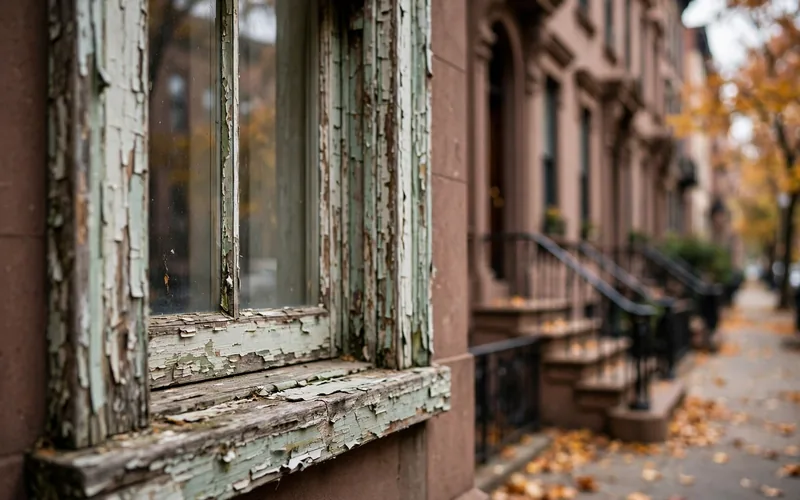
Weathered wooden window frame with chipped paint on a pre-war Brooklyn brownstone townhouse

Lead Paint Violations in NYC: What Sellers Must Know

Finding a lead paint violation on your property — or simply learning your pre-war home probably contains lead paint — can feel like a deal-killer when you’re trying to sell. In New York City, though, it’s one of the most common property issues there is: roughly 76% of the city’s buildings predate 1960 and are presumed by law to contain lead-based paint (NYC Dept. of City Planning data, via the Cooper Square Committee). The good news is that a lead paint problem doesn’t make your home unsellable. It means you need to understand three things: what federal law requires of every seller of a pre-1978 home, what New York City’s own lead rules require of owners of certain rental buildings, and how an outstanding violation changes the math on your sale. Here’s what most sellers get backwards: NYC’s strictest lead rules are aimed at landlords, not at someone selling the home they live in. But sellers of pre-1978 homes still have federal disclosure duties that apply whether you’re listing with an agent or looking to sell your house fast in New York for cash. This guide covers both regimes, what an open violation means, and your realistic options. Why lead paint matters so much in New York City Lead-based paint was banned in the United States in 1978, but it was standard in nearly every home painted before then. New York City’s health department reported 4,655 children under six with elevated blood lead levels in 2024 — a 93% decline since 2005, but still a reminder of why the city treats this seriously (NYC Dept. of Health and Mental Hygiene annual report). Peeling or chipped paint, especially around windows and doors, is the main way lead dust gets into a home’s air. That history is why New York has some of the strictest lead-paint rules in the country. But the rules split sharply between what a landlord must do and what a home seller must do — and knowing which bucket you’re in saves you from paying for work you don’t owe, or missing work you do. The federal rule every NYC seller must follow Under Section 1018 of the federal Residential Lead-Based Paint Hazard Reduction Act, the seller of “target housing” — essentially any home built before 1978 — must complete specific disclosures before the buyer becomes obligated under the contract. The exceptions are narrow (foreclosures, certified lead-free homes, very short leases, mortgage transactions, zero-bedroom units, senior housing). There is no cash-sale or as-is exemption. Specifically, you must: Disclose all known lead-based paint and lead hazards — what they are, where they are, and their condition. Hand over all available lead records and reports for the home. Give the buyer the EPA pamphlet Protect Your Family From Lead in Your Home. Include the federal Lead Warning Statement in the contract, signed by both parties. Give the buyer a 10-day opportunity to have the home inspected or risk-assessed for lead at their expense. The buyer can waive this in writing — which is how legitimate cash deals close quickly while staying compliant. Keep your signed acknowledgments for three years. Note what the rule does not require: you need not test for lead, remediate it, or warrant the home lead-free. The penalties for skipping disclosure, however, are severe — EPA civil penalties ran up to $49,772 per violation per day in the 2025 inflation adjustment, buyers can sue for up to three times their damages, and willful failures have drawn criminal fines. One more New York layer: under the state’s Property Condition Disclosure Act, sellers of 1–4 family homes must deliver a completed Property Condition Disclosure Statement before the buyer signs — and since March 2024, the old option of paying a $500 closing credit instead is gone. New York City’s Local Law 1: the landlord-side rules New York City’s lead law — Local Law 1 of 2004 (Admin Code §27-2056 onward) — is primarily a landlord law, stricter than the federal baseline. It covers tenant-occupied buildings built before January 1, 1960, which are presumed by law to contain lead paint (1960–1978 buildings are covered only where the owner actually knows lead paint is present). It activates when a child under six lives in the unit. Covered owners must send an annual notice (January 1–16, English and Spanish), inspect those units and common areas, use certified contractors and lead-safe work practices, remediate to turnover level on every vacancy, and keep records for ten years. Crucially for most house sellers: owner-occupied one- and two-family homes are exempt from Local Law 1. If you own the brownstone or rowhouse you live in, the city’s lead-violation regime almost certainly never applied to you — your duties at sale are the federal disclosure duties above. (Exception: if your two-family has a rental unit occupied by someone other than you or your family, that unit is covered.) Unsure which category you’re in? That’s a question for a New York real estate attorney, not a guess. Recent changes sellers should know about Recent developments, verified with the city: XRF testing deadline passed (August 9, 2025). Under Local Law 31 of 2020, covered pre-1960 buildings needed every unit tested by an EPA-certified independent inspector by that date. Missed testing draws a Class C violation plus $1,500 per untested unit or common area. The legal threshold dropped. Local Law 66 lowered the definition of lead-based paint from 1.0 to 0.5 mg/cm², effective December 2021. Turnover work has hard deadlines. Under Local Law 123 of 2023, pre-1960 multiple-dwelling units must reach turnover level by the earlier of: unit turnover, July 1, 2027 (if a child under six lived there as of January 1, 2025), or within three years of a child under six moving in. Enforcement is real. In August 2023 the city announced $473,500 in penalties against four landlords (5,147 apartments); in January 2024 HPD obtained $150,000 against one group with 154 lead-related violations. In 2023 alone HPD issued more than 18,000 lead-paint violations. What an open lead

Lead Paint Violations in NYC: What Sellers Must Know Read More »

Pre-war brick apartment building on a tree-lined Queens street, typical of NYC rent-stabilized housing

Selling a Building With Rent-Stabilized Tenants in NYC

Owning a rent-stabilized building in New York City can feel like holding two different investments at once: steady rental income on one side, and one of the strictest regulatory systems in the country on the other. When the time comes to sell, most owners share the same worry — will the tenants, the paperwork, and the rent rules scare buyers away, or drag the price down? The short answer is that rent stabilization changes the sale, but it does not prevent it. Stabilized buildings change hands every day across the five boroughs. The owners who get the best outcome understand what transfers to the buyer, how buyers value regulated income, and what paperwork makes a closing smooth — whether they list the building or choose to sell a property in New York directly to a cash buyer. What Rent Stabilization Means for Your Sale New York City’s rent stabilization system covers roughly one million apartments, most of them in buildings constructed before 1974 with six or more units. The state agency now known as New York State Homes and Community Renewal (HCR, still often called DHCR) oversees the program: owners must register rents annually, offer tenants the choice of a one- or two-year renewal lease, and stay within the yearly increase limits set by the Rent Guidelines Board (RGB). The rules got significantly stricter with the Housing Stability and Tenant Protection Act of 2019, which eliminated vacancy decontrol. Before that law, apartments could leave the stabilization system when the rent crossed a threshold or a unit went vacant; now they generally cannot. The law also eliminated the vacancy bonus landlords once charged between tenancies, capped rent increases for individual apartment improvements (IAIs), made preferential rents the base for calculating future increases, and lengthened the period tenants can look back when challenging overcharges. The numbers that matter most for your sale are the current guidelines. The Rent Guidelines Board voted in June 2025 to raise rents by 3% for one-year leases and 4.5% for two-year leases on leases commencing between October 1, 2025 and September 30, 2026 — caps below inflation, which is exactly why many owners are choosing to sell now. One more recent law is worth knowing about: the Good Cause Eviction law that took effect in April 2024. It mainly protects tenants in market-rate apartments, since rent-stabilized tenants already had renewal and eviction protections. But it matters for your sale because it narrows the “upside” story for any unregulated units in your building — buyers can no longer assume they will freely raise those rents either. What buyers already know — and what surprises first-time sellers Professional buyers of regulated buildings know all of this. What surprises first-time sellers is how thoroughly those buyers check the details. They will compare your rent roll against the official DHCR registration history, look for open violations and pending tenant complaints, and flag preferential rents that change the math on future increases. Small inconsistencies that went unnoticed for years become negotiating leverage at the closing table. What Stays With the Building When Ownership Changes Everything that makes the building rent-stabilized stays with the building. That single principle answers most of the questions owners ask: Leases and renewal rights survive the sale. The buyer steps into your shoes and must honor existing leases and offer renewals at guideline-limited rents. A sale does not deregulate the apartments. As one landlord-tenant attorney put it, a sale by itself does not change a unit’s rent-stabilized status — deregulation only happens in rare cases tied to expiring tax abatements, with written notice required. Compliance problems transfer too. Open violations, unresolved DHCR complaints, and overcharge liability follow the building, not the owner. Overcharge findings can carry treble damages, and buyers know it — they will discount for every issue they find. Security deposits move to the new owner along with your records of them. The deposits belong to the tenants, and the buyer inherits the accounting. Succession rights continue. Family members who qualify can inherit a stabilized lease, which means your rent roll may outlast your ownership by a generation. None of this is a reason not to sell. It is simply the reality your buyer is underwriting — and the reason an informed seller gets better terms than one who discovers it during due diligence. How Stabilization Affects Your Price and Your Buyer Pool Buyers do not pay for market rent. They pay for the rent you are legally allowed to collect. Valuation of a stabilized building starts from the in-place rent roll and the capped growth on top of it, then works backward through operating costs, taxes, and insurance. In practice, that means stabilized buildings typically trade at a discount to deregulated comparable properties — the income is dependable, but the upside is legislated. The buyer pool narrows accordingly. Owner-occupants looking for a vacant unit are mostly out of the picture, because recovering a stabilized unit for personal use is allowed only under strict conditions — generally a single unit for the owner’s own primary residence, with a genuine good-faith requirement that courts examine closely. The buyers who remain are investors who specialize in regulated buildings: they understand the DHCR paperwork, price the compliance risk, and plan to hold for the long term. That is a smaller audience, but a serious one. What serious buyers will scrutinize Before making an offer, an experienced buyer (or their attorney) will check whether your rent roll matches the DHCR registration history, whether any units carry preferential rents that cap future increases, whether violations or tenant complaints are open, whether the building sits under a J-51 or 421-a abatement with an end date, and whether every lease includes the required stabilization rider. Every gap they find becomes a price adjustment. Price on real numbers, not hopeful ones The fastest way to stall a sale is to price on pro-forma rents — what the units could bring if deregulated — instead of the regulated rents they actually bring. Honest pricing

Selling a Building With Rent-Stabilized Tenants in NYC Read More »

Brownstone rowhouse stoop in Brooklyn with an official-looking envelope on the steps, representing a NYC tax lien notice

How to Sell a House With a Tax Lien in NYC

In New York City, unpaid property taxes don’t just sit quietly in your mailbox. They turn into a tax lien — a legal claim against your home that gets paid before almost anything else when the property changes hands. And New York goes further than most places: the city bundles unpaid property taxes, water and sewer bills, and other municipal charges into tax liens and sells those liens to private investors, who can add interest and fees and, in the worst case, foreclose on your home. If you’re staring at a Department of Finance notice and wondering whether selling is even possible, here’s the short answer: yes, you can sell a house with a tax lien in NYC. The lien doesn’t block the sale — but it has to be satisfied before the buyer can take clear title, and most sellers clear it right at the closing table from the sale proceeds. Our guide to selling a home with a lien in New York covers the general process; this article digs specifically into property tax liens, how New York’s lien system works, and your options as an NYC seller who owes back taxes. Tax debt is also one of the more common reasons owners decide it’s time to sell their house fast in New York — every month of delay lets penalties and interest push the number higher. What Is a Property Tax Lien in New York? A tax lien is the government’s legal claim on your property for unpaid taxes. When you fall behind on NYC property taxes, the unpaid balance becomes a lien attached to the property itself. It takes priority over almost all other claims, including most mortgages — which is why it must be resolved before a buyer can receive clear title. New York is what real estate professionals call a “tax lien state” rather than a “tax deed state.” In a tax deed state, the government auctions the property itself; in New York — and especially in New York City — the government sells the debt, not the deed. The city packages overdue property taxes, water and sewer charges, and other municipal debts and sells those liens to a private investor-backed trust that collects on them. According to the city comptroller’s office, the 2025 lien sale moved roughly $220 million in tax debt to private hands. Once your lien is sold, you’re dealing with private collectors who can add interest, legal fees, and collection costs on top of the original bill. The NYC lien sale is changing The system has faced years of criticism for pushing low-income homeowners toward losing their homes — and that pressure has produced real changes. In June 2024, the City Council authorized lien sales through 2028 with reforms including an “Easy Exit” option for qualifying low-income owners. In December 2025, the Council passed bills aimed at abolishing the investor-backed lien sale by 2029 in favor of a publicly accountable land bank. And in March 2026, the administration froze that year’s lien sale pending a six-month review. Rosenberg & Estis’s follow-up on the 2025 sale tracks these developments, including proposed Department of Finance hardship installment rules. If you owe NYC back taxes, check the current status of these programs before assuming the worst. Not every tax lien comes from property taxes Most tax liens on NYC homes come from unpaid property taxes, but New York State tax warrants (unpaid state income or sales taxes) and federal tax liens (IRS) can also attach to your property. Since July 1, 2025, new state tax warrants are filed with the Department of State rather than the county clerk, so a title search must check both systems, per CPA firm George Dimov’s tax-warrant guide. Can You Sell a House With a Tax Lien? Yes. This is the question sellers ask most, and the answer is straightforward: a tax lien does not prevent you from selling your house. As real estate investors who handle back-tax sales put it, the lien doesn’t stop the transaction — the debt just gets paid at closing instead of by you in advance. Before any sale can close, a title search identifies every lien on the property, and the standard way to satisfy them is to pay them from the seller’s proceeds at the closing table. The title company handles the disbursement: money flows from the buyer, the lien gets paid first, and you receive whatever remains. Where the lien creates complications is with financed buyers. Lenders won’t fund a loan until title is clear, so a traditional buyer may walk when a lien shows up late in the process. That’s one reason sellers with tax debt often look into cash-buyer offers: cash purchases don’t need lender approval, so a lien cleared at closing doesn’t threaten the deal the way it threatens a mortgage. How Selling With a Tax Lien Works, Step by Step 1. A title search finds every lien early After you accept an offer, the buyer’s title company orders a title search that pulls up the tax lien along with any other recorded debts. Getting this done early matters — surprises found days before closing are what kill deals. 2. The title company gets an exact payoff figure For NYC property tax liens, the title company gets a payoff statement from the Department of Finance — the precise amount owed, including penalties and interest through the projected closing date. Tax liens accrue interest over time, so a payoff figure from three months ago is already stale. Always work from a fresh number. 3. The payoff comes out of your proceeds at closing On the closing statement, the lien payoff is listed as a deduction from the seller’s proceeds, much like your remaining mortgage balance. The money goes directly to the lienholder at settlement — you never write the check yourself. (This is also why it’s worth understanding typical closing costs for sellers in New York — liens are one of several deductions that come off the sale

How to Sell a House With a Tax Lien in NYC Read More »

Pre-war co-op apartment building in New York City with a uniformed doorman at the entrance

How to Sell a Co-op Fast in NYC

Three out of every four apartments in New York City are co-ops, and co-ops come with something condos, houses, and townhouses don’t: a board of directors that must approve your buyer before you can close. That board review is the single biggest reason co-op sales drag — a financed co-op sale typically takes 75 to 110 days, 30 to 45 days longer than a comparable condo (The Roebling Team, 2026). But a slow sale isn’t inevitable. If you need to sell a co-op in New York City fast — a relocation, a divorce timeline, maintenance arrears you can’t catch up on, or an inherited unit you don’t want — the playbook below shortens the timeline without forcing you to give the apartment away. Why Co-op Sales Take Longer (and What Actually Controls the Clock) When you “own” a co-op, you own shares in the cooperative corporation plus a proprietary lease — not real estate. There’s no deed: at closing, you sign over the stock certificate and lease, and the buyer’s lender records a UCC-1 financing statement instead of a mortgage. Co-op buyers skip mortgage recording tax and title insurance, but financing is a specialized share loan that fewer lenders originate, and buyers must sign a recognition agreement (the standard “Aztech” form) with the co-op (Coltrain Funding, 2026). The timeline killer is the approval gauntlet: after the contract is signed, the buyer assembles a board package — tax returns, bank statements, employment and reference letters — which the managing agent reviews before it reaches the board, followed by a board interview and then a decision. Boards may legally reject a buyer without giving a reason, as long as the rejection doesn’t violate fair housing laws — which is why an estimated 10 to 20% of co-op contracts fall apart at the board stage (The Roebling Team, 2026). One newer wrinkle works in sellers’ favor: since July 28, 2026, a New York City law requires co-op boards to acknowledge a completed application within 15 days and issue a decision within 45 days — so the board phase now has a legally defined ceiling (HOA Docs Direct, 2026). The buyer pool is also structurally smaller: foreign buyers, LLC purchasers, investors, and buyers with thin financials are screened out by approval requirements, leaving a pool roughly two to three times smaller than what a condo draws — and most condo boards only hold a rarely exercised right of first refusal (The Roebling Team, 2026). For co-ops, the entire strategy has to be built around the board from day one. If you’re weighing the two ownership types, read how selling a condo in NY differs. Step 1: Get Your Building Paperwork in Order Before You List Most co-op sale delays are paperwork delays, and almost all of them are preventable. Before your unit hits the market, pull together: Your proprietary lease and the building’s bylaws — this is where your flip tax rate, sublet rules, and resale procedures are spelled out. The stock certificate and a copy of your recognition agreement (if you financed the purchase). The board’s resale application from the managing agent, so you know exactly what your buyer will need to produce. Three years of building financials and the current budget, including any special assessments on the horizon. House rules, pet policy, and renovation requirements — common sources of late-stage surprises. One timing detail: the estoppel and payoff documents the managing agent produces are typically only valid for 30 to 60 days, so order them when the contract is signed rather than months in advance (HOA Docs Direct, 2026). Having a complete, organized document file ready on day one can shave weeks off the process. Step 2: Price It With the Flip Tax in Your Math A flip tax is not a government tax — it’s a private transfer fee the co-op charges on every resale, usually 1 to 3% of the sale price, though structures vary by building. The money goes to the building’s reserve fund, and by custom the seller pays it, although the proprietary lease controls the rule and the split is negotiable in some deals (Agarunov Law, 2026). Understand exactly how your building’s flip tax works before you set a price, because it comes straight out of your proceeds: a 2% flip tax on a $900,000 sale is $18,000. Budget the whole exit before you set a price. Total seller closing costs in NYC typically run 8 to 10% of the sale price — commission, transfer taxes, attorney fees, flip tax, and building fees (Agarunov Law, 2026). Price against recent sales in your building, not your wish number: overpriced co-ops sit, and a stale listing signals desperation to the exact buyers you need to impress. If your unit has already been sitting, read what to do when your NYC listing expires before you relist. Step 3: Pre-Qualify Buyers for Board Approval, Not Just Price Here’s the co-op seller’s golden rule: the right buyer isn’t the highest bidder — it’s the buyer most likely to get past the board. Boards care about financial strength far more than price: most want at least 20% down, a credit score of 700 or above, and substantial liquid assets left after closing (Agarunov Law, 2026). Put that to work when you compare offers. Ask each buyer’s broker for the basics up front: down payment percentage, post-closing reserves, and employment history. An all-cash buyer with clean financials and no financing contingency is almost always the fastest path through a board — there’s no lender underwriting, no appraisal to come in low, and no loan commitment to expire. Step 4: Clear Maintenance Arrears and Assessments Early The board will not approve a transfer while maintenance or assessments are in arrears, and the managing agent’s payoff statement will surface every dollar owed. Get a written payoff figure from management early and settle anything outstanding — arrears can sometimes be netted from closing proceeds with board cooperation, but they can’t be hidden. The Fastest Route: Selling

How to Sell a Co-op Fast in NYC Read More »

Brick multi-family residential house on a tree-lined street in New York — the kind of inherited property that can become subject to a partition action among co-owners.

Partition Sales in New York: Forcing the Sale of an Inherited House

When several people inherit a house together in New York, disagreements are almost inevitable. One sibling wants to sell and split the money, another wants to keep the house in the family, and a third may have already moved out and stopped paying the taxes. If the heirs cannot reach an agreement, New York law gives any single co-owner a way to force the issue: a lawsuit called a partition action. If you have inherited a house in New York and a dispute with your co-owners is brewing, it helps to know how partition works, what it costs, and what alternatives exist before the lawyers get involved. For owners who want to skip the courtroom, selling an inherited house directly is often a far faster way out. What Is a Partition Action in New York? A partition action is a lawsuit that asks a court to divide jointly owned real property or, more commonly, order the property sold so each owner can receive their share of the proceeds. Partition actions in New York are governed by Article 9 of the Real Property Actions and Proceedings Law (RPAPL), and Section 901 gives any co-owner — whether a joint tenant or tenant in common — the right to bring one, regardless of how small that person’s ownership share is. In practice, physically dividing a single-family or two-family house between owners is rarely possible without destroying its value. Courts therefore typically order a partition by sale: the property is sold and the net proceeds are distributed among the co-owners in proportion to their ownership interests, after costs and certain adjustments. Who Can File a Partition Action? Any person who holds and possesses real property as a joint tenant or tenant in common may file for partition. That includes siblings who inherited a parent’s house together, unmarried partners who bought a home jointly, and former spouses after a divorce. The right to partition is considered absolute under New York law unless there is a countervailing condition, such as a written agreement in which the owners waived the right to partition. One important exception: spouses who own property as tenants by the entirety generally cannot force a partition against each other while they remain married. And when the dispute is between a life tenant and the remaindermen who will inherit later, partition is usually the wrong tool — those cases fall under RPAPL Article 16 instead, which asks whether a sale is expedient rather than dividing interests among co-owners. How a Partition Action Works, Step by Step Filing the lawsuit and the interlocutory judgment The action begins in the Supreme Court of the county where the property is located. The co-owner seeking a sale files a complaint naming all other owners (and any lienholders), and must establish joint ownership and that a physical division of the property cannot be made without great prejudice to the owners. Where the facts are not disputed, courts can grant summary judgment on the issue — meaning the case proceeds to sale without a trial. Once the court resolves the ownership shares and whether the property will be divided or sold, it issues what is called an interlocutory judgment. The court-appointed referee The court then appoints a referee — a neutral party, typically an experienced real estate attorney — to carry out the sale. The referee lists the property, handles showings, negotiates offers, and can even sign the deed and listing agreement on behalf of any co-owner who refuses to cooperate. This is why partition actions work even when one owner tries to block the sale: the court does not need every owner’s consent once it has ordered a sale. Sale and distribution of the proceeds After the sale closes, the court conducts a final accounting. Court costs, the referee’s fees, brokerage commissions, and sometimes the attorneys’ fees that benefited all owners are paid from the proceeds first, and the remainder is distributed according to each co-owner’s adjusted ownership share. The accounting can include credits and offsets — for example, an owner who paid the mortgage or property taxes alone during the dispute may be reimbursed from the proceeds before they are split. New York’s Heirs Property Protections (RPAPL §993) In 2019, New York adopted its version of the Uniform Partition of Heirs Property Act, codified at RPAPL §993. The law was designed to stop speculators from buying a small inherited interest and using a partition action to force a sale at a fraction of the property’s real value. For property that qualifies as heirs property — generally, real estate held by relatives as tenants in common, used for residential or agricultural purposes — the court must order an appraisal, let the co-owners who did not ask for the sale buy out the co-owner who did at the court-determined value, and prefer a physical division of the property over a sale unless division would cause great manifest prejudice to the owners as a group. A sale under these rules is presumptively conducted on the open market rather than by auction. How Much Does a Partition Action Cost? Partition lawsuits are not cheap, and the costs come off the top before anyone sees a dollar. Typical expenses include court filing fees (the Supreme Court index number is $210, a request for judicial intervention is $95, and each motion costs $45), a title search, and a court-ordered residential appraisal that generally runs from several hundred to a few thousand dollars. The referee is compensated from the sale proceeds, and a brokerage commission on the sale is charged at the standard percentage. Attorney’s fees are the largest variable. Uncontested cases where everyone agrees on the outcome can cost a few thousand dollars in legal fees, while contested cases with disputed ownership shares or contribution claims routinely run $20,000 or more. Under RPAPL §981, the court can direct that costs and reasonable counsel fees for work that benefited all the owners be paid from the sale proceeds before distribution — which means even

Partition Sales in New York: Forcing the Sale of an Inherited House Read More »

Blank wooden real-estate sign in the front garden of a brick NYC row house on an autumn street.

My Listing Expired in NYC: What Should I Do Next?

When your listing agreement runs out and the house still hasn’t sold, it’s hard not to feel discouraged. Months of showings and price discussions, and the listing is gone with nothing to show for it. If your listing expired in NYC and you’re wondering what to do next, start here: you are not starting from zero. An expired listing is a signal, not a verdict — and many sellers in this exact position end up selling on better terms the second time around. This guide covers what an expired listing means in New York, the contract clause to check first, and your six realistic options — relisting, renting, or selling as-is for cash. What “Expired Listing” Actually Means A listing expires when your agreement with your broker reaches its end date without a sale. In New York City, exclusive right-to-sell agreements typically run 90 to 180 days (the national median in competitive markets is around 120 days). Once that date passes, the listing comes off the MLS and portals like StreetEasy, and you’re free to make a new decision. Don’t confuse expired with two other statuses. A withdrawn listing is temporarily removed while the agreement is still active — you’re still under contract. A cancelled listing ends the agreement early, usually requiring a written cancellation. Each status carries different obligations about when you’re free to act: expired, withdrawn, and cancelled listings each have their own rules. The key point: an expired listing means your agreement ended on its own terms. Nobody needs to fire anyone. What you do need to check is whether your old broker still has any claim on a future sale — more on that below. Why NYC Listings Expire Without Selling First, diagnose why the listing failed. Usually it comes down to: Pricing. An asking price above comparable recent sales filters your home out of most buyers’ searches from day one — pricing high “with room to negotiate” almost never works in a data-transparent market. Stale-listing stigma. The longer a home sits, the more buyers assume something is wrong with it. This stale-listing stigma compounds over time, and relisting at the same price with the same photos rarely breaks it. Weak presentation. Dark or dated photos, cluttered rooms, and deferred maintenance quietly kill interest — most buyers tour a home online long before visiting in person. Condition and access issues. Tenant-occupied homes, strict showing windows, and properties needing obvious repairs see far fewer serious offers. Market timing. Rates near 7% in late 2026 have made buyers more selective and price-sensitive, even with inventory tight. StreetEasy’s August 2026 market data shows homes entering contract spent a median of 77 days on the market citywide — 93 in Manhattan, 69 in Brooklyn, 73 in Queens — while 21.8% of sales still closed above the latest asking price. Well-priced, well-presented homes are moving. If yours didn’t, the issue was likely positioning rather than the market itself. See our guide to why homes fail to sell in NYC for the full diagnosis. The One Clause to Check Before You Do Anything Before you relist, rent, or sell, read the broker protection clause — also called a tail provision — in your old listing agreement. It’s the provision most sellers overlook, and it can cost you a commission months after your listing ended. A protection clause extends your former broker’s right to a commission — typically for 30 to 90 days after expiration — if the home sells to a buyer they introduced during the listing. How broker protection periods work is straightforward: the trigger is introduction, not an offer. Any buyer who toured the property or attended an open house counts as introduced. A typical NYC exclusive listing agreement shows what this looks like in practice: a 3-month tail covering no more than six named buyers the broker must deliver in writing within three business days of expiration. Do three things now: Ask your former broker for the registered-buyer list. Get it in writing so you know exactly who can trigger the clause. Note the tail length. NYC provisions typically run 30 to 90 days; if yours is unclear, have a real estate attorney review it. Know that independent buyers are safe. Selling to someone your broker never introduced — for example, a direct cash buyer who found you independently — generally does not trigger the clause. If you relist with a new agent while the tail is still active, tell them about the clause upfront so everyone understands who owes what if an old lead resurfaces. When in doubt, consult a qualified real estate attorney — this is general educational information, not legal advice. Your 6 Options After an NYC Listing Expires The best move depends on your timeline, finances, and patience — start by weighing the agent listing versus a direct cash sale. 1. Relist with the same agent If your agent marketed aggressively, communicated honestly, and the problem was pricing or timing, staying can make sense. The test: ask what they’d do differently. A concrete answer — new pricing analysis, professional photography, a refreshed launch — signals a second run can work. A vague one suggests the strategy, not the market, was the problem. 2. Hire a new agent A fresh broker brings new buyer relationships and a clean slate on outreach. But the listing history follows the property, not the agent — a new face doesn’t fix an old price. Interview two or three agents and choose the one with the most data-driven pricing analysis, not the one quoting the highest number to win your business. 3. Take a break, then relist A 60-to-90-day pause typically resets the days-on-market clock on most platforms, clears the stale-listing stigma, and lets you relaunch with new photos, pricing, and narrative — especially useful if your listing expired in a slow season. 4. Rent the property out If your timeline is flexible, converting to a rental can be the right call. Manhattan median rent hit $4,900 in September 2026,

My Listing Expired in NYC: What Should I Do Next? Read More »