
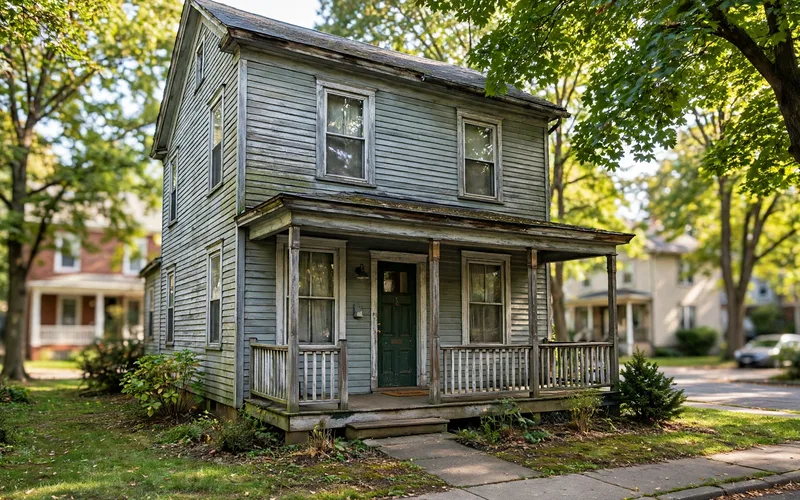
Yes — you can sell a house with termite damage in New York, and homeowners do it every year. Termites are a fact of life for older wood-frame homes across the five boroughs and Long Island, and a termite problem does not make a house unsellable. What it changes is how you prepare, what you must tell buyers, and which selling route makes the most sense. If you need to sell your house fast in New York and termites are part of the picture, ignoring them is the worst move — the law, the buyer’s inspector, and the buyer’s lender are all likely to find them first.
This guide covers how to spot termite damage, what New York law requires you to disclose, what treatment and repairs typically cost, and how to choose between fixing the problem and selling as-is to a cash buyer.
Termites in New York: What You’re Actually Dealing With
New York has one main termite to worry about: the Eastern subterranean termite (Reticulitermes flavipes). According to Cornell Cooperative Extension, it is the only established termite species on Long Island and the most common insect subject its Nassau County office hears about from homeowners. These termites live in underground colonies that can number in the hundreds of thousands, and they attack wood from the ground up — sills, joists, studs, and framing — often for years before any damage is visible from the outside.
Swarm season in the New York metro area runs from March through May, peaking on warm, humid days after rain, when winged reproductives leave the colony to start new ones. Seeing swarmers indoors in spring is one of the clearest signs of an established colony in or under the house. Colonies stay active year-round as long as soil temperatures stay above about 50°F, so this is not a problem that freezes away in winter.
Pressure is highest where wood-frame housing and damp soil meet: Long Island, Staten Island, and parts of Queens, along with older homes anywhere in the city that have wood in contact with soil, leaky basements, or poor drainage. Brownstones and row houses are not immune either — their masonry walls hide wooden floor joists, sills, and roof framing that termites can reach through cracks and mud tubes. The National Pest Management Association estimates that termites damage around 600,000 homes in the United States each year and cause more than $5 billion in property damage annually — damage that standard homeowners insurance policies almost never cover, because insurers treat it as a maintenance issue.
How to Spot Termite Damage Before Buyers Do
Termites are often called silent destroyers because they eat wood from the inside out, leaving a thin surface shell that can look perfectly normal. By the time damage is obvious, the colony may have been active for years. These are the signs to look for:
Mud tubes on foundations and walls
Subterranean termites build narrow earthen tubes — about the width of a pencil — to travel between the soil and the wood they are eating while staying out of open air. Check foundation walls, basement walls, crawl spaces, and the posts and beams near the ground. Mud tubes are the single most reliable field sign of an active infestation.
Hollow-sounding or blistered wood
Tap baseboards, window frames, door frames, and floor joists with a screwdriver handle. Wood that sounds hollow, feels papery, or crumbles easily may be eaten out inside. Look for paint that bubbles or blisters and floors that sag or buckle — all can point to termite activity, especially where moisture is also present.
Discarded wings near windows and doors
After swarmers mate, they shed their wings. Piles of small, equal-length wings on windowsills or near doors in spring are a strong sign of a nearby colony. Termite swarmers have straight antennae and four wings of equal length; ants, their common look-alike, have elbowed antennae and uneven wings.
Moisture problems that invite termites
Termites are drawn to damp, softened wood. A leaking pipe, poor grading, a wet basement, or water damage that was never fully dried out all make a house more attractive to them — and damp wood often brings mold along with it. If you find termites, check for the moisture source too, because treatment alone will not fix what keeps attracting them.
Get a Professional Inspection Before You Decide Anything
A standard home inspection in New York does not cover pests — by law, a licensed home inspector’s scope excludes radon and pest inspections. That means the inspection your buyer orders may not be the one that finds your termites. A separate wood-destroying insect (WDI) inspection by a pest professional is the report that actually answers the question: how bad is it, is it active, and what will it take to fix?
In New York, anyone who applies pesticides for hire must hold a commercial pesticide applicator certification from the Department of Environmental Conservation (DEC), and the business itself must hold a DEC pesticide business registration — structural pest work falls under Category 7A. Before hiring anyone, confirm both credentials. The written report is worth paying for even if you plan to sell as-is: it tells you the extent of the damage, whether the colony is active or old, and what treatment and repairs would cost — the three facts any buyer, agent, or cash buyer will ask about first. Keep every report, treatment record, and warranty; they become part of your disclosure file.
What New York Law Requires You to Disclose
New York sellers of one- to four-family homes must give the buyer a signed Property Condition Disclosure Statement before the buyer signs a binding contract of sale, under Real Property Law § 462. Two of its questions deal directly with pests. Question 30 asks: “Is there any termite, insect, rodent or pest infestation or damage?” Question 31 asks whether the property has ever been tested for termite, insect, rodent or pest infestation or damage, and tells the seller to attach the reports.
Three points matter for termite sellers. First, you answer from your actual knowledge — “unknown” is a legitimate answer if you genuinely do not know, and the form states on its face that it is not a warranty. Second, Question 30 covers infestation or damage, so old damage counts even if the insects are long gone. Third, since March 20, 2024, sellers can no longer skip the form by giving the buyer a $500 credit at closing; the statement is now mandatory. If you learn something new after signing, Real Property Law § 464 requires a revised statement as soon as practicable, and a willful failure to comply can leave the seller liable for the buyer’s actual damages under § 465. Condos and co-ops are not covered by the disclosure law. This is general educational information, not legal advice — if your situation is complicated, talk to your real estate attorney before you answer the form.
How Termite Damage Affects What Your House Is Worth
Termite damage lowers a home’s value in three ways: the cost of treatment, the cost of repairing the wood, and the risk and hassle a buyer takes on. Professional extermination commonly runs a few hundred dollars to around $1,000 — one widely cited average range is $263 to $1,033 — while structural repairs vary enormously. Replacing a few damaged studs is a small job; replacing rotted sills and joists, or repairing foundation problems termites helped cause, can run into the tens of thousands. The longer an infestation goes unnoticed, the wider that range gets.
Two pricing mistakes are common. The first is pricing as if the damage did not exist and hoping the buyer’s inspection misses it — it rarely does, and a failed inspection usually costs more in renegotiation and lost time than an honest price would have. The second is discounting far beyond the actual repair cost out of fear. Get written estimates for treatment and repair before you set a price, and price from those numbers rather than from a guess. Do not count on insurance to cover the bill: standard homeowners policies generally exclude termite damage, treating it as a preventable maintenance issue rather than a sudden event.
Your Two Main Options for Selling
Once you know the extent of the damage, there are really two routes, and the right one depends on how bad it is, how much time you have, and how much cash you want to put into a house you are leaving.
Option 1: Treat, repair, then list on the open market
If the damage is limited and you can wait, this route usually brings the highest price. Hire a DEC-licensed company to treat the colony, repair or replace the damaged wood, and get the treatment warranty in writing — most termite treatments carry a warranty of around a year that can transfer to the buyer. Then disclose the history with the treatment records and warranty attached, and list the house. A treated house with paperwork sells far more easily than one with an open question mark, because the buyer’s lender will often require a clean wood-destroying insect report before approving the mortgage. Keep the inspection report, treatment records, and warranty together — a buyer’s attorney and lender will ask for them.
Option 2: Sell as-is to a cash buyer
If the damage is extensive, the repair bill is larger than the value it would add, or you simply cannot wait, selling as-is to a cash buyer skips the whole cycle. Cash buyers purchase the house in its current condition — no treatment, no repairs, no staging, no showings — and because there is no mortgage lender involved, there is no lender-required inspection to fail. The trade-off is price: the offer will reflect the cost of the treatment and repairs the buyer is taking on, plus the risk. For a house that needs major work, compare that against the real cost of the other route: treatment, repairs, carrying costs while you wait, agent commission, and the chance a financed buyer’s inspection still kills the deal. If you want to see what the as-is route looks like for your house, you can request a no-obligation cash offer and compare it against your repair estimates before deciding.
Frequently Asked Questions
Can you sell a house with termite damage in New York?
Yes. There is no New York law that stops you from selling a house with termite damage. You must disclose known infestation or damage on the Property Condition Disclosure Statement, and most buyers will want a professional inspection and treatment records, but the house can absolutely be sold — either after treatment and repair, or as-is to a cash buyer.
Do I have to disclose termite damage when selling in New York?
Yes, if you know about it. Real Property Law § 462 requires sellers of one- to four-family homes to complete the Property Condition Disclosure Statement, and Question 30 asks directly whether there is any termite, insect, rodent or pest infestation or damage. You answer from your actual knowledge, and since March 2024 you cannot opt out of the form with a $500 credit.
Will termites show up on a home inspection?
Maybe — but do not rely on it. A standard New York home inspection does not include a pest inspection, so termites are often missed unless the inspector happens to spot visible signs. A separate wood-destroying insect inspection by a licensed pest professional is the right tool, and many mortgage lenders require one before approving a loan.
Does homeowners insurance cover termite damage?
Generally, no. Standard homeowners insurance policies typically exclude termite and other pest damage, treating it as a maintenance issue the homeowner is responsible for preventing. Review your own policy to confirm, and budget for treatment and repairs out of pocket.
How much does termite treatment cost in New York?
Professional extermination commonly costs a few hundred dollars to around $1,000, with a widely cited average range of $263 to $1,033. Repairs are separate and vary far more — from a few hundred dollars for minor wood replacement to tens of thousands for structural damage that went unnoticed for years.
The Bottom Line
Termite damage is a common problem in New York’s older housing stock, and it is a solvable one. Get a professional inspection so you know what you are dealing with, disclose what you know on the Property Condition Disclosure Statement, and choose your route with real numbers in hand: treat and repair if the damage is limited and time is on your side, or sell as-is if the repair bill or the timeline does not work for you. Either way, an honest paper trail — inspection report, treatment records, warranty — is what turns a scary finding into a manageable sale.
If termites are one of several problems holding up your sale, or you would rather skip the repairs entirely, Cash Buyers NY buys houses in any condition across New York City and Long Island. Call 646-920-8900 or request a free, no-obligation cash offer and find out what your house is worth as-is — termites and all.

Jeff is part of the team at Cash Buyers NY, a cash home-buying company serving New York City and Long Island from Bellerose, Queens. The company buys houses as-is in any condition — no repairs, no agents, no commissions, and no financing contingencies — through a straightforward cash-offer process. Jeff covers the questions New York homeowners actually ask: how long a cash sale takes, what it costs, how co-op boards and inheritance work, and when selling as-is makes sense.